
April 22, 2026
Are there Dangerous Animals in the Galapagos Islands? Is the Galapagos Safe To Visit?
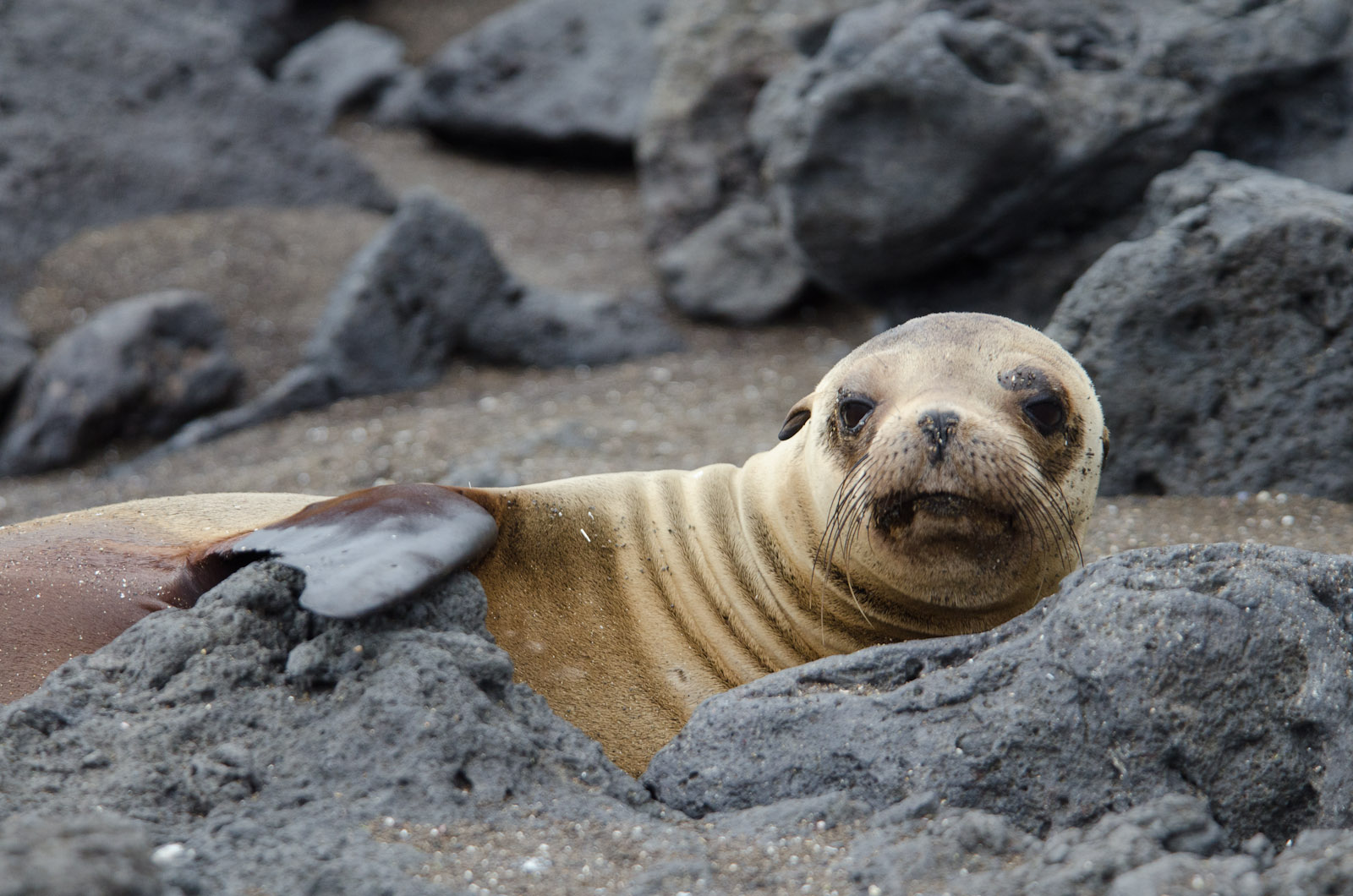
The Galápagos Islands are considered one of the safest travel destinations in the world. Here tourism plays such an important role in the local economy and the protection of the Galápagos National Park. As a result, strict regulations are in place to preserve the environment while ensuring the safety and wellbeing of visitors.
For travelers considering a Galápagos Islands tour, safety is less about avoiding danger and more about understanding how to explore a remote, protected environment responsibly.
As the islands are a remote location, travelers often have lots of questions relating to their destination, mainly regarding safety, such as Is the Galápagos safe to visit? And are there dangerous animals in the Galápagos Islands? Keep reading to learn the answers.
Safety in Towns and Visitor Sites
In towns such as Puerto Ayora, safety is straightforward. Like anywhere else, basic awareness and common sense go a long way. The more important considerations begin when visiting natural sites.
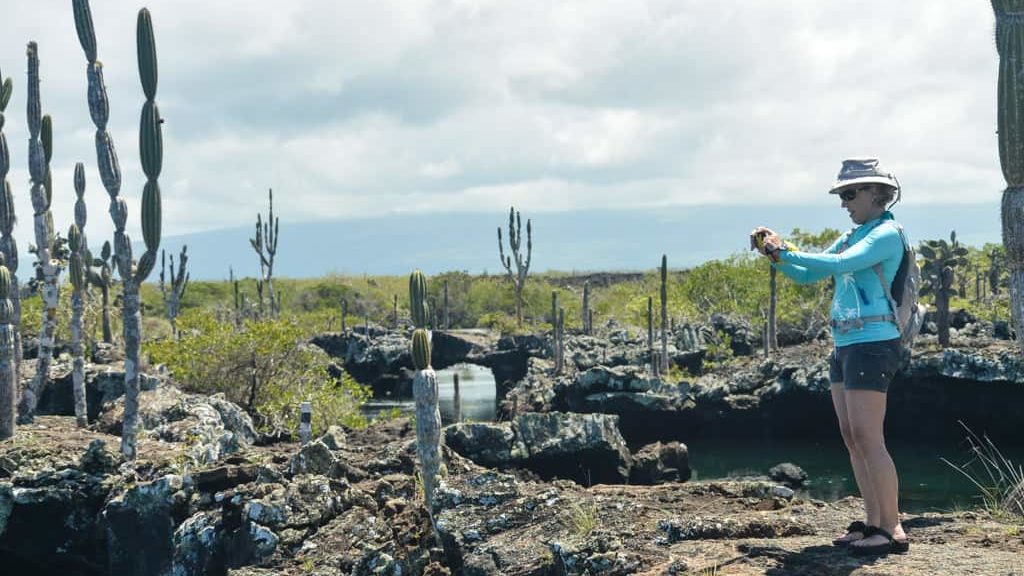
The Galápagos is not a conventional destination with paved paths and built infrastructure. Instead, most visitor sites are raw, natural environments. Trails may cross volcanic rock, sandy beaches, or uneven terrain, which requires visitors to move carefully and stay aware of their surroundings.
Marked trails and visitor guidelines are there for a reason. They protect both travelers and the fragile ecosystems unique to the Galápagos Islands. Stepping off trails or ignoring signage can lead to unnecessary risks. Warning signs about plants, restricted areas, or trail boundaries should always be respected. Venturing off established paths to get a closer photo may seem tempting, but the volcanic terrain can be unpredictable, and delicate ecosystems can easily be damaged.
Understanding the Environment and Ocean Conditions
There are a few important factors to keep in mind when exploring the Galápagos Islands. While they are not necessarily risky, being aware of the environment will help you stay comfortable and enjoy each activity with confidence.
The Galápagos sits directly on the equator, which means the sun is strong year-round, even on cloudy days. Proper sun protection is essential. Using reef-safe sunscreen, wearing a hat, and choosing lightweight protective clothing will help prevent sunburn or heat exhaustion. Staying hydrated is just as important, especially during outdoor activities. During your Galakiwi tour, guides will regularly remind you to reapply sunscreen and take the necessary precautions.
Ocean conditions can vary depending on currents and time of year. Snorkeling is often a highlight of any Galápagos Islands tour, but water temperatures can be cooler than expected. For this reason, wetsuits are recommended to maintain comfort in the water. On a Galakiwi tour, you’ll be provided with complete snorkeling gear, including a wetsuit suited to the conditions. During snorkeling sessions, guides may also encourage the use of a buddy system to ensure everyone stays close to the group and feels supported in the water.
Traveling between islands typically involves boat transfers. Even in calm seas, wearing a life vest (PFD) is always recommended. When boarding or disembarking, guides often use the well-known “Galápagos handshake”, gripping forearms instead of hands, to provide greater stability and support. Keeping your hands free during these moments also helps maintain balance.
Exploring Safely: Terrain and Movement
Because of the islands’ volcanic origin, terrain can be uneven or loose in some areas. Walking carefully and wearing proper footwear, such as hiking shoes with good grip, makes a significant difference.
For longer walks, some travelers benefit from trekking poles for added stability. Wildlife can also blend into the landscape, from marine iguanas resting on dark rocks to small birds along the trails, so staying attentive helps protect both you and the animals.
A well-paced visit is key. Experienced Galapagos naturalist guides will always explain site conditions in advance and adapt the pace to ensure a safe and enjoyable experience.
Wildlife Encounters: Safe and Respectful
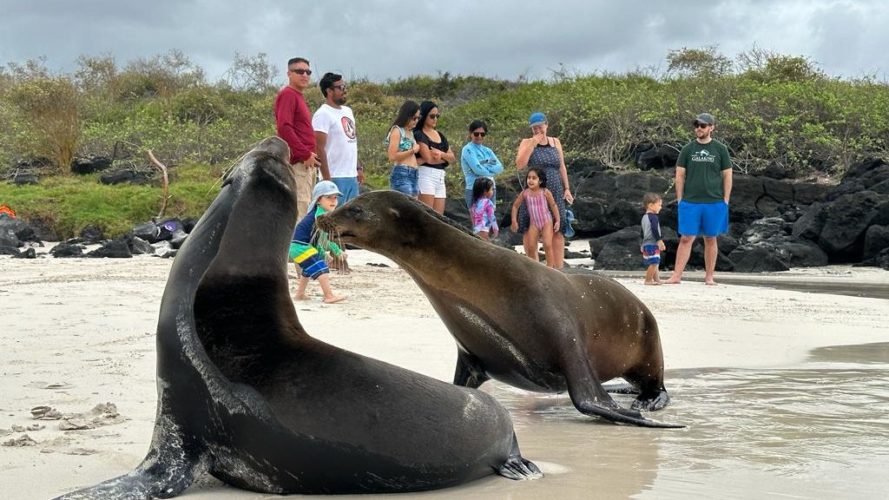
One of the most unique aspects of the Galápagos Islands is the absence of apex predators on land. Wildlife encounters are typically calm, close, and incredibly memorable.
The only animals that may occasionally require extra caution are male sea lions during mating season. These bulls can become territorial, but they are easy to observe from a safe distance, and guides will always advise when to be cautious.
In general:
- Sea lions, iguanas, and birds are not aggressive
- Animals may approach out of curiosity
- Maintaining a respectful distance is always the best approach
Some species, like finches, can be particularly curious around food. Keeping food secured and properly disposing of waste is essential to protecting the ecosystem.
In the water, snorkelers may encounter sharks, sea urchins, or other marine species. These encounters are not dangerous when handled correctly. Sharks in the Galápagos are not aggressive toward humans, and sightings are often a highlight rather than a concern. Read all about shark encounters in the galapagos here
The Role of Your Guide
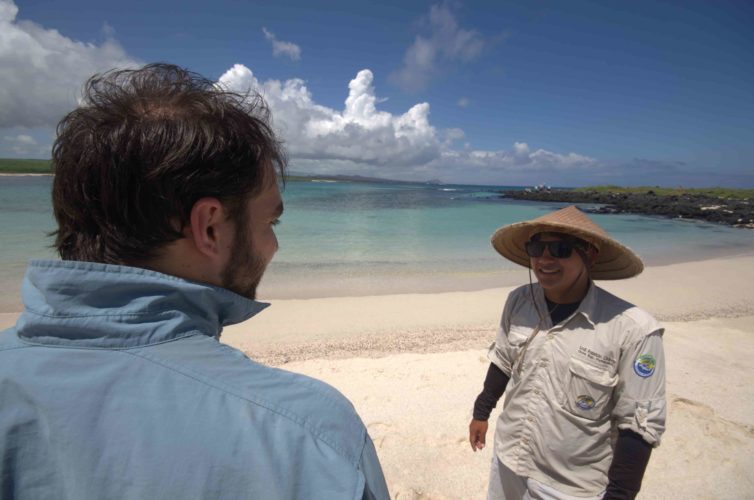
A key part of staying safe during any Galápagos Islands tour is following the guidance of your naturalist guide. Their role goes beyond sharing knowledge; they are there to ensure that every activity is conducted safely, responsibly, and in alignment with park regulations.
At Galakiwi, all guides are Wilderness First Aid (WFA) certified and trained to respond to a wide range of situations, from minor injuries to unexpected changes in conditions. They also carry the necessary equipment to manage these situations while keeping the experience smooth and enjoyable.
A Safe and Thoughtfully Managed Destination
The Galápagos Islands are not just safe; they are carefully protected. The combination of strict regulations, experienced guides, and responsible Galápagos Islands ecotourism practices creates an environment where travelers can explore with confidence.
Most risks are easily avoided by:
- Staying on marked trails
- Respecting wildlife distance rules
- Following your guide’s instructions
- Being mindful of terrain and conditions
With the right preparation and support, visiting the Galápagos becomes a seamless balance of adventure, safety, and discovery.
Planning Your Galápagos Islands Tour
If you’re considering a Galápagos Islands tour, choosing the right approach makes all the difference. A well-planned, land-based experience allows for flexibility, comfort, and a more personalized way to explore the islands.
At Galakiwi, we focus on creating thoughtfully designed journeys that prioritize safety, detail, and meaningful experiences, so you can explore with confidence and fully enjoy what makes the Galápagos so extraordinary.
If you’re ready to explore the Galápagos, take a look at our tours and reach out to us. We’d love to hear about your vision for the perfect visit and help create a safe, adventurous, once-in-a-lifetime experience tailored just for you.