
January 2, 2026
Galápagos Marine Iguanas: The Remarkable Reptiles You’ll Meet on Your Adventure
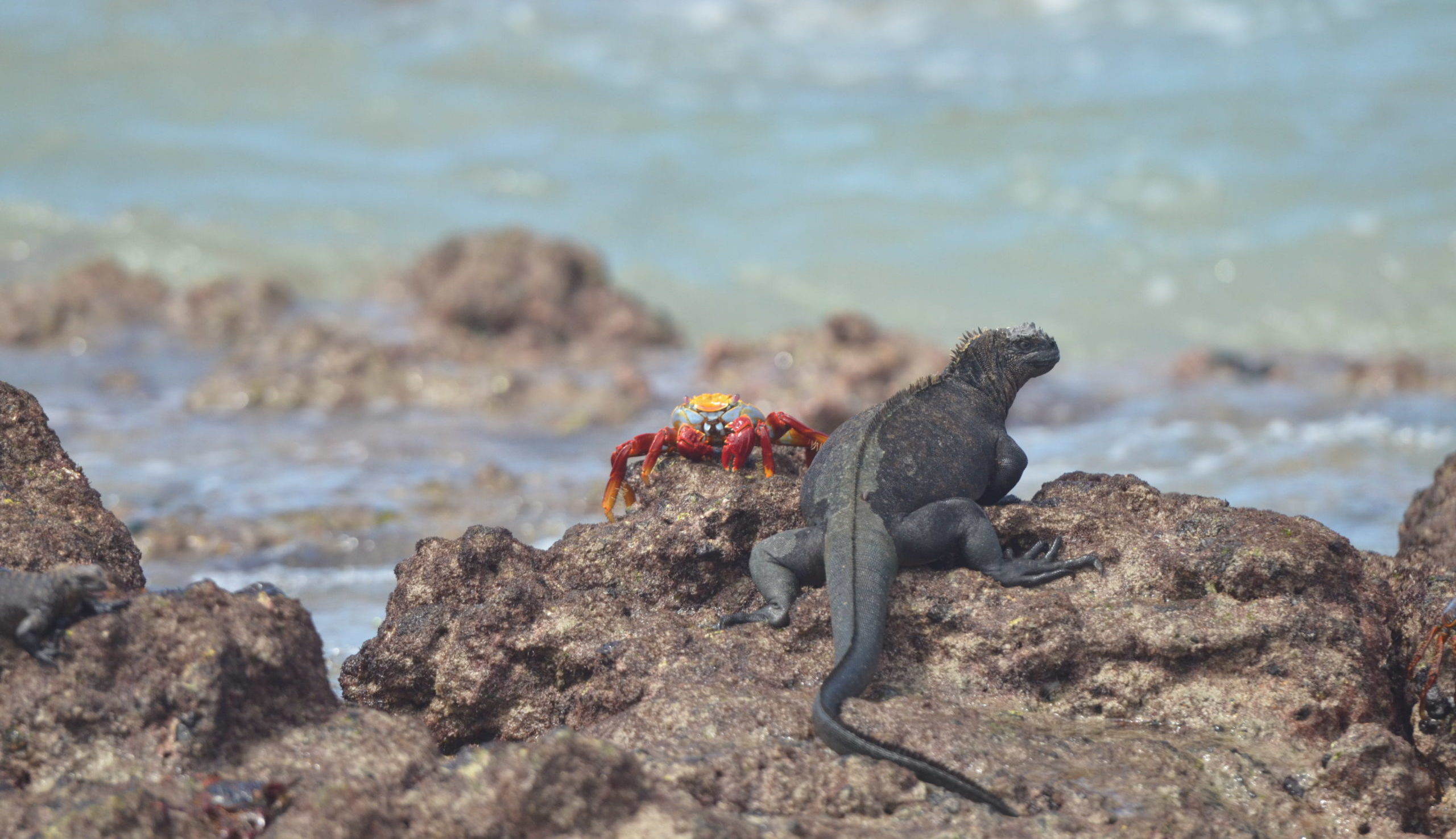
If there’s one animal guaranteed to fascinate you during your Galápagos tour, it’s the Galápagos marine iguana (Amblyrhynchus cristatus).
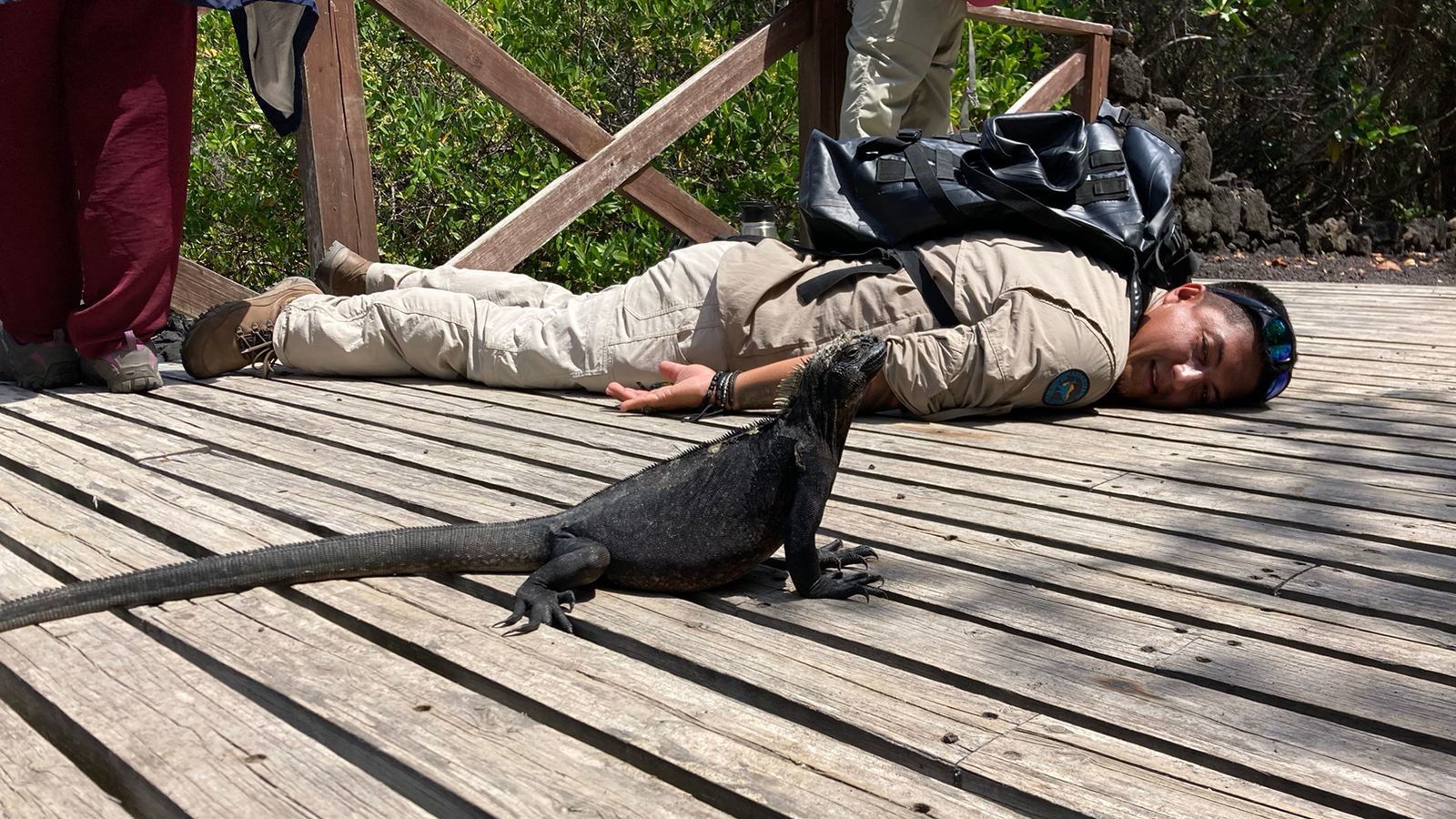
The only seagoing lizard on Earth, these prehistoric creatures are found nowhere else in the world. You’ll see them everywhere, layered in sun-soaked piles on black lava rock, swimming through turquoise bays like mini-dragons, or calmly grazing on algae just beneath the surface. They’re an emblematic species of the Galápagos National Park, and one of the best examples of evolution in motion.
Below is your guide to what makes them so special, where to find them, and how to enjoy unforgettable yet responsible encounters.
A Species Found Only in the Galápagos
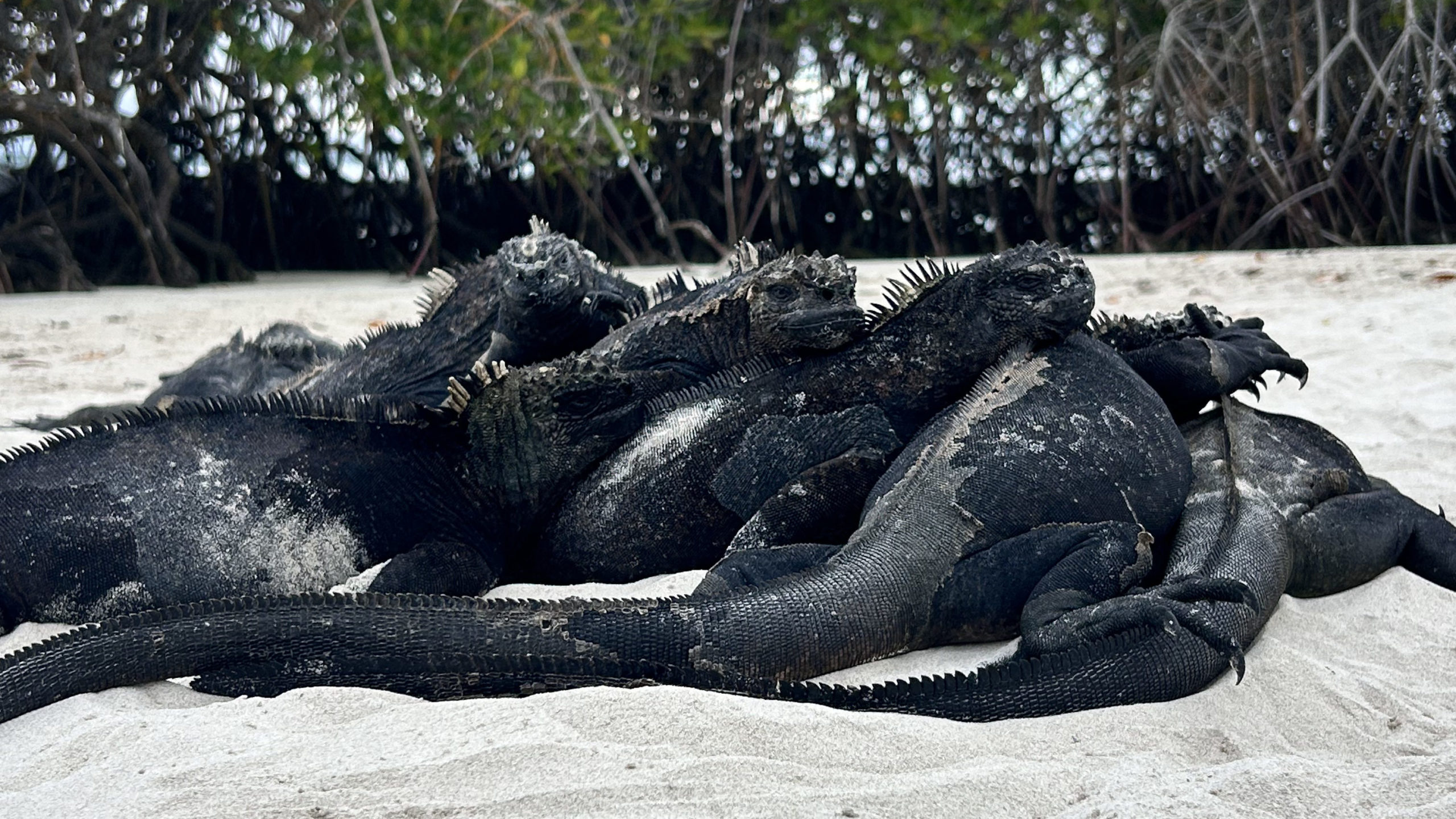
Marine iguanas evolved from land iguanas that arrived on the islands millions of years ago. Over time, they adapted to life along the coast and in the ocean, developing flattened tails for swimming, strong limbs for clinging to lava rock, and specialized glands for expelling salt.
They exist in several distinct subspecies, each found on different islands. Their differences are subtle but fascinating:
- Some have unique coloration
- Some are larger than others (like those on Fernandina)
- And some show striking breeding-season hues that make each island’s iguanas feel like their own “characters”
These variations are part of what makes exploring multiple islands on a land-based Galápagos tour so meaningful, each island introduces you to a new, slightly different version of the same species.
What Makes Marine Iguanas So Unique
Salt Sneezing:
Their algae-rich diet means they ingest a lot of salt. To survive, they “sneeze” it out through special nasal glands, often leaving a white crust across their heads.
Underwater Herbivores:
Marine iguanas are vegetarian and feed exclusively on marine algae. Large males can dive up to 30 minutes and swim with gentle, serpentine movements.
Heat Seekers:
After feeding in the chilly Pacific, they return to the volcanic rocks to warm up. Their dark coloration helps them absorb heat quickly.
Seasonal Color Shifts:
Some subspecies, especially on Floreana or Española, blaze into vibrant reds and greens during mating season.
Where to See Them: Different Islands, Different Iguanas
Marine iguanas are found on every major island, but their appearance and behavior vary from place to place. On a Galakiwi tour, you start to notice how their colors, sizes, and behaviors shift from one place to the next.
San Cristóbal
San Cristóbal’s eastern shores are home to large colonies that thrive on the rugged lava coastlines. Early mornings here often mean watching dozens of iguanas warming up on the rocks, or spotting them slipping into the water for their first feeding of the day.
Santa Cruz
You can find them especially around Tortuga Bay, where marine iguanas show a darker coloration that contrasts beautifully against the white sand. Their calm behavior and comfort around visitors make Santa Cruz one of the best places for close, peaceful encounters in the archipelago.
Floreana
Though smaller and quieter, Floreana offers a more intimate look at marine iguana life. Its colonies tend to be smaller, and the iguanas here are a striking sight, the contrast of black volcanic rock and their turquoise tones during mating season creates incredible photo moments. Late afternoon is especially magical, when they gather to warm up in the fading light.
Isabela
Isabela is a standout, home to some of the most active and plentiful colonies. Its rocky shores and mangrove-lined bays make it one of the best islands to watch marine iguanas swimming. A highlight on every visit to Isabela is Tintoreras, one of the easiest and most magical places to see baby marine iguanas.
During breeding season, this tiny islet becomes a nursery where hundreds of hatchlings emerge and scurry across the lava. Travelers often spot them just a few centimeters long as they learn to navigate their new world, one of the most heartwarming wildlife moments in the archipelago.
Staying on the inhabited islands gives you repeated opportunities to observe different colonies at different times of day, a natural advantage of land-based exploration.
Marine Iguana Encounters: What You’ll Experience
During your Galakiwi adventure, it’s almost impossible not to cross paths with marine iguanas. They’re calm, patient animals that allow quiet observation both on land and underwater.
You might see them:
- Stacked together in large warming groups
- Spitting salt with impressive enthusiasm
- Swimming through calm bays
- Grazing underwater as you snorkel nearby
- Blocking a trail with absolutely no intention of moving
- Or even a battle between two males fighting to gain control of the colony
These moments are part of what makes the Galápagos feel untouched and wonderfully wild.
When to See Baby Marine Iguanas
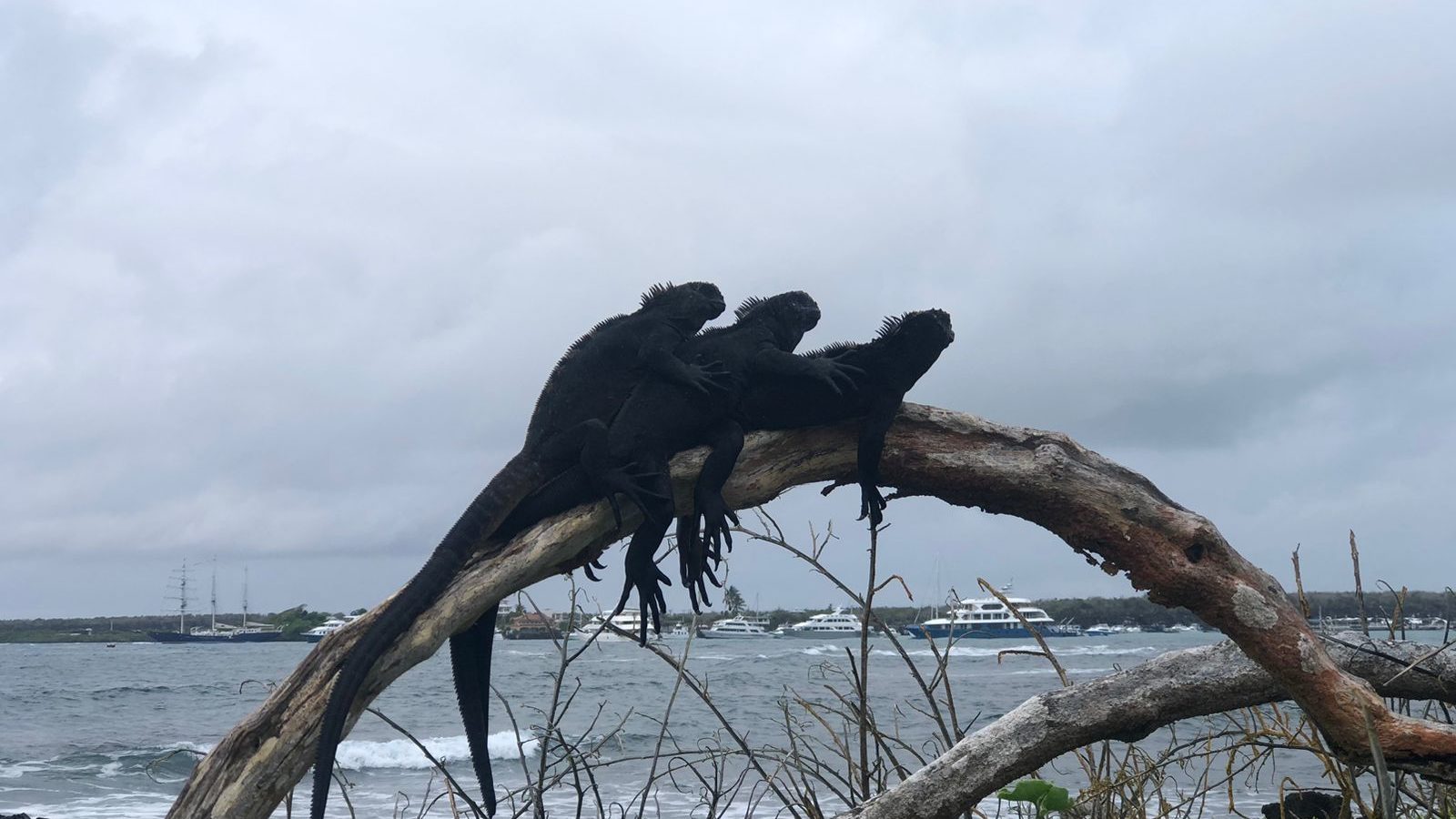
Hatchlings typically emerge between February and April, although you might still catch a glimpse of younger iguanas a bit later on Isabela Island. During this season, beaches and lava fields are dotted with tiny iguanas sprinting between rocks as they learn to navigate their new world.
How to Watch Marine Iguanas Responsibly
Even though marine iguanas are accustomed to visitors, the rules still matter, both for their safety and for the protection of the fragile coastlines they inhabit.
- Keep at least 2 meters (6 feet) away
- Never touch or approach them
- Avoid blocking paths or movement routes
- Be careful on lava rocks, they blend in perfectly
- Don’t disturb nesting sites
- In the water, give them space to surface and breathe
These simple steps help ensure that your trip supports conservation efforts rather than disturbing wildlife.
But even with their incredible resilience, marine iguanas, and all Galápagos iguana species, still face serious conservation threats. According to Mongabay, the land iguanas and marine iguanas of the archipelago are all pressured by two major challenges:
- Climate change, which disrupts food sources and nesting success.
- Invasive species, such as introduced rats, cats, and dogs that prey on eggs, juveniles, and even adults.
WWF highlights additional threats, including human disturbance and marine pollution. You can read more here:
https://www.worldwildlife.org/species/marine-iguana/
If you’d like to support conservation efforts on the islands, organizations such as the Galápagos Conservation Trust work directly with local partners to protect iguana habitats and restore island ecosystems:
https://galapagosconservation.org.uk/support-us/donate/
Ready to meet the world’s only ocean-swimming lizard? Plan your Galápagos adventure and encounter these extraordinary island icons up close on a Galakiwi tour.