
July 20, 2026
Lava, Lava, Lava: 3 Unique Galapagos Lava Animals
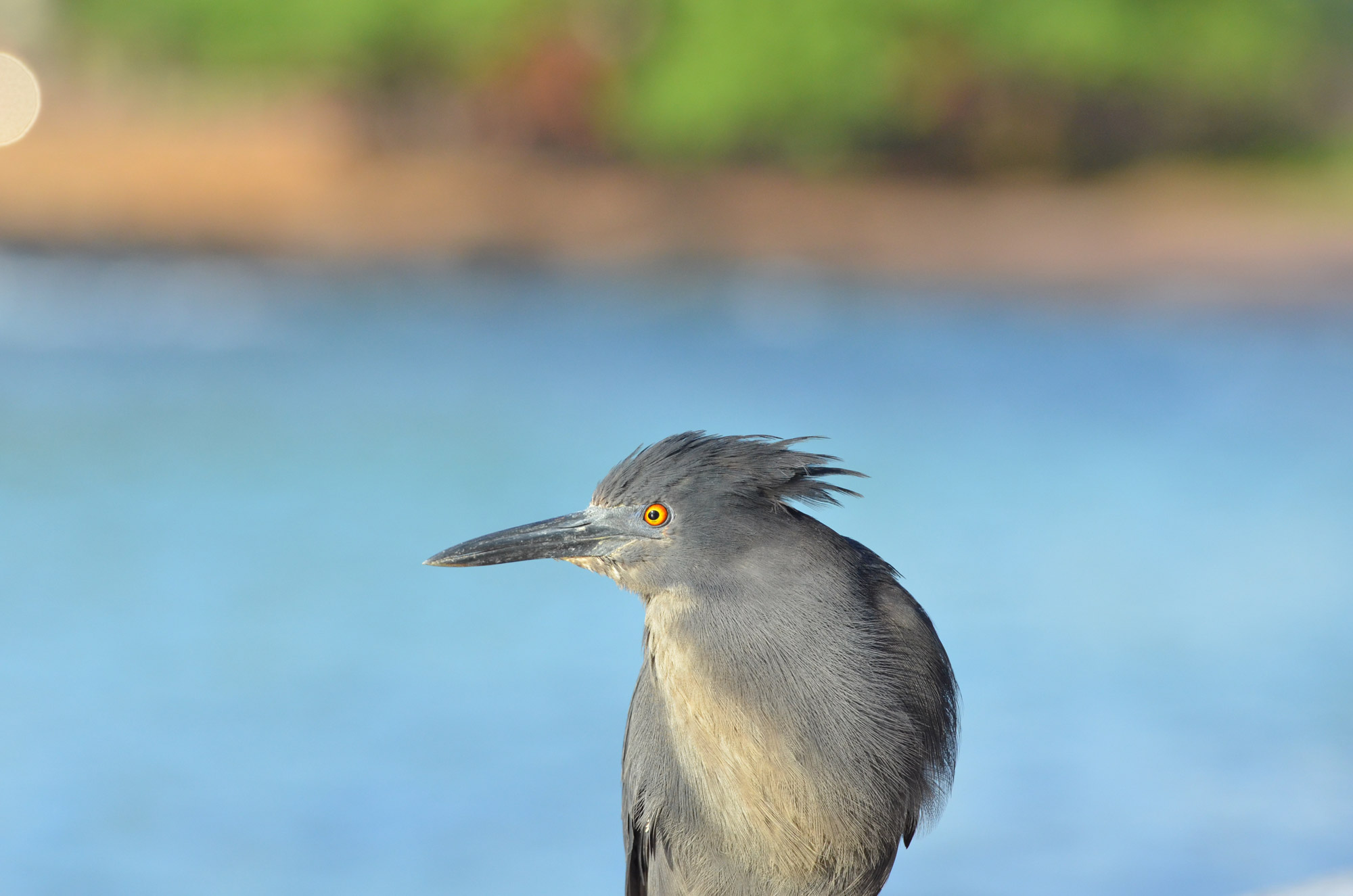
Galápagos lava animal test time! Can you name three lava-named animals that are endemic to the Galápagos Islands?
If not, don’t worry, you’re about to meet them.
The Galápagos Islands were formed by volcanic activity and continue to be shaped by it today. Across the archipelago, black lava fields stretch toward the ocean, creating landscapes that can feel almost otherworldly. Yet despite these seemingly harsh conditions, wildlife has found remarkable ways to thrive.
Some species have become so closely associated with these volcanic environments that “lava” is part of their common name.
With a keen eye, you’ll have a good chance of spotting all three of the animals featured below on a Galápagos land tour. Lava-lined coastlines, rocky shorelines, and volcanic trails are some of the best places to look for these unique creatures, each of which tells its own story about adaptation and survival in the islands.
Let’s see how many you’ve already met.
1. Lava Lizards
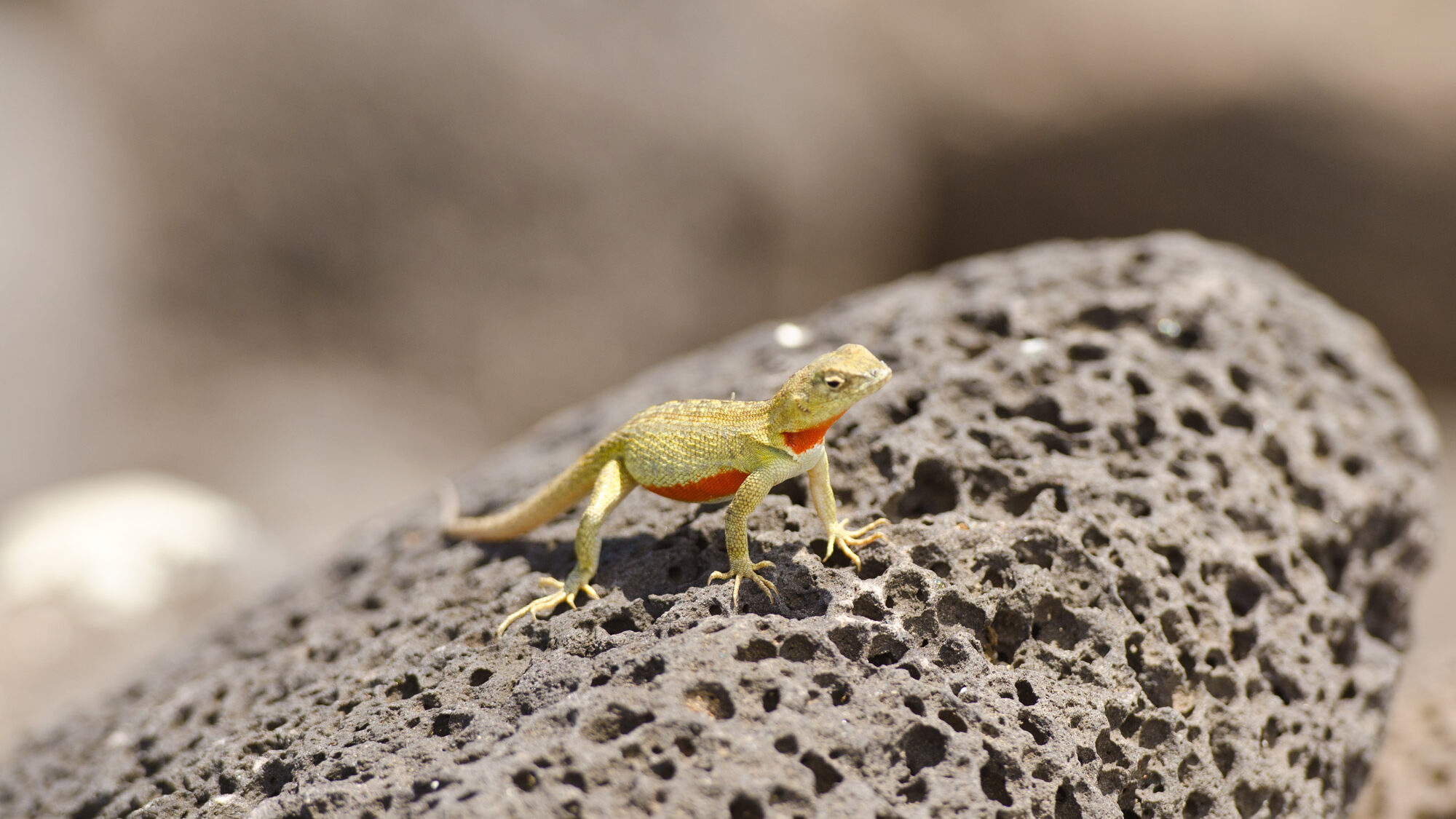
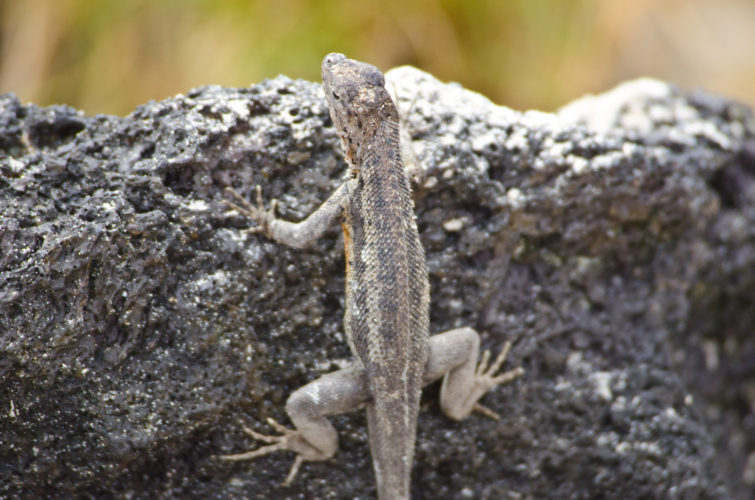
Lava lizards are among the most commonly seen wildlife species in the Galápagos, but they’re also some of the easiest to overlook.
These small reptiles earned their name because they are often found basking on the volcanic rocks and lava fields that cover much of the archipelago. You’ll commonly spot them darting across hiking trails, sunning themselves on lava rocks near beaches, or even exploring streets and gardens in some island towns.
What makes lava lizards especially interesting is that they have evolved differently on different islands. There are several species of Galápagos lava lizards, and many are endemic to a single island. This means a lava lizard on San Cristóbal may look slightly different from one on Santa Cruz or Isabela.
If you’re traveling between islands on a Galápagos land tour, try paying close attention to the lava lizards you encounter. Comparing their colors, patterns, and size can provide a fascinating glimpse into the same evolutionary processes that inspired Charles Darwin’s observations in the islands.
Lava lizards are also known for their entertaining behavior. Males can often be seen performing “push-ups” to defend their territory, while females of some species develop reddish or orange-colored heads during certain periods.
Despite their small size, lava lizards are an important part of the Galápagos ecosystem and are considered a conservation success story, with healthy populations found across many islands.
Where to look:
- Visitor sites with volcanic landscapes
- Lava trails and hiking paths
- Rocky shorelines and beaches
2 – Lava Herons
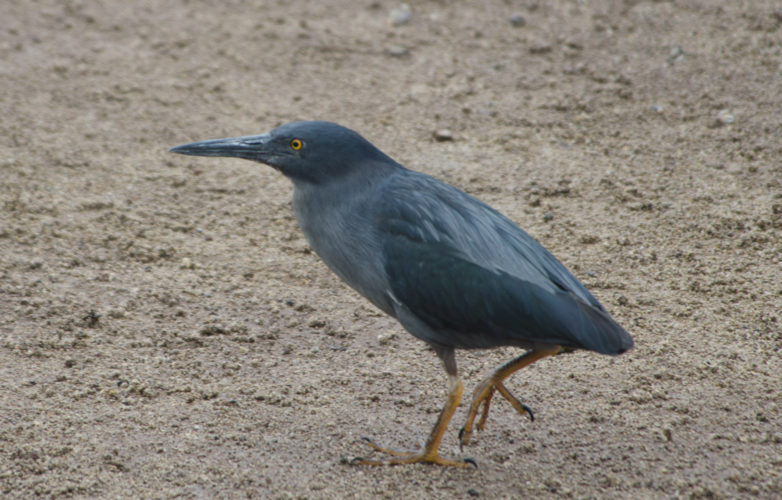
The lava heron, also known as the Galápagos heron, is one of the archipelago’s most unique coastal birds. Found only in the Galápagos Islands, these medium-sized herons are a familiar sight along rocky shorelines, lava pools, mangroves, and coastal trails.
Lava herons tend to be remarkably calm. Travelers can sometimes observe them standing motionless along the water’s edge, patiently watching for their next meal.
Their hunting strategy relies on patience rather than speed. A lava heron may remain perfectly still for several minutes before suddenly striking at a small fish, crab, or other marine prey. Watching one hunt can be a fascinating reminder that wildlife encounters in the Galápagos are often about behavior as much as appearance.
Lava herons typically nest among lava rocks, coastal vegetation, or mangrove areas. They are also known for forming long-term pair bonds, with males and females often remaining together for many years and working together to build and defend their nests.
Where to look:
- Rocky shorelines and lava pools
- Coastal walking trails
- Mangrove habitats
- Beaches and small bays throughout the islands
Although their populations are considered stable, lava herons remain an important endemic species and another example of the remarkable wildlife that has evolved in isolation in the Galápagos.
3 – Lava Gulls
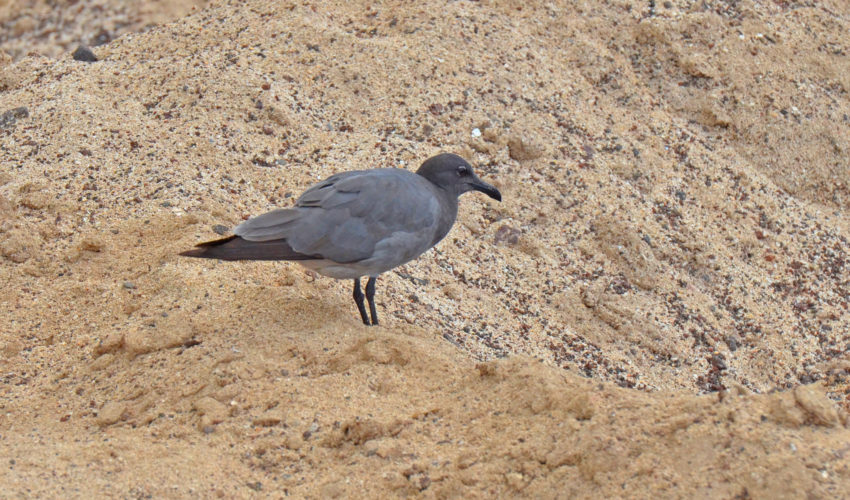
Another endemic bird found only in the Galápagos Islands, the lava gull is one of the rarest gull species in the world.
At first glance, it may not seem as eye-catching as some of the archipelago’s more famous birds. Its dark gray plumage, black head, and subtle coloring allow it to blend into the volcanic coastlines and rocky shorelines where it spends much of its time. But for birdwatchers and wildlife enthusiasts, spotting a lava gull is often a memorable moment.
Scientists estimate there are only around 300 breeding pairs in the Galápagos, making the species vulnerable and one of the most restricted gull species on Earth. Unlike many gulls found elsewhere in the world, the lava gull exists only within the Galápagos archipelago, making every sighting special.
The reasons behind their low population are still being studied, but their limited range and naturally small numbers make them particularly important from a conservation perspective. Fortunately, the Galápagos National Park and Marine Reserve help protect the habitats these birds depend on.
Like the lava heron and lava lizard, the lava gull is another example of how wildlife has adapted to the volcanic environment of the islands. Their darker coloration helps them blend into the lava-covered coastlines where they hunt and nest, a useful adaptation in a landscape dominated by black volcanic rock.
While they may not be the most colorful birds in the Galápagos, they are certainly among the most unique.
Where to Look
- Rocky shorelines and coastal lava fields
- Beaches and small bays on Santa Cruz, San Cristóbal, and Isabela
- Harbors and waterfront areas where seabirds gather
- Visitor sites on Genovesa Island, one of the best birdwatching destinations in the Galápagos
Because lava gulls are relatively uncommon, sightings are never guaranteed. However, keeping an eye on coastal areas and listening to your guide’s recommendations can greatly improve your chances of spotting one during your Galápagos land tour.
Why So Many Galápagos Species Are Associated with Lava
To understand why so many Galápagos animals are associated with lava, it helps to understand how the islands were formed.
The Galápagos Islands were created by volcanic activity as the Nazca tectonic plate slowly moved eastward over a geological hotspot deep beneath the Pacific Ocean. Over millions of years, repeated eruptions formed the islands that make up the archipelago today.
The result is a landscape unlike almost anywhere else on Earth. Black lava fields stretch toward the ocean, rugged coastlines rise from the sea, and volcanic rock shapes everything from hiking trails to nesting sites and shorelines.
For wildlife, these landscapes are more than just scenery. They are habitats.
Over thousands of years, many Galápagos species have adapted to life among lava rocks, volcanic coastlines, and harsh island conditions. Some use lava fields for shelter, others nest among volcanic rocks, and many have evolved colors and behaviors that help them survive in these unique environments.
The lava lizard, lava heron, and lava gull are all examples of how wildlife has adapted to the volcanic character of the islands. Their names reflect the close relationship they have with the habitats that surround them.
A field of lava rocks may seem like an empty volcanic landscape at first glance, but a closer look often reveals some of the most fascinating Galápagos wildlife in the archipelago hidden among the dark terrain.
If you’re interested in experiencing this incredible wildlife firsthand, explore our Galápagos land tours or browse more of our blog articles to learn about the animals, landscapes, and local stories that make the islands so unique.
| |