
May 6, 2026
What happened to the Masked Booby in the Galapagos?
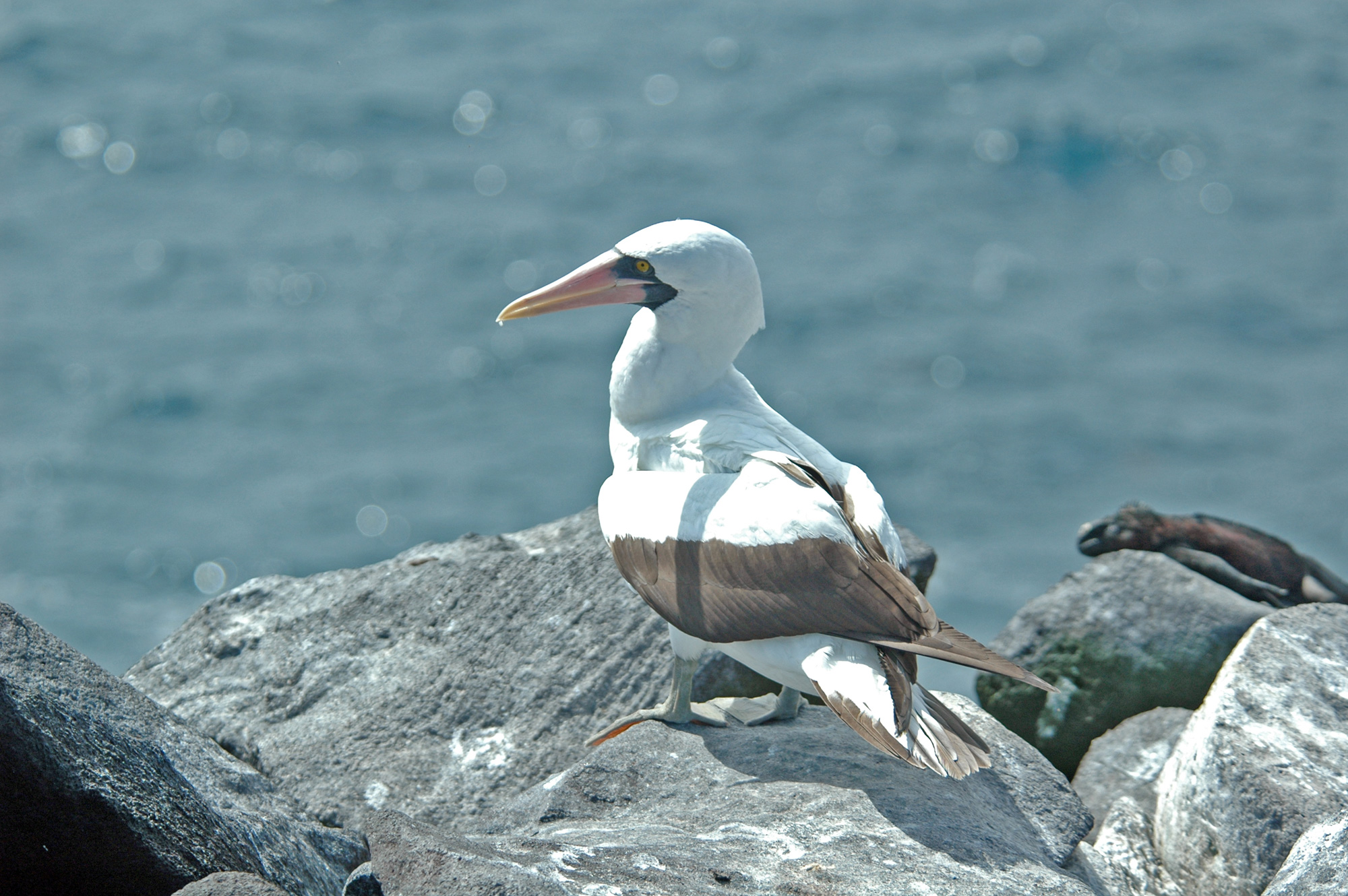
If you’ve spent time exploring the Galápagos, you’ve likely seen one of its most iconic seabirds perched along cliffs or soaring above the ocean. For many years, guides would point to a striking white bird with a dark “mask” and call it a Masked Booby.
Today, however, most naturalist guides will introduce that same bird by a different name: the Nazca Booby.
So what changed?
A Closer Look at a Familiar Seabird
Boobies are a group of seabirds well known in the Galápagos, often recognized for their distinctive features and behaviors. Alongside the famous Blue-Footed and Red-Footed Boobies, this third species has always been part of the islands’ coastal landscapes.
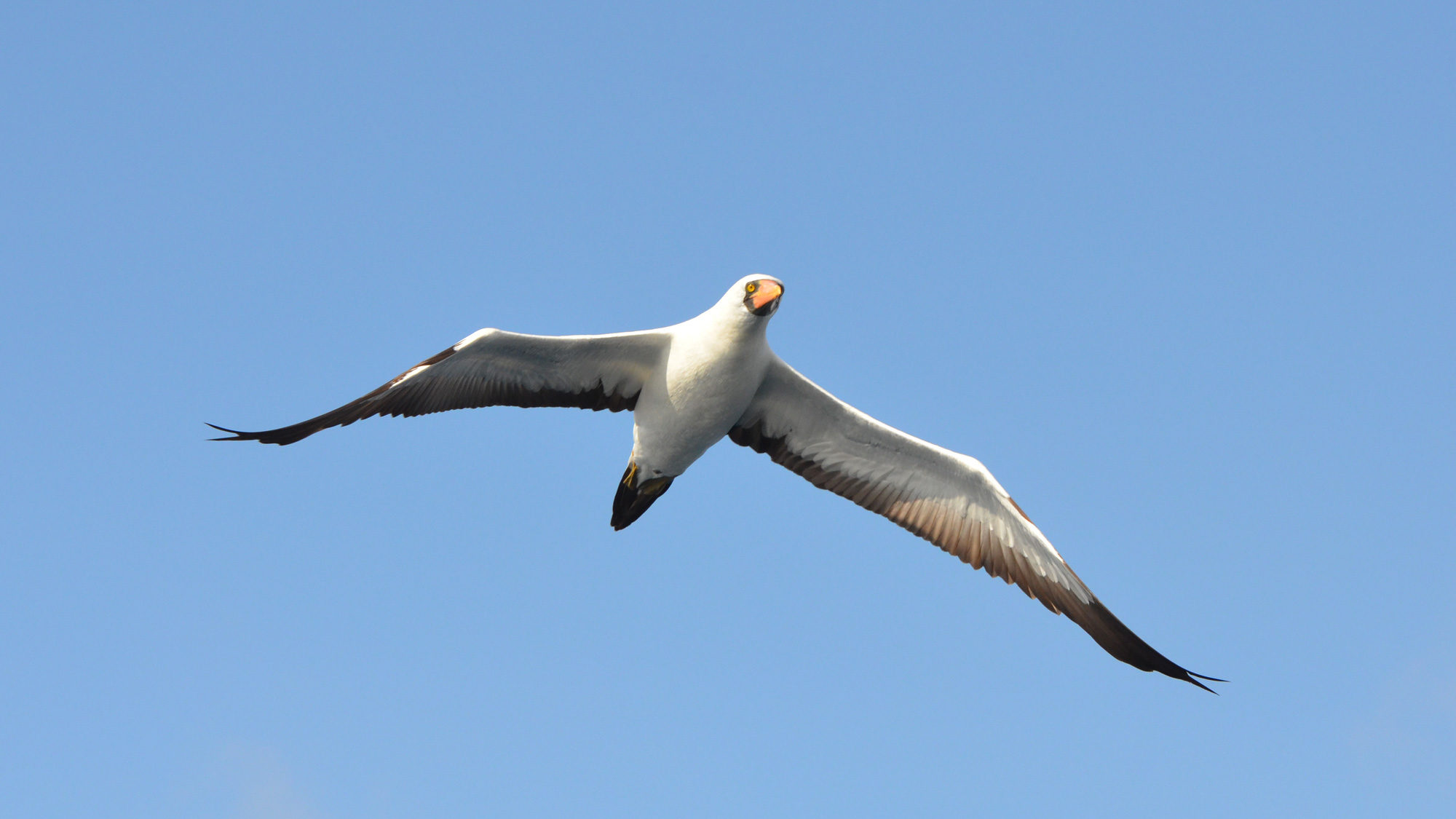
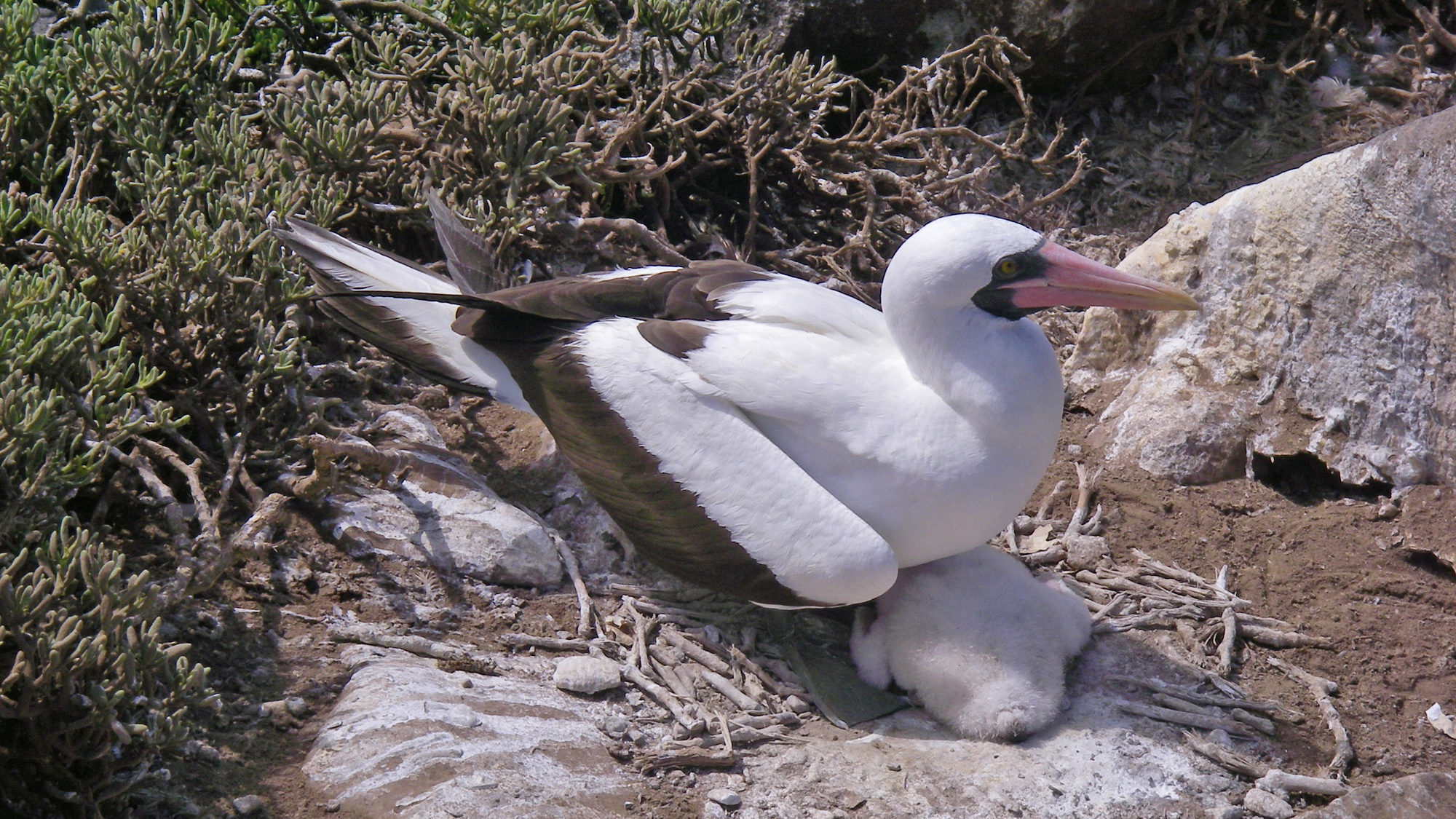
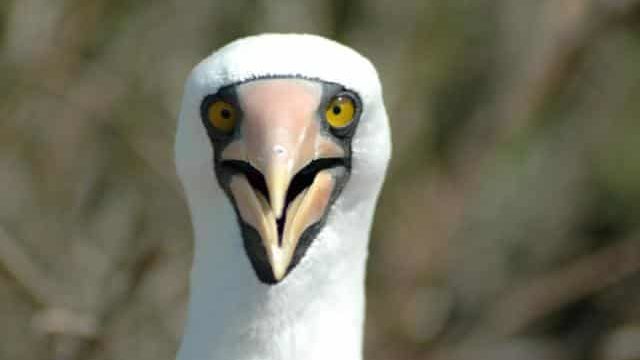
At first glance, Nazca Boobies can look very similar to what was once called the Masked Booby. Adults are mostly white with a dark facial mask, while younger birds appear quite different, with brown plumage on the head and upper body, sometimes mixed with lighter patches. One detail naturalist guides often point out is the beak color. As Nazca Boobies mature, their beaks develop orange or pinkish tones, which helps distinguish them from true Masked Boobies, whose beaks tend to remain more yellow.
When Science Took a Second Look
For much of the 20th century, the Nazca Booby was considered a subspecies of the Masked Booby. This meant that calling it a Masked Booby wasn’t entirely incorrect, it simply reflected what science understood at the time.
But as research advanced, scientists began to notice subtle differences.
In the late 1990s, observations on remote islands like Clipperton, far out in the Pacific away from the Galapagos, revealed something interesting: birds identified as Masked and Nazca Boobies were not interbreeding, even when they shared the same environment. This raised questions about whether they were truly the same species.
Further studies looked at their behavior, nesting habits, and eventually their genetics. By the early 2000s, enough evidence had emerged to suggest they were distinct. In 2011, genetic research confirmed it, the Nazca Booby is its own species, having diverged from the Masked Booby possibly as far back as a million years ago.
So, Where Is the Masked Booby?
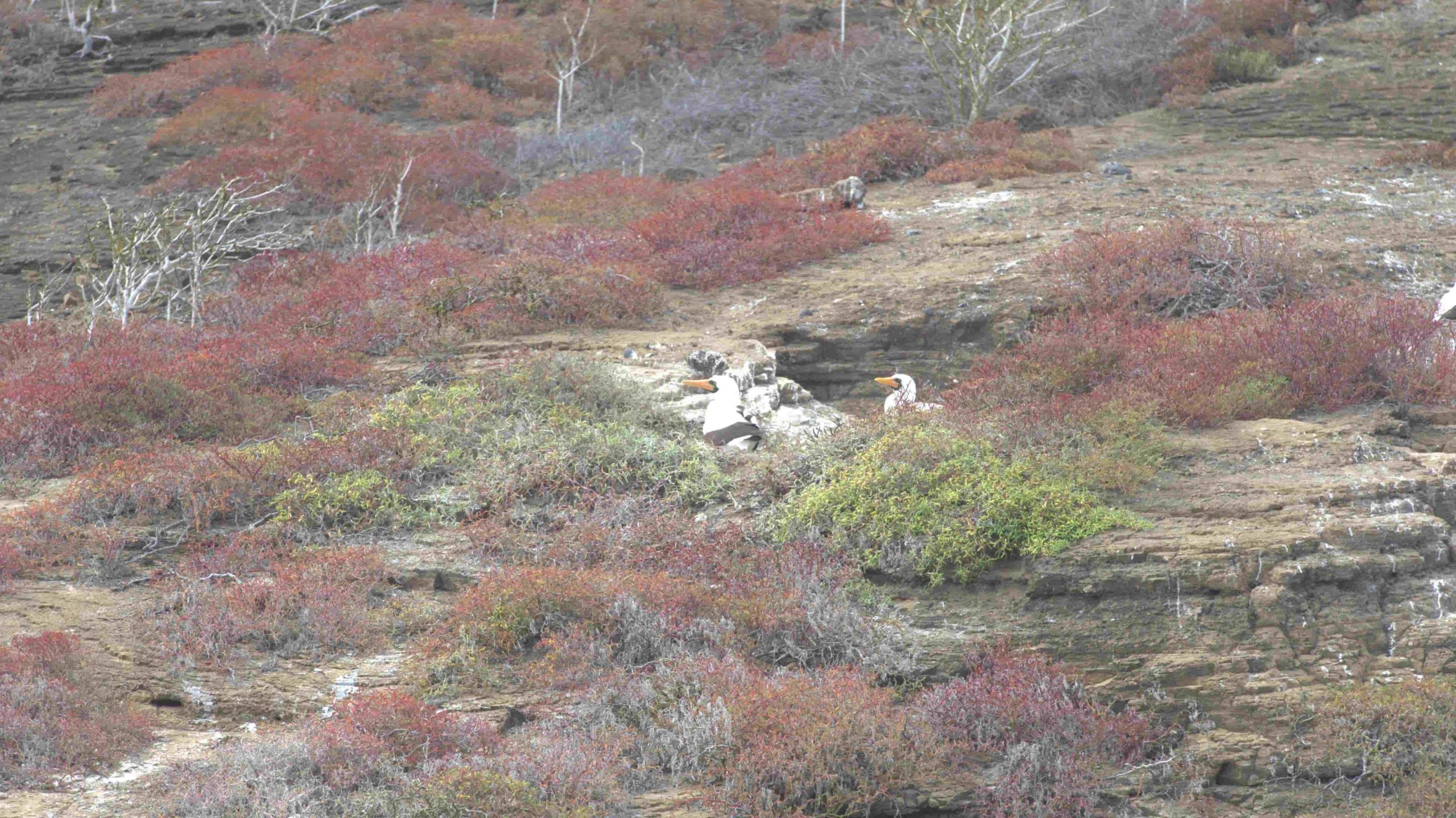
While the ranges of these two species can overlap in parts of the Pacific, in the Galápagos Islands, the seabird you’re most likely to encounter is the Nazca Booby.
True Masked Boobies are rarely seen in the archipelago, as they tend to nest and live on more remote islands. This is why modern guides in the Galápagos now refer to this bird correctly as the Nazca Booby.
If you come across older guidebooks or websites mentioning Masked Boobies in the Galápagos, they’re reflecting an earlier understanding of the species.
What Travelers Often Notice
One of the interesting things about encountering Nazca Boobies in the Galápagos is how approachable and visible they can be, always at a respectful distance, of course.
They are often seen:
- Nesting along cliffs and rocky slopes
- Gliding above coastal waters
- Resting in open, exposed areas
Watching their behavior, whether it’s nesting, feeding, or interacting with a mate, offers a small window into the complexity of island ecosystems.
Moments like these are often where guided interpretation makes a difference, helping travelers understand not just what they’re seeing, but why it matters.
A Reminder of How Nature Evolves
The story of the Nazca Booby is a good example of how our understanding of the natural world continues to evolve. What was once considered a single species is now recognized as two, shaped by time, isolation, and adaptation.
In a place like the Galápagos, where evolution is part of the story everywhere you look, this kind of discovery feels especially fitting.
Want to Learn More About Nazca Boobies?
If you’re curious to observe Nazca Boobies in their natural habitat, many coastal visitor sites in the Galápagos offer opportunities to see them nesting or soaring above the ocean.
On land-based trips, travelers often visit areas where these birds can be seen alongside other species, with guides explaining their behavior, nesting patterns, and role within the ecosystem.
| |