
September 9, 2026
Santa Cruz Island, Galápagos: A Complete Travel Guide

Santa Cruz Island is often one of the first places travelers encounter when visiting the Galápagos. It is home to Puerto Ayora, one of the archipelago’s largest towns, and serves as an important center for tourism, conservation, transportation, and local life.
But Santa Cruz is much more than a convenient starting point.
Travel from the coast into the highlands and the scenery changes dramatically. Dry coastal landscapes give way to greener vegetation, agricultural areas, lava formations, and the habitat of one of the Galápagos‘ most famous residents: the giant tortoise.
You can spend a morning exploring wildlife, an afternoon learning about conservation, and an evening experiencing the restaurants, waterfront, and everyday rhythm of Puerto Ayora. For travelers on a Galápagos land-based tour, few places demonstrate quite so clearly how wildlife, conservation, community, and travel come together in the inhabited islands.
Santa Cruz may be where many Galápagos journeys begin, but it shouldn’t simply be treated as somewhere to pass through after landing at Baltra. Give it time, and you’ll discover an island with enough wildlife, landscapes, activities, and local character to be explored in its own right.
Why Visit Santa Cruz Island?
Santa Cruz stands out for the variety of experiences it offers within one island. You can encounter giant tortoises in the highlands, explore beaches and coastal environments, learn about conservation, spend time experiencing everyday life in Puerto Ayora, and join excursions to surrounding visitor sites.
That variety is what makes Santa Cruz so special. Wildlife, conservation, community, and adventure are all within easy reach, so you can experience different sides of the Galápagos without having to travel far.
Its central location also makes Santa Cruz an important connection point for excursions to surrounding visitor sites and onward travel through the archipelago.
For land-based travelers, this combination of nature, community, and accessibility to different experiences makes Santa Cruz a particularly versatile island.
Iconic Wildlife of Santa Cruz Island
One of the pleasures of exploring Santa Cruz is seeing how the wildlife changes as you move from the coast into the greener highlands. Some encounters happen at dedicated visitor sites, while others may appear unexpectedly as you explore.
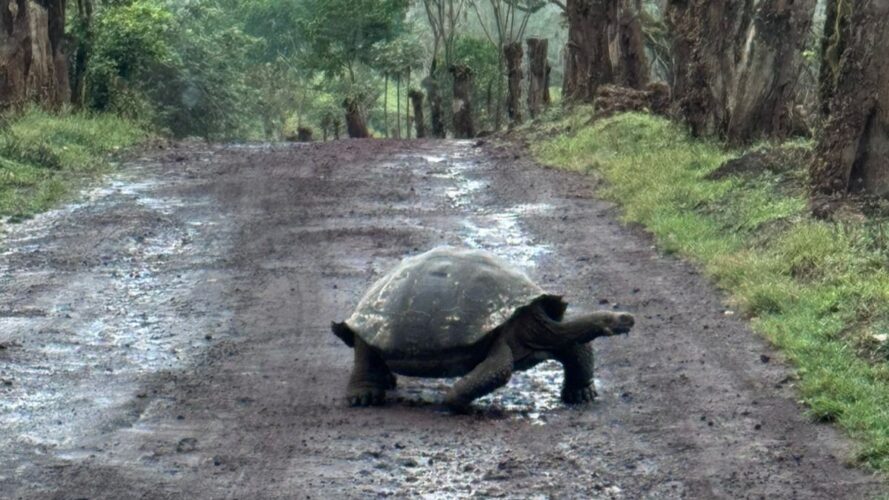
Giant Tortoises in the Highlands
Giant tortoises are central to the Santa Cruz wildlife experience.
In the highlands, travelers can visit areas where these remarkable animals roam freely through their natural habitat. You might find one slowly crossing a grassy area, feeding among the vegetation, or resting in the shade. Exploring with a naturalist guide adds another layer to the experience, helping you understand how the highland environment supports the tortoises, as well as their movements, behaviour and life cycle.
Marine Iguanas and Coastal Wildlife
Head back toward the coast and the wildlife changes.
Marine iguanas can often be seen warming themselves on dark volcanic rocks after feeding in the ocean, while sea lions may appear resting along the shore or swimming nearby. These encounters are part of what makes Santa Cruz interesting to explore, particularly because coastal wildlife can sometimes appear beyond scheduled visitor sites.
Darwin’s Finches and Highland Birds
Santa Cruz’s greener areas provide habitat for Darwin’s finches and other land birds.
Many finch species can be surprisingly difficult to distinguish at first glance. This is where exploring with a naturalist guide becomes especially valuable. Differences in beak shape, calls, feeding behavior, and habitat can reveal much more than simply spotting a small bird in the vegetation.
Marine Wildlife
The waters around Santa Cruz add another layer to the island’s wildlife diversity. Depending on the location, activity, and conditions, snorkeling and coastal excursions may bring opportunities to encounter sea turtles, rays, reef fish, sharks, and other marine species.
Also Look For…
As you explore Santa Cruz and surrounding visitor sites, keep an eye out for:
- Sally Lightfoot crabs along volcanic shorelines
- Brown pelicans around coastal areas
- Blue-footed boobies and other seabirds
- Rays moving through shallow or deeper waters
- Sea turtles while snorkeling
- Frigatebirds soaring overhead
Exactly what you see will depend on where you explore and the natural conditions during your visit. Wildlife sightings are never guaranteed, and that’s part of experiencing the Galápagos as a living ecosystem rather than a wildlife attraction.
Santa Cruz Island Facts
Before exploring Santa Cruz in more detail, here are a few useful facts to know:
- Main town: Puerto Ayora, the largest town in the Galápagos, with approximately 12,700 residents.
- Location: Central Galápagos archipelago.
- Airport access: Most travelers arrive via Seymour Airport on neighboring Baltra Island before continuing by ferry and road to Santa Cruz.
- Known for: Wild giant tortoises, Puerto Ayora, conservation and research, varied landscapes, and access to numerous visitor sites.
Santa Cruz is also an important center of community life in the Galápagos. Puerto Ayora is home to people working across tourism, fishing, conservation, education, transportation, hospitality, and many other local industries.
For travelers staying on the island, this offers an opportunity to experience another side of the Galápagos: not only as a protected destination, but as a place where people live, work, raise families, and build their lives alongside the natural environment.
From Volcanic Coast to Green Highlands
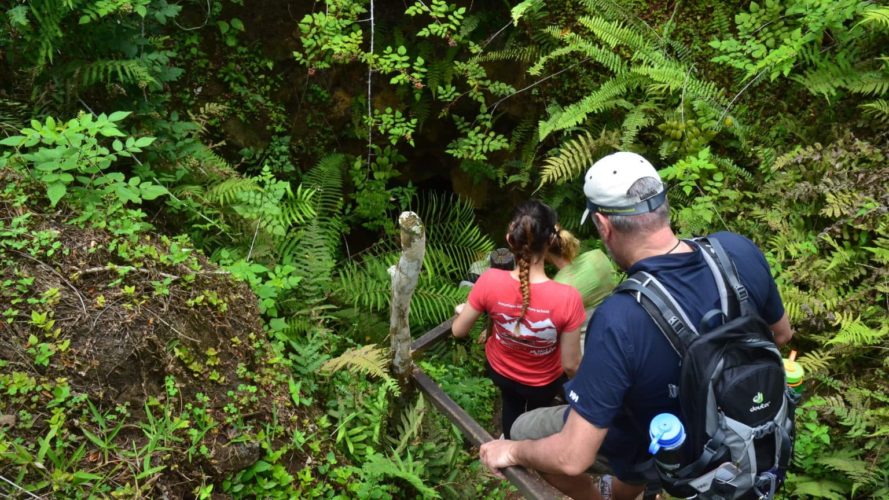
Santa Cruz was formed through volcanic activity, and that history is still visible across the island today. Lava formations, volcanic craters, tunnels, and rocky coastlines all reveal clues to the forces that shaped the landscape.
But one of the most interesting things for travelers is how dramatically Santa Cruz changes as you move inland.
Near the coast, conditions are generally warmer and drier, with exposed volcanic rock, cacti, and vegetation adapted to limited rainfall. As the road climbs toward the highlands, temperatures become cooler and moisture increases. The landscape gradually turns greener, with denser vegetation, farmland, and humid highland environments.
What begins as a dry volcanic landscape can soon feel lush and almost completely different, with the highlands revealing lava tunnels, farmland, giant tortoise habitat and dense vegetation.
These changes in elevation and moisture also create different habitats across Santa Cruz, helping support the remarkable variety of plant and animal life found on the island. They have also influenced where agricultural communities developed, adding another layer to the relationship between Santa Cruz’s landscape and the people who live here.
For travelers, the journey from coast to highlands is more than simply getting from one visitor site to another. It’s one of the clearest ways to see how geography and climate shape life in the Galápagos.
What Is There to See and Do on Santa Cruz Island?
One of Santa Cruz’s strengths, as we mentioned in the previous section, is the variety of experiences you can enjoy without traveling far. You can spend time in a lively island town, learn about conservation, walk among wild giant tortoises, explore the green highlands, and finish the day by the ocean.
Rather than simply checking attractions off a list, here are some of the experiences worth making time for and what you can expect from each.
Explore Puerto Ayora

Puerto Ayora is the main town on Santa Cruz, but it’s more than somewhere to sleep between excursions. Spending time here gives you a glimpse into the everyday rhythm of life in the Galápagos.
In the morning, the waterfront begins to fill with activity as boats come and go and residents head to work. During the day, cafés, shops, galleries, parks, and local businesses offer plenty to explore between activities. In the evening, restaurants fill and the town takes on a relaxed atmosphere.
You may also be surprised by the variety of locally owned businesses and Ecuadorian brands found around town. If you’d like to take something home from the islands, it’s worth looking beyond traditional souvenir shops and seeing what local makers, artists, and businesses have to offer.
Particularly good for: Land-based travelers who enjoy food, local culture, shopping, photography, and exploring on foot.
Visit the Charles Darwin Research Station
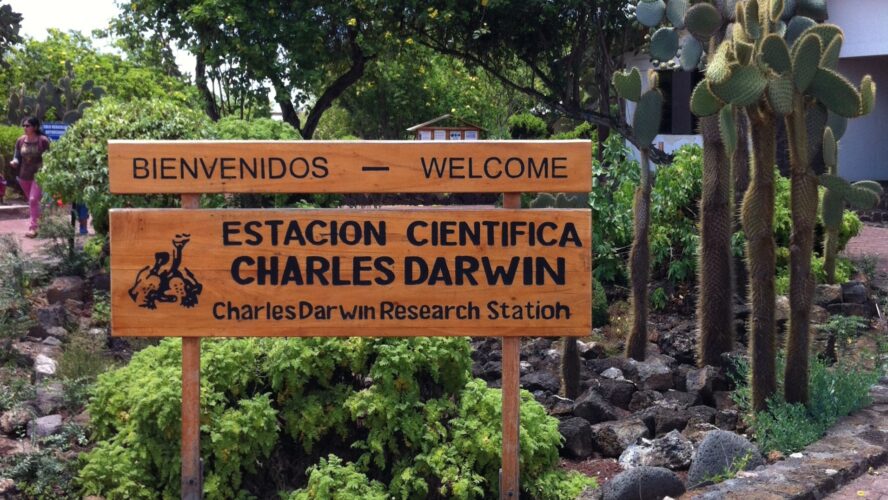
The Charles Darwin Research Station helps visitors understand something that can be easy to overlook when surrounded by extraordinary wildlife: protecting the Galápagos requires continuous scientific and conservation work. Visiting places like this also helps support those efforts.
A visit introduces you to research and conservation initiatives in the archipelago, including work connected to giant tortoises. Rather than simply seeing the wildlife, you will be able to understand some of the efforts taking place behind the scenes to study and protect it.
A visit to this important conservation site is included in many of our Galakiwi itineraries that explore Santa Cruz, helping provide context for the wildlife and ecosystems travelers experience throughout their journey.
Particularly good for: Families, students, conservation-minded travelers, and anyone who wants more context behind the wildlife they’re seeing.
See Giant Tortoises in the Wild
For many travelers, heading into the Santa Cruz highlands to see giant tortoises is one of the island’s defining experiences.
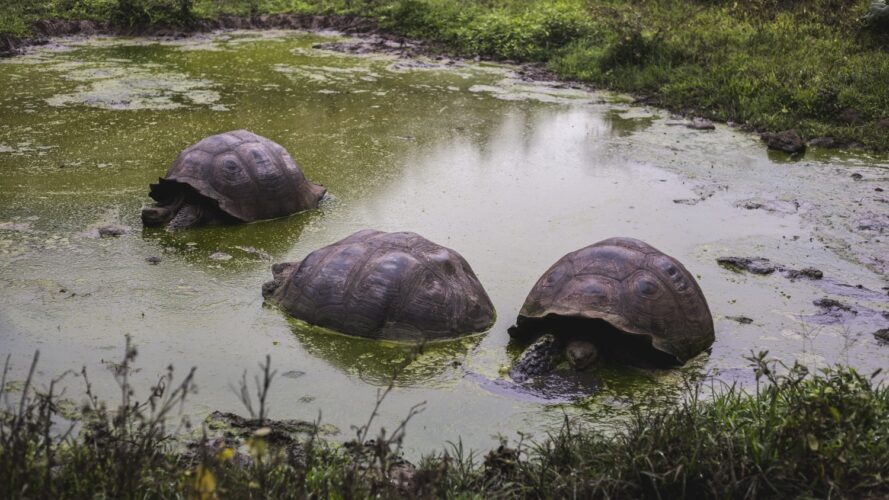
Part of the excitement begins before you even reach the reserve. As you travel higher into tortoise country, keep looking across the surrounding landscape. At certain times, there can be enough tortoises around that travelers start mistaking distant tortoises for large rocks, and large rocks for tortoises.
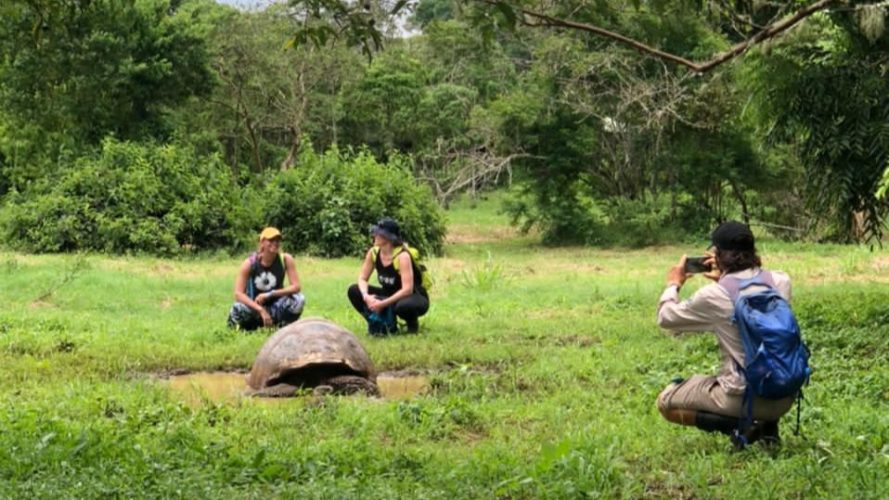
Once you’re walking through their habitat, the experience becomes wonderfully simple. You may watch an enormous tortoise slowly cross the vegetation, feed nearby, or rest in the mud while you observe from the required distance.
With a naturalist guide, the encounter also becomes an opportunity to understand how tortoises use the highlands, what you’re observing in their behavior, and the conservation challenges Galápagos tortoise populations have faced.
Particularly good for: Almost everyone, especially wildlife lovers, families, photographers, and first-time Galápagos visitors.
Explore More of the Highlands

Don’t make the mistake of thinking the Santa Cruz highlands are only about tortoises.
Depending on your itinerary, exploring farther can reveal lava tunnels, agricultural landscapes, native vegetation, farms, freshwater environments, and small local producers. These experiences show how dramatically the island changes as you move away from the coast.
They can also introduce another side of Santa Cruz life. Agriculture, local production, craftsmanship, and small businesses all form part of the highland communities, providing a different perspective from tourism-focused Puerto Ayora.
Particularly good for: Curious travelers interested in geology, food, agriculture, local culture, and slower exploration.
Discover Santa Cruz’s Coast
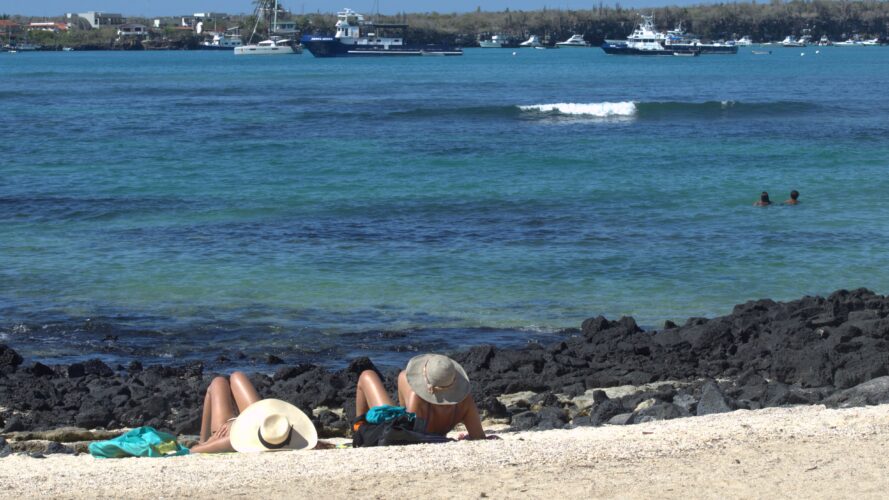
Santa Cruz’s coastline gives you plenty of opportunities to swap the green highlands for beaches, volcanic shores, and marine environments.
Depending on where you go and the day’s conditions, you might hike, swim, snorkel, kayak, watch wildlife, or simply spend some time beside the ocean.
Tortuga Bay is one of the best-known examples. Reaching it involves a walk rather than simply stepping out of a vehicle, which makes arriving at the broad stretch of coastline feel like part of the experience. We particularly enjoy making the walk later in the day, when it can be a wonderful way to slow down after a morning of exploring elsewhere on the island.
Particularly good for: Active travelers, beach lovers, families, photographers, and anyone who appreciates having some time to explore at a more relaxed pace.
Take a Day Trip to a Nearby Visitor Site
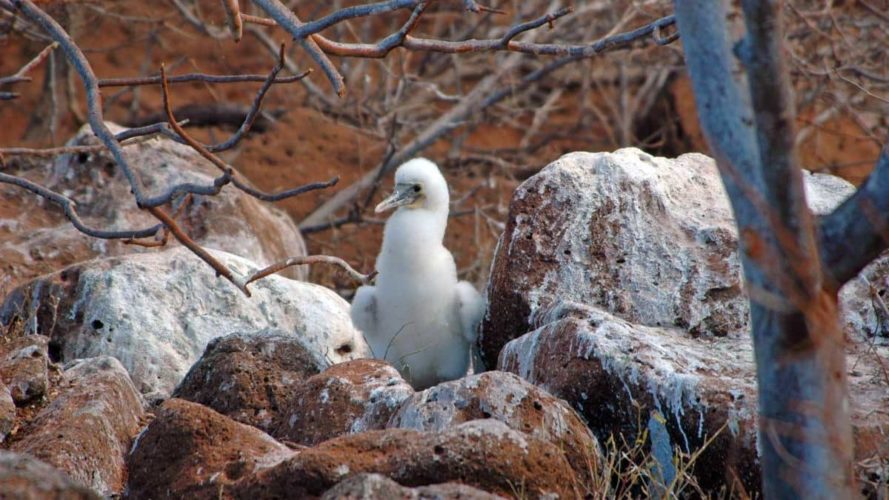
Santa Cruz’s central location also makes it possible to add experiences beyond the island without changing hotels.
Depending on your itinerary, a day excursion can take you to a nearby island or marine visitor site for snorkeling, wildlife watching, hiking, and the chance to explore a completely different environment. North Seymour, for example, is a popular option for experiencing abundant birdlife and a very different landscape from Santa Cruz.
Another popular excursion is Bartolomé, where dramatic volcanic scenery, the iconic Pinnacle Rock, and clear surrounding waters offer yet another perspective of the Galápagos. Together, these excursions show how staying on Santa Cruz can give travelers access to a wide variety of experiences while keeping the same comfortable base.
This variety is one of the advantages of spending several days based on Santa Cruz. One day might have you walking through green highlands among giant tortoises, while another takes you across the water to experience seabirds, marine wildlife, and volcanic landscapes elsewhere in the archipelago.
Particularly good for: Travelers with an extra day on Santa Cruz or those who want to experience greater variety during a land-based itinerary.
Where to Stay on Santa Cruz Island
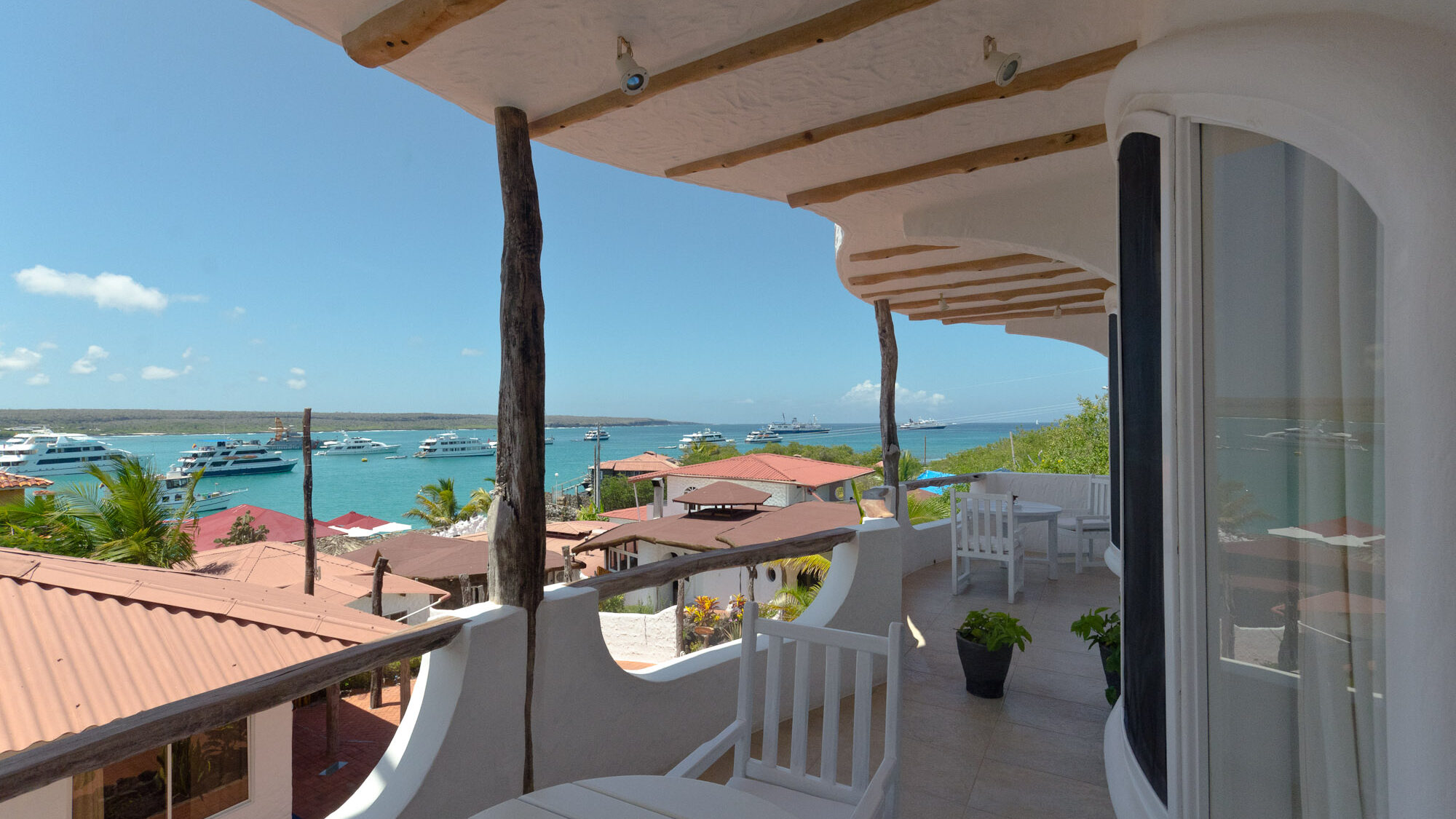
Most travelers staying on Santa Cruz choose Puerto Ayora, where you’ll find a wide range of hotels along with easy access to restaurants, shops, the waterfront, and departure points for many excursions.
For land-based travelers, location makes a real difference. Staying in town means the day’s experience doesn’t necessarily end when you return from an excursion. You can walk out for dinner, explore the waterfront, browse local shops, or simply enjoy Puerto Ayora at your own pace.
At Galakiwi, we carefully select accommodations based on comfort, service, location, and, of course, local ownership. We particularly love coastal stays where possible, where the sound of the ocean and early morning birdlife become part of the experience. There’s something special about starting the day noticing seabirds outside before heading off to explore the highlands or setting out on the water.
Staying on Santa Cruz also gives you flexibility. You can use Puerto Ayora as a base for exploring different parts of the island, while selected day trips allow you to experience nearby marine and visitor sites without changing hotels.
That’s one of the advantages of experiencing Santa Cruz by land. You’re not simply visiting its attractions during the day. You have time to settle into the island, experience the rhythm of Puerto Ayora, and enjoy the quieter moments between excursions.
How Do You Get to Santa Cruz Island?
For most international travelers, reaching Santa Cruz begins with a flight from mainland Ecuador. The arrival involves a few different stages, but when everything is organized in advance, the connections flow together naturally.
Step 1: Fly to Baltra
Flights from Quito or Guayaquil arrive at Seymour Airport (GPS) on Baltra Island, just north of Santa Cruz.
Baltra and Santa Cruz are separated by the narrow Itabaca Channel, so landing at the airport is only the first part of your arrival.
Step 2: Cross the Itabaca Channel
From the airport, you’ll travel to the Itabaca Channel and make the short ferry crossing to Santa Cruz.
This is where you officially arrive on the island and continue south toward Puerto Ayora.
Step 3: Travel Across Santa Cruz to Puerto Ayora
From the channel, the journey to Puerto Ayora takes approximately an hour by road, depending on traffic and your transfer arrangements.
Although the process of airport, transfer, ferry, and road journey can sound complicated when you’re planning it for the first time, it’s a familiar route for those of us who operate trips in the islands. On a Galakiwi tour, these connections are coordinated in advance, so you don’t have to work out each stage as you go.
The transfer is also your first opportunity to see just how varied Santa Cruz is. As you travel south, the dry landscapes around Baltra gradually give way to the greener highlands before you descend toward Puerto Ayora and the coast.
Santa Cruz can also be reached from other inhabited islands by inter-island speedboat or flight, depending on your itinerary. When traveling on a multi-island Galakiwi tour, these connections are coordinated as part of the journey.

Santa Cruz as Part of a Multi-Island Galápagos Trip
Santa Cruz has enough variety to reward a few days of exploration, but one of the best ways to understand the Galápagos is to experience how different the islands are from one another.
On a multi-island land-based trip, Santa Cruz often becomes an important part of a wider journey. Its green highlands, giant tortoises, active Puerto Ayora waterfront, and conservation centers create a very different experience from the quieter beaches and volcanic landscapes of Isabela or the sea lion-filled waterfront and coastal experiences of San Cristóbal.
Moving between these islands allows you to see those contrasts for yourself. Landscapes change, wildlife opportunities vary, and each island community has its own atmosphere.
At Galakiwi, our multi-island itineraries are designed around that diversity. Rather than treating Santa Cruz simply as an arrival or departure point, we build in time to experience what makes it distinctive before continuing to other parts of the archipelago.
Traveling this way also means returning to island communities each evening. You experience the Galápagos during guided excursions but also in the quieter hours between them, whether that’s an early morning waterfront walk, or simply watching island life unfold around you.
Why Santa Cruz Is More Than a Starting Point
It’s easy to think of Santa Cruz simply as the island where your Galápagos adventure begins or ends.
But spend a few days here and you’ll quickly see that it has its own story.
There are giant tortoises moving through the highlands, marine iguanas warming themselves along the coast, sea lions resting around the waterfront, and finches moving through the vegetation.
At the same time, there are restaurant owners, researchers, families, artisans, and other residents building their lives here.
That combination of wildlife, conservation, community, and everyday island life is what makes Santa Cruz so interesting.
For travelers choosing a land-based Galápagos experience, the island offers a chance to do more than visit famous sites. You can explore its landscapes, meet its wildlife, support local businesses, and experience what it feels like to spend time in a real Galápagos community.
If you’re ready to discover Santa Cruz and the other inhabited islands, explore Galakiwi’s land-based Galápagos tours or get in touch with our locally based team in San Cristóbal. We’d be happy to help you build an active, locally connected Galápagos adventure that fits the way you want to travel.
| |