
February 17, 2026
Wildlife: 5 Iconic Species Unique to the Galapagos Islands
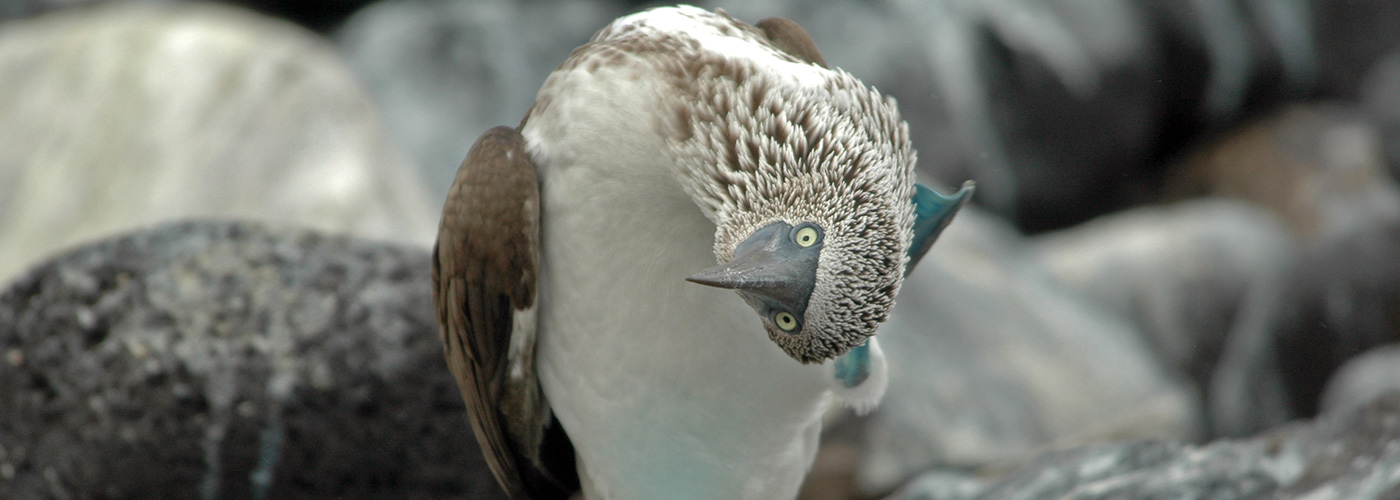
The Galápagos Islands are home to some of the most extraordinary wildlife on Earth. Shaped by isolation, time, and adaptation, the animals here have evolved in ways found nowhere else in the world. This unique biodiversity is what draws many travelers to the Galápagos Islands in the first place.
But after years of leading Galápagos adventure tours, we’ve noticed something interesting: travelers are often surprised by which animals become their personal favorites. Beyond the famous names, it’s the encounters, behaviors, and moments in the wild that leave the strongest impressions. Here are five of the most iconic Galápagos species, chosen time and again by travelers exploring the islands up close.
5 – Lava Lizards
Lava lizards don’t always top travelers’ “favorite wildlife” lists at first glance, but that often changes once our naturalist guides start sharing their story. These small, fast-moving reptiles are incredibly adaptable, and learning about how they survive in such a harsh volcanic environment quickly earns them a new level of appreciation.
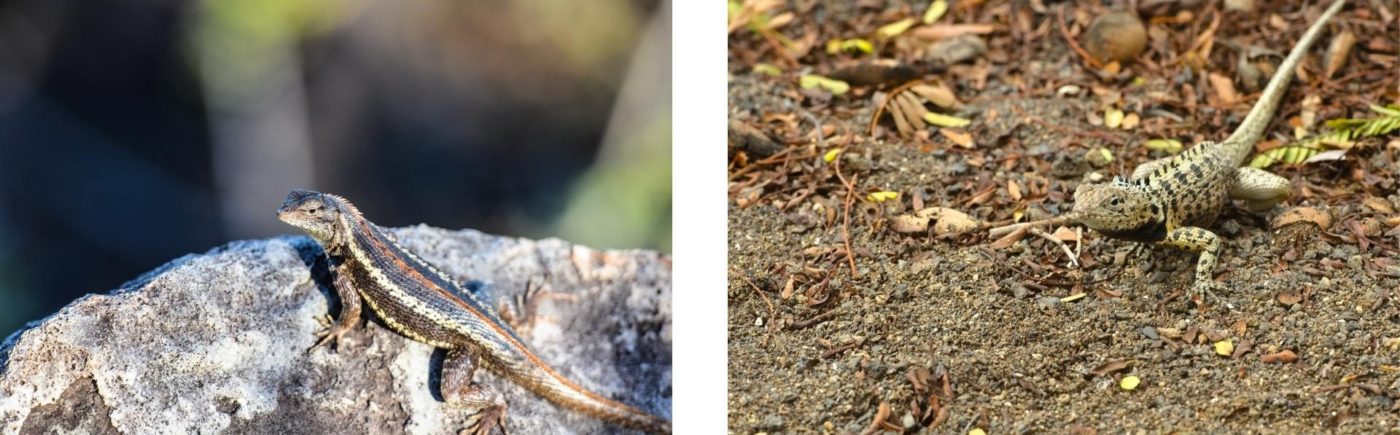
While some lava lizard species can also be found on the South American mainland, including coastal Peru, the Galápagos Islands are home to nine endemic species, meaning they exist nowhere else on Earth. Each island has shaped its own version, resulting in noticeable differences in size, color, and markings from one island to another.
That’s part of what makes spotting them so fascinating. With a closer look, you’ll begin to notice how distinct they are depending on where you are in the archipelago. Two endemic lava lizard species from different islands are shown above, can you spot the differences?
Once you start paying attention, you’ll realize lava lizards are everywhere, darting across lava rocks, basking in the sun, and quietly reminding us how evolution works on an island-by-island scale.
4 – Galapagos Sea Lions
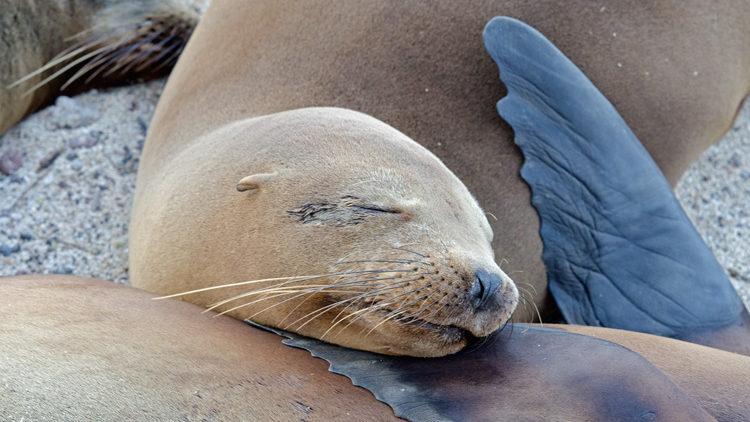
For many visitors, the endemic Galápagos sea lion earns the title of the most entertaining, and arguably the most charismatic, animal in the islands. They’re often one of the very first species travelers encounter, and sharing the water with them while snorkeling instantly makes any trip to the Galápagos Islands feel special.
On our 6-day Galápagos Land Tour and 10-day Galápagos Adventure Tour, sea lions are a constant presence. You’ll see them swimming near town, lounging on sandy beaches, and occasionally even blocking sidewalks as they nap in the shade. Their playful personalities are impossible to miss.
They can be noisy, with honks, barks, and snorts filling the air, but that only adds to their charm. From curious sea lion pups to dominant adults, each sea lion seems to have its own personality. While they may look slow and a bit clumsy on land (watching them walk is always amusing), in the water they are incredibly agile and graceful.
Snorkeling with Galápagos sea lions is often a top highlight of a trip to the Galápagos Islands. Their natural curiosity means they often swim right up to snorkelers, twisting, diving, and “playing” in the water, creating one of those unforgettable wildlife encounters that defines active adventures in the Galápagos.
3 – Blue-footed Boobies
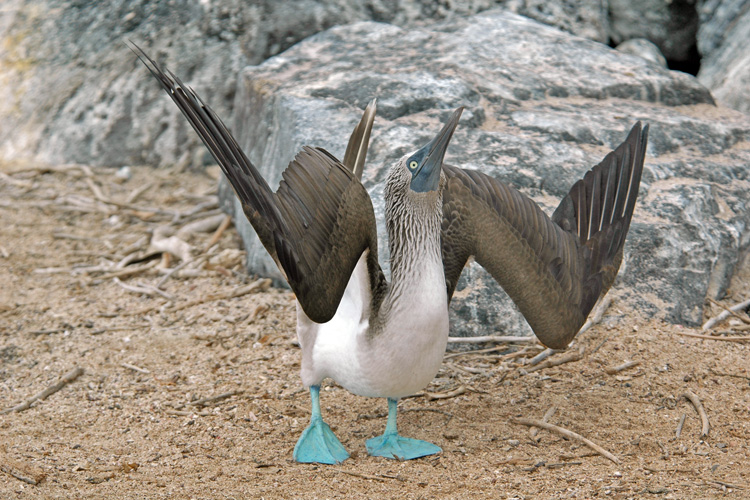
There are several booby species in the Galápagos Islands, all members of the booby family native to the eastern Pacific, but the blue-footed booby is without a doubt the crowd favorite. These charismatic birds can be found along the coastlines of most islands, often standing on lava rocks or nesting near coastal trails.
Blue-footed boobies are not endemic to the Galápagos; they can also be seen along the coasts of Ecuador, Peru, and even as far north as California. However, around half of the world’s blue-footed booby population breeds in the Galápagos, which is why sightings here are so common during a trip to the Galápagos Islands.
They are powerful and precise hunters, frequently spotted plunge-diving into the ocean to catch fish. One fun detail many travelers don’t know: their iconic blue feet don’t appear right away. Juvenile and young boobies actually have grayish feet, which gradually turn blue as the birds mature.
It’s no surprise that blue-footed boobies have become one of the unofficial symbols of the islands. Walk through any souvenir shop and you’ll find t-shirts, postcards, and artwork celebrating them. One popular local favorite is Patas Azules socks, a brand inspired by these birds and widely available throughout the islands. Even better, their sales help support beach cleanups in the Galápagos,making them a meaningful souvenir from your Galápagos islands tour.
Seeing blue-footed boobies up close, whether perched along the shore or diving offshore, is one of those classic wildlife moments that makes active adventures in the Galápagos so memorable.
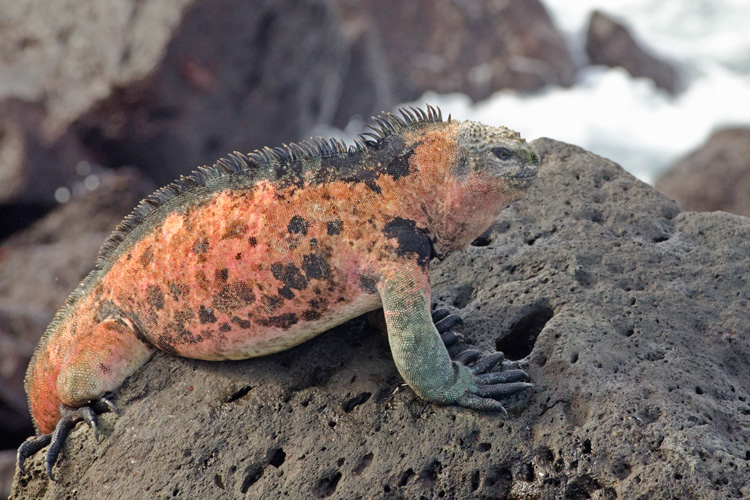
2 – Marine Iguanas
One of the truly iconic creatures of the Galápagos Islands, marine iguanas are found nowhere else on Earth. They are the only lizards in the world that have adapted to life in the sea, evolving to feed on algae growing on underwater rocks in the harsh volcanic environment.
It’s not unusual to see marine iguanas swimming out from shore and diving beneath the surface, propelling themselves through the water with their powerful, flattened tails. There are 11 distinct subspecies of marine iguanas in the Galápagos, each uniquely adapted to the island it inhabits.
Their strong claws allow them to grip lava rocks while grazing underwater, even as waves crash around them. They have compact, rounded heads that make feeding more efficient, and specialized glands that allow them to expel excess salt. This is why you’ll often see them with a crusty, white residue around their noses, salt sneezed out after feeding.
Marine iguanas can also be surprisingly colorful. Depending on the island, food availability, and whether it’s mating season, they may display bright hues, especially reds, along their bodies. Outside of breeding season, they are typically dark gray or black, blending perfectly into the lava landscape.
For many travelers on a Galápagos islands tour, marine iguanas quickly become a favorite. Strange, ancient-looking, and completely unique, they are a perfect example of the remarkable adaptations that make a trip to the Galápagos Islands so unforgettable.
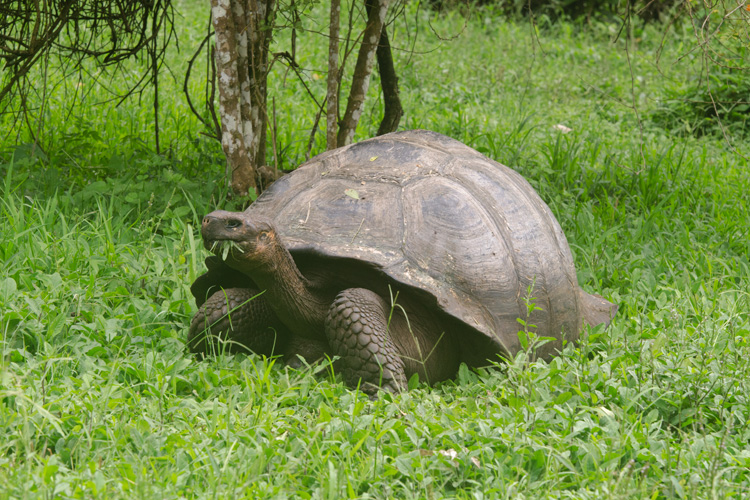
1 – Giant Tortoises
No surprises here, Galápagos giant tortoises consistently rank as the most iconic species of the islands and are a highlight of almost every Galápagos islands tour.
These ancient reptiles are true ecosystem engineers. By grazing, dispersing seeds, and shaping vegetation, Galapagos giant tortoises play a vital role in keeping Galápagos ecosystems healthy and balanced. Much of their natural habitat is protected and off-limits to visitors, but there are still special places where travelers can encounter them respectfully in the wild.
One unforgettable opportunity is hiking near Sierra Negra Volcano on Isabela Island, where giant tortoises can sometimes be seen slowly making their way across the landscape. We love including this hike on our active adventures in the Galápagos, and every now and then, the trail rewards us with sightings of giant tortoises, or even a land iguana, along the way.
For more reliable sightings, the highlands of Santa Cruz Island are the best option. Several private farms and reserves protect wide open fields and natural pathways where giant tortoises roam freely. Here, it’s common to see dozens of tortoises eating, resting, walking slowly through the grass, or cooling off in muddy ponds on warm days.
The Galápagos is also home to important conservation and research centers dedicated to protecting tortoise populations that were once severely impacted. The Charles Darwin Research Station on Santa Cruz Island is the most well-known site for an educational encounter, offering insight into breeding, reintroduction programs, and the long-term conservation of these remarkable animals.
For many travelers on a trip to the Galápagos Islands, standing face-to-face with a giant tortoise is a powerful moment, one that perfectly captures the timeless, evolutionary wonder of the Galápagos Islands.
Observing Galápagos wildlife is a privilege that comes with responsibility. Following National Park rules, keeping a respectful distance, and allowing animals to behave naturally helps protect these species and the fragile ecosystems they depend on. When we observe without interfering, we help ensure these extraordinary encounters remain possible for generations to come.
If you’re looking for a Galápagos active adventure that allows you to explore wildlife in a thoughtful, sustainable, and deeply connected way, discover our Galápagos land tours and experience the islands with care, curiosity, and purpose.