October 5, 2026
El Niño Live Updates
This content is available in English only
.jpg)
El Niño is a topic on many travelers’ minds right now. As a locally based operator in the islands, we thought it would be useful to share a local perspective alongside updates from scientific institutions and local authorities, helping adventurers stay informed as conditions develop.
Please note that the observations shared in this update are local observations rather than scientific measurements. They give us another perspective to follow alongside the broader scientific picture.
El Niño is a climate pattern in the Pacific Ocean that influences ocean temperatures, currents, weather, and wildlife across the Galápagos Islands. While El Niño is not a new phenomenon, scientists have only been studying it systematically for around 150 years.
The Galápagos are naturally influenced by different ocean currents throughout the year. The cold Humboldt Current brings nutrient-rich waters that support the islands' incredibly productive marine ecosystem. During an El Niño event, warmer ocean temperatures can reduce nutrient availability and change where marine species feed and gather.
El Niño does not happen every year, and predicting exactly how an event will develop can be difficult. That is why we are following the situation month by month.
For a deeper explanation of how El Niño works and why it occurs, read our full guide to the El Niño phenomenon.
What Is Different About 2026?
An El Niño event is developing in the Pacific, with forecasts indicating that conditions could strengthen through late 2026 and potentially continue into 2027.
Because conditions can change over time, we will continue monitoring the latest information and sharing updates throughout the season.
So, what is happening in the Galápagos right now?

What Are Scientific Institutions and Local Authorities Saying?
|
Weather | 75°F–86°F (24°C–30°C)
Warm conditions continue across the islands. Source: The Weather Channel |
Sea Temperature | 77°F–79.7°F (25°C–26.5°C)
INOCAR continues to report rising sea temperatures as El Niño develops. Source: INOCAR |
|
Wildlife | While there have not been major changes in wildlife activity so far, the Galápagos National Park and other conservation organizations continue monitoring species that could be affected if more extreme weather conditions occur, including Galápagos penguins, blue-footed boobies, sharks, and sea turtles.
|
|
One concern being monitored is the possibility that heavier rainfall could encourage invasive plants to grow more rapidly. If invasive species spread more quickly, they could compete with native plants for space and resources.
As a precaution, the Charles Darwin Foundation has been working on conservation measures that include the removal of invasive plants, collecting seeds from threatened native species, and developing nurseries to help conserve and protect important plant species.
These actions are part of a broader effort to prepare for changing conditions while strengthening the conservation of native Galápagos ecosystems.
What Are We Seeing in the Islands?
These observations reflect what our team is seeing in the field and are not intended to replace scientific measurements across the entire archipelago.
|
Weather | Our local team has observed more frequent short periods of rain around the islands this month, along with warm temperatures.
|
Sea Temperature | The water has felt warmer and remains comfortable for getting in and enjoying the ocean. While the sea has felt somewhat choppy, these conditions are normal for this time of year.
|
|
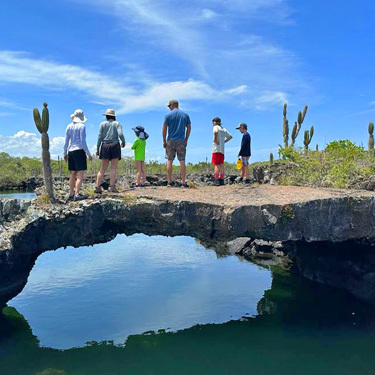
Wildlife | Our adventurers continue to encounter a variety of Galápagos wildlife while snorkeling, including rays, penguins, sea turtles, and other species. The recent rainfall has also helped keep parts of the islands' normally arid landscapes greener, creating favorable conditions for plants and the land species that depend on them.
|
|
Unusual encounters
Sea Turtle | While walking through Puerto Villamil, our guide Pablo spotted a nesting sea turtle. Nesting is a normal part of the sea turtle life cycle in the Galápagos, but this particular turtle appeared to be nesting earlier than usual. It is an interesting local observation, although one sighting is not enough to determine whether it is related to El Niño.
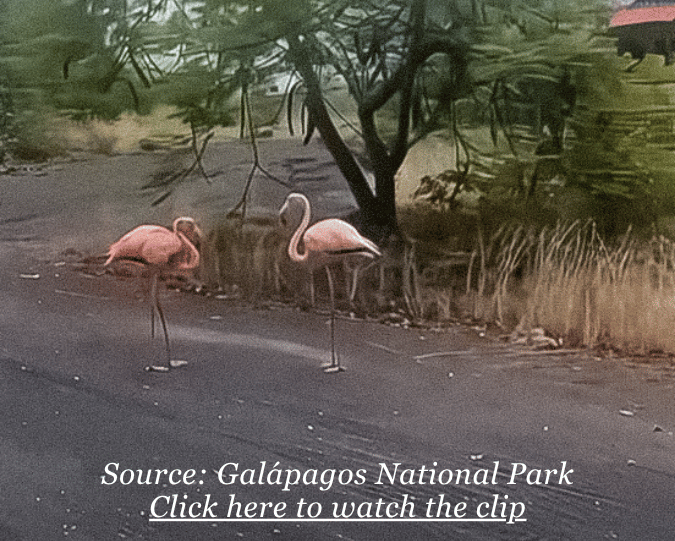
Flamingos | A few flamingos have reportedly been seen walking around Puerto Villamil rather than remaining around their usual local pond. While this is unusual, only two flamingos have been observed, and there is currently no evidence linking this behavior to El Niño. It is something our team will continue to keep an eye on.

What Are Scientific Institutions and Local Authorities Saying?
|
Weather | 71.6°F–84.2°F (22°C–29°C)
Warm conditions have been reported across the islands. Source: The Weather Channel |
Sea Temperature | 75.2°F to 78.6°F (24 °C –25.9 °C)
Sea temperatures remain warmer than usual. Source: INOCAR |
|
Wildlife | Activity has remained mostly unchanged so far. It is still early to identify any major changes related to El Niño.
|
|
Ecuador’s Ecuadorian Navy Oceanographic and Antarctic Institute (INOCAR) has reported ocean conditions consistent with the developing El Niño phenomenon, including warmer-than-average sea surface temperatures and changes in the depth of the thermocline.
Warmer ocean conditions do not necessarily mean that heavy rains will begin immediately or that travelers should expect major changes across the islands. We will continue following information from scientific institutions and local authorities as conditions develop.
What Are We Seeing in the Islands?
This month, wildlife activity has remained mostly unchanged, while ocean temperatures continue to be warmer than usual as El Niño conditions develop. Here is a quick look at what our team has been observing across the islands.
|
Weather | Some rain was observed, which is somewhat unusual for this time of year, but the rainfall has been short.
|
Sea Temperature | We have noticed warmer-than-usual water for this time of year. While wetsuits are still used for safety during our activities, the water temperatures have been comfortable and inviting for getting in and enjoying the ocean.
|
|
Wildlife | The quantity and quality of wildlife encounters on our tours have remained active, and bay life continues to thrive. Our adventurers are still regularly encountering a wide variety of Galápagos wildlife, especially seabirds.
|
|
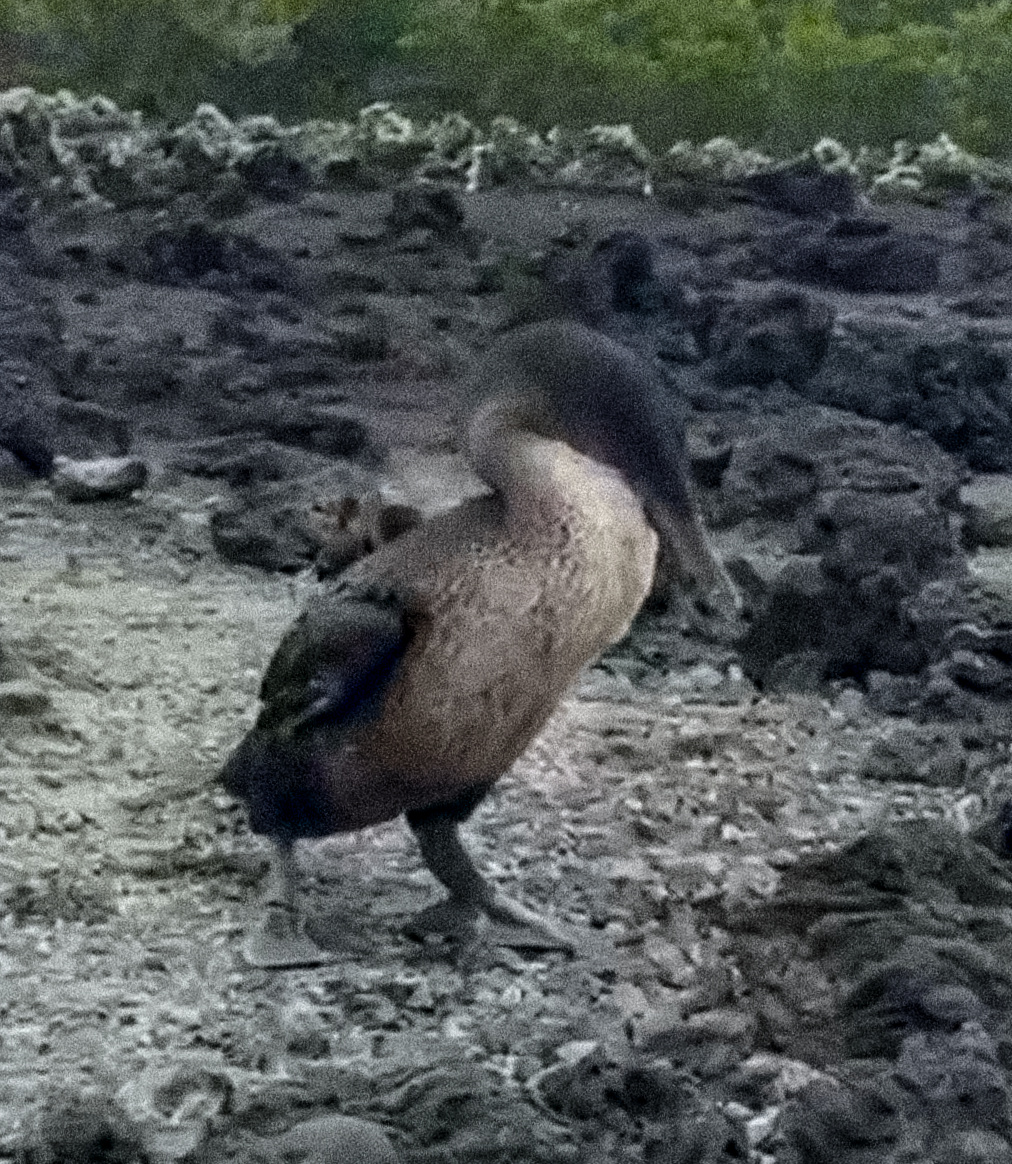
Unusual encounters
These observations are only small pieces of a much bigger picture, but they help us follow how conditions are changing from month to month. Some observations may be connected to broader environmental patterns, while others are simply part of the fascinating movements and behaviors of Galápagos wildlife.
What Should Travelers Know?
At the moment, El Niño has not caused major changes that would prevent travelers from enjoying a Galápagos adventure.
Our guides continued to observe the diverse marine and terrestrial wildlife that makes the Galápagos so special. Of course, wildlife is unpredictable, and no particular encounter can ever be guaranteed.
The weather has been warm, so lightweight, comfortable clothing and good sun protection are recommended for activities on land. For water-based activities, Galakiwi provides the necessary equipment, including wetsuits when needed.
For now, snorkeling, hiking, and other activities continue as usual, while we keep monitoring how conditions develop.
Should You Still Travel to the Galápagos?
Based on what we are seeing at the moment, there is no reason to change your Galápagos travel plans because of El Niño alone.
Conditions in the Pacific can change over time, which is why we will continue monitoring scientific reports, listening to our guides, and sharing what we observe in the islands each month.
For now, come prepared for warm weather, stay curious, and keep in mind that the Galápagos is a dynamic ecosystem. Next month, we’ll be back with another update on what September is bringing to the islands.