
July 3, 2026
Where to See Hammerhead Sharks in the Galápagos
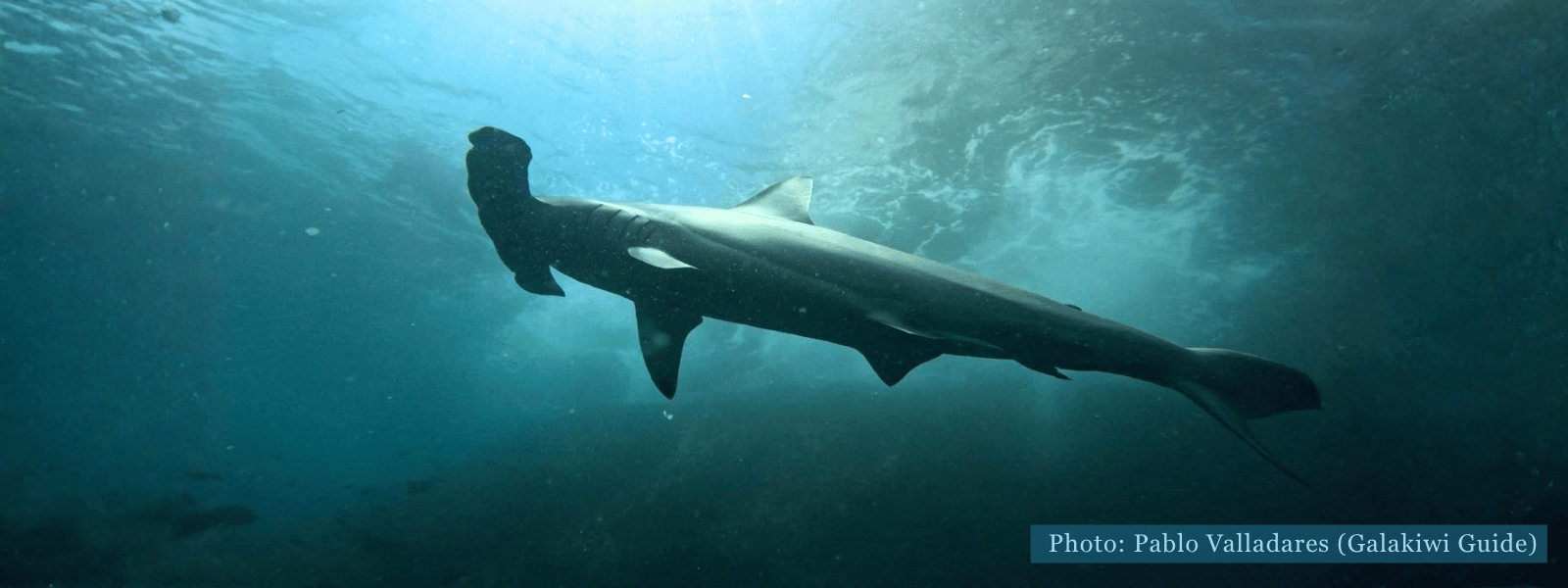
Few marine wildlife encounters capture the imagination quite like seeing a hammerhead shark in the wild.
With their distinctive head shape and graceful movements, hammerhead sharks have become one of the most iconic species associated with the Galápagos Islands. For many travelers, spotting a school of hammerheads swimming through the blue is one of the highlights of visiting this remarkable archipelago.
The Galápagos are considered one of the best places in the world to see scalloped hammerhead sharks, thanks to their nutrient-rich waters and thriving marine ecosystem. Although sightings cannot be guaranteed, both snorkelers and scuba divers have the opportunity to encounter them. With a bit of luck, you might catch a glimpse of these iconic sharks as they move through the islands’ waters.
In this guide, we’ll explore where hammerhead sharks can be seen in the Galápagos, what to expect during an encounter, and why these fascinating animals have become such an important part of the islands’ marine environment.
Are There Hammerhead Sharks in the Galápagos?
The short answer is yes.
The species most commonly associated with the Galápagos is the scalloped hammerhead shark (Sphyrna lewini). Although this species is listed as Critically Endangered by the International Union for Conservation of Nature (IUCN) due to fishing pressure around the world, the Galápagos Marine Reserve remains one of the best places on Earth to observe them in their natural environment.
The islands sit at the meeting point of several major ocean currents, bringing nutrient-rich waters that support an incredibly productive marine ecosystem. This abundance of life helps attract large numbers of hammerhead sharks and many other marine species.
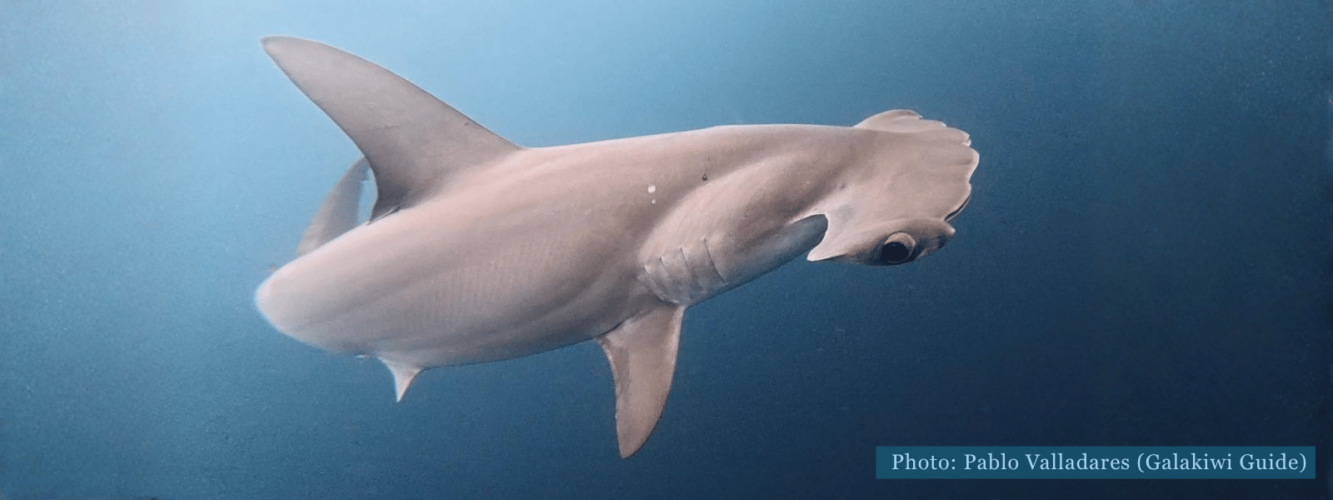
Why Hammerhead Sharks Are So Special in the Galápagos
The Galápagos Islands are one of the most important places in the world for scalloped hammerhead sharks.
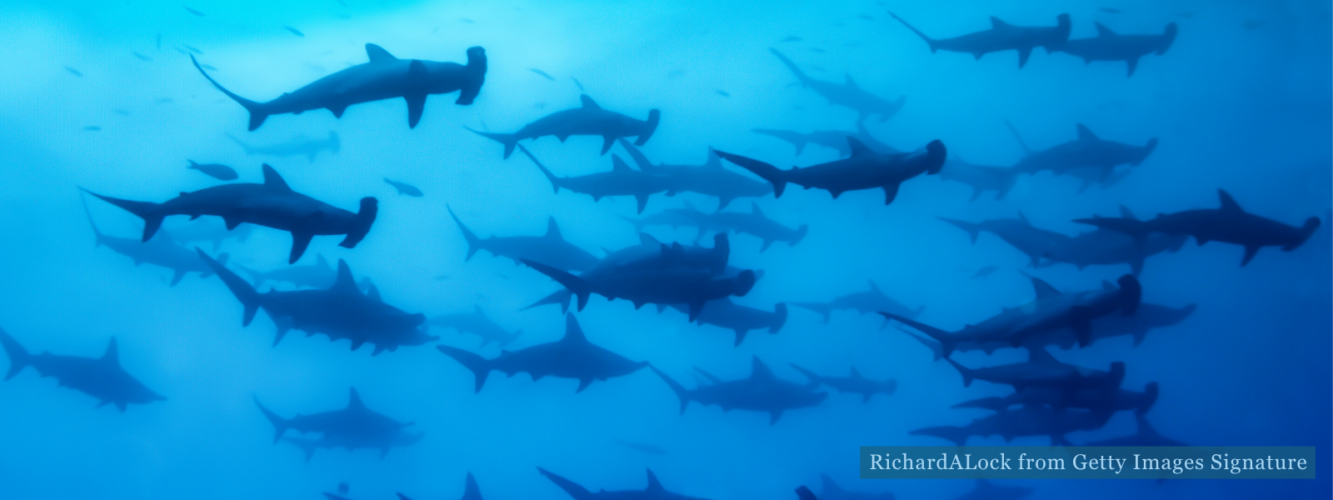
One of the reasons these sharks are so famous is their schooling behavior. While many shark species are typically seen alone, scalloped hammerheads often gather in large groups, creating some of the most impressive underwater wildlife spectacles in the ocean.
The waters surrounding the Galápagos also play an important role in the migration routes of hammerhead sharks. Scientists have tracked individuals traveling between marine protected areas across the Eastern Pacific, highlighting the importance of the Galápagos Marine Reserve in protecting these highly mobile animals.
Thanks to their healthy marine ecosystems, protected waters, and the possibility of encountering scalloped hammerhead sharks, the Galápagos have become one of the world’s most sought-after destinations for marine wildlife encounters. Whether exploring the waters while snorkeling or through other water-based activities, visitors have the chance to experience some of the most remarkable shark-viewing opportunities on the planet.
Perhaps what surprises many visitors most is how effortlessly these sharks move through the water. Encounters often feel peaceful rather than dramatic, with hammerheads focused on their natural behavior as they cruise through the currents of the islands’ marine reserve.
Quick Facts About Scalloped Hammerhead Sharks
Hammerhead sharks are fascinating animals with several unique adaptations:
- Their distinctive hammer-shaped head, known as a cephalofoil, helps them detect prey and improves their ability to sense electrical signals in the water.
- Adults typically grow between 3 and 4 meters (10–14 feet) in length.
- Females are generally larger than males.
- They feed primarily on fish, squid, octopus, and rays.
- Young hammerheads, known as pups, are born fully formed and can measure up to 55 cm (22 inches) in length.
One of the things that surprises many travelers is that these sharks are often calm and focused on their natural behaviors, moving gracefully through the water rather than paying attention to people.
Where Can You See Hammerhead Sharks in the Galápagos?
The Galápagos is home to several locations known for hammerhead shark sightings.
Scientists have even identified nursery areas around the islands. In 2017, researchers documented a scalloped hammerhead nursery along the northeastern coast of Santa Cruz Island, highlighting the important role the archipelago plays in the species’ life cycle.
For travelers, however, one location stands out above the rest and remains one of our favorite places to explore with Galakiwi adventurers: Kicker Rock (León Dormido), near San Cristóbal Island.
Located about 45 minutes to one hour by boat from Puerto Baquerizo Moreno, Kicker Rock is one of the most famous snorkeling and diving sites in the Galápagos. The channel between these towering volcanic formations creates ideal conditions for a wide variety of marine life, including sea turtles, rays, sea lions, reef fish, and, with a bit of luck, hammerhead sharks.
It’s also one of the highlights of many of our land-based adventures, and a place that frequently leaves a lasting impression on travelers.
As some of our guests have shared:
“At the end of the trip, the most difficult thing was deciding which of the many activities was our favorite. Both my wife and I chose diving/snorkeling at Kicker Rock, where we saw schools of hammerheads and other sharks, turtles, and rays—too many to count.”
– Gary, Customized Adventure
“We started on San Cristóbal Island with downhill bike riding to a lovely beach. Then we took a boat to Kicker Rock, where we snorkeled with a hammerhead shark, a ridiculous amount of turtles, and fish of all sizes and colors everywhere. Pablo is the Steve Irwin of the Galápagos—always enthusiastic, truly passionate, and deeply knowledgeable.”
– Krista, 10-Day Galapagos Adventure Tour
As with all wildlife encounters in the Galápagos, sightings are never guaranteed. Hammerhead sharks are migratory animals, and their location and numbers can vary throughout the year. Even so, Kicker Rock remains one of the most accessible and rewarding places in the archipelago to look for them.
Best Time to See Hammerhead Sharks in the Galápagos
Hammerhead sharks can be seen in the Galápagos throughout the year, but seasonal ocean conditions can influence both marine life activity and the likelihood of encountering larger groups of sharks.
The Galápagos experiences two main seasons:
Warm Season (January–May)
During the warm season, ocean temperatures rise and sea conditions are often calmer. These months are popular for snorkeling and diving thanks to warmer water and generally good visibility. Hammerhead sharks remain present in the islands, although sightings may vary depending on location and local conditions.
Cool Season (June–December)
The cool season is often considered one of the most exciting times for shark enthusiasts. During these months, cooler nutrient-rich currents flow through the archipelago, increasing marine productivity and attracting a greater abundance of marine life.
These nutrient-rich waters support the food chain that many larger marine species depend on, including hammerhead sharks. As a result, divers visiting sites known for shark encounters often report larger aggregations and more frequent sightings during this period.
The good news for travelers is that hammerhead sharks can be encountered year-round. Whether visiting during the warm or cool season, the Galápagos remains one of the world’s best destinations to observe these remarkable animals in their natural environment.
For a deeper look at seasonal conditions, you can also explore our guides to the Galápagos warm season and Galápagos cool season
Snorkeling with Hammerhead Sharks in the Galápagos
Seeing a hammerhead shark while snorkeling is often one of the most memorable moments of a Galápagos trip.
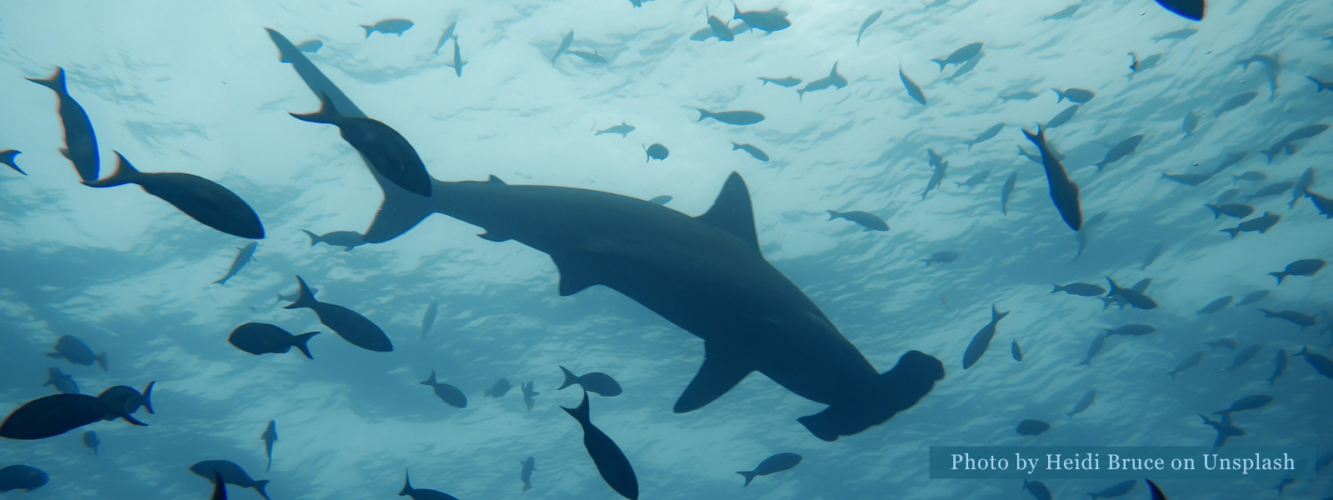
Unlike the close encounters many people imagine, sightings often begin at a distance. A silhouette may appear below in the blue water, or a small group of hammerheads may be spotted moving calmly through a channel alongside other marine life. Their movements are typically smooth and unhurried, and encounters often feel surprisingly peaceful.
Locations such as Kicker Rock provide opportunities to observe hammerheads in their natural environment while also encountering sea turtles, rays, reef fish, and other species that thrive in the Galápagos Marine Reserve.
As with all wildlife encounters in the islands, it’s important to observe these animals respectfully and follow Galápagos National Park regulations:
- Maintain a respectful distance from wildlife.
- Never chase, touch, or attempt to attract animals.
- Avoid sudden movements that may disturb marine life.
- Always follow your naturalist guide‘s instructions.
The best encounters happen when wildlife is allowed to behave naturally. By observing responsibly, travelers can enjoy the experience while helping protect one of the world’s most remarkable marine ecosystems.
If you’re curious about experiencing the incredible marine life of the Galápagos, including opportunities to snorkel at sites like Kicker Rock, explore our land-based tours or reach out to start planning your adventure.
| |