
August 3, 2026
Rays in the Galápagos: Where to See These Graceful Marine Animals
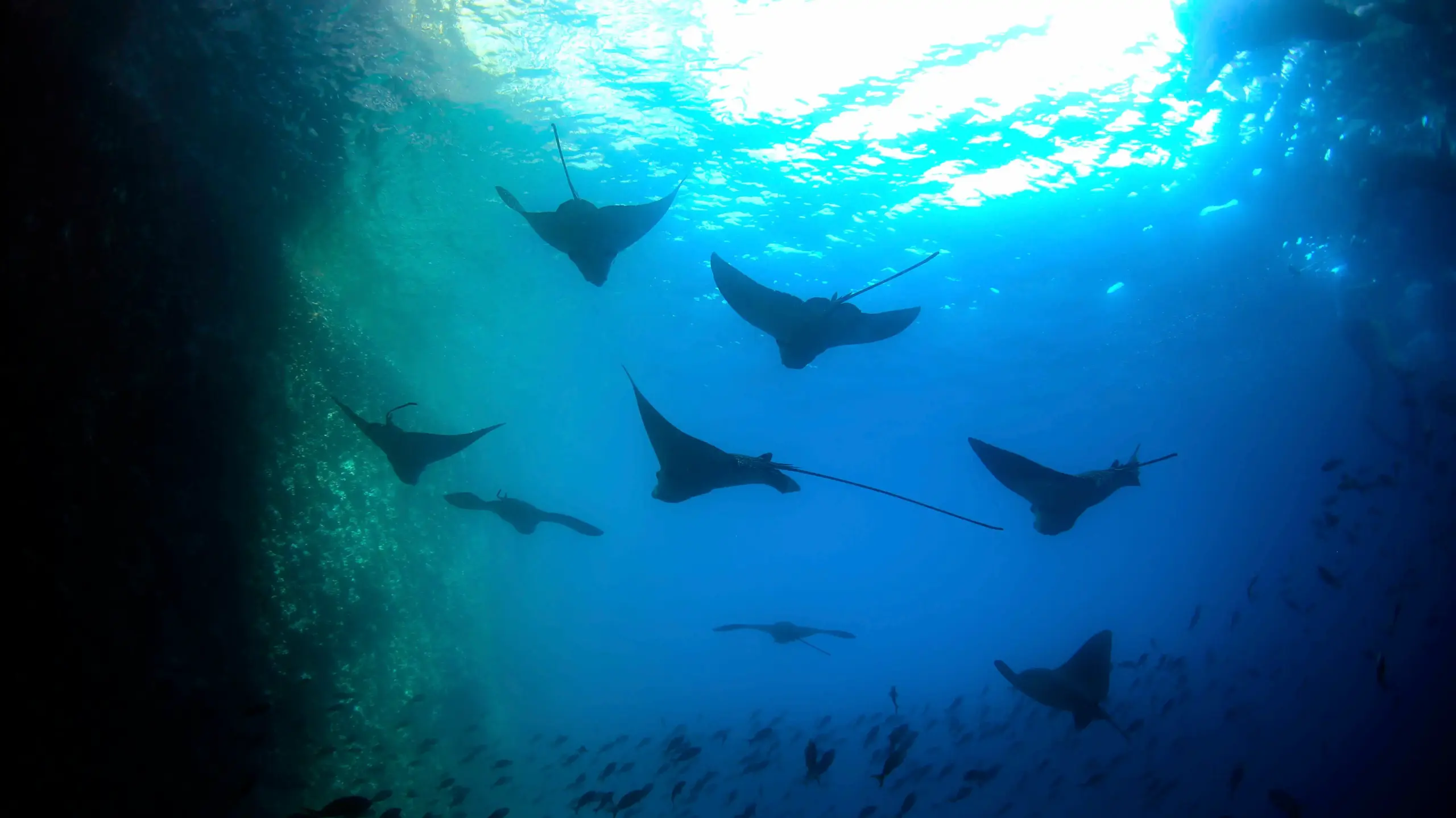
While sea lions often steal the spotlight and sharks capture many travelers’ attention, rays offer a quieter but equally memorable wildlife encounter. They glide over volcanic reefs, sandy seabeds, and coral-covered rocks with graceful, flowing movements that make them fascinating to observe.
The Galápagos Marine Reserve is home to several species of rays, each adapted to different habitats around the archipelago. Depending on where you explore, you may spot spotted eagle rays cruising through volcanic channels, golden rays gliding gracefully over shallow coastal waters, or even mobula rays leaping from the ocean during an inter-island boat journey.
Like all Galápagos wildlife, every encounter is natural and unpredictable. Whether you’re snorkeling in clear waters or simply watching the ocean between islands, spotting a ray is often one of those unexpected moments that stays with travelers long after their trip has ended.
In this guide, we’ll introduce some of the most common ray species you may encounter in the Galápagos, where to look for them, and what makes each one unique.
Meet the Rays of the Galápagos
Several species of rays inhabit the waters surrounding the Galápagos Islands. Although they all belong to the same broad family, each has its own appearance, preferred habitat, and behavior.
For travelers on a Galápagos land tour, there’s no shortage of opportunities to encounter these graceful marine animals. With snorkeling excursions, coastal exploration, and inter-island navigation all part of the experience, visitors have the chance to explore a variety of marine environments where different ray species can be found.
Let’s take a closer look at some of the rays you may encounter during your Galápagos adventure and what makes each one unique.
Spotted Eagle Ray
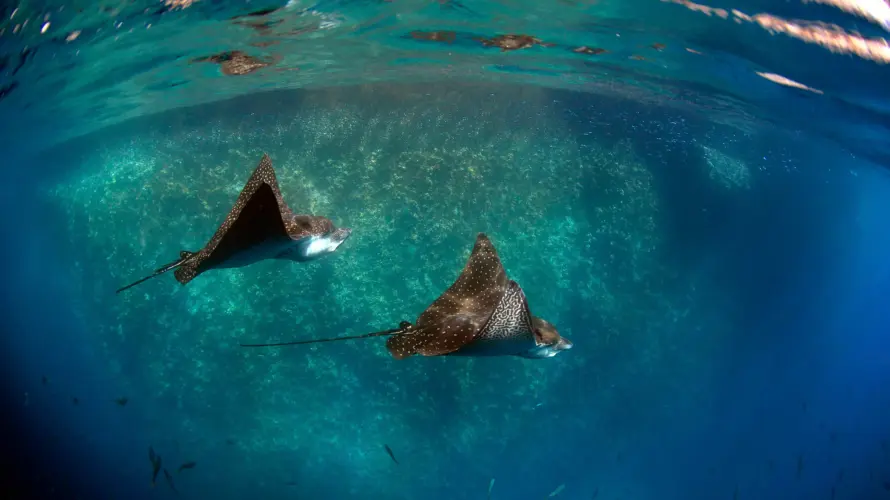
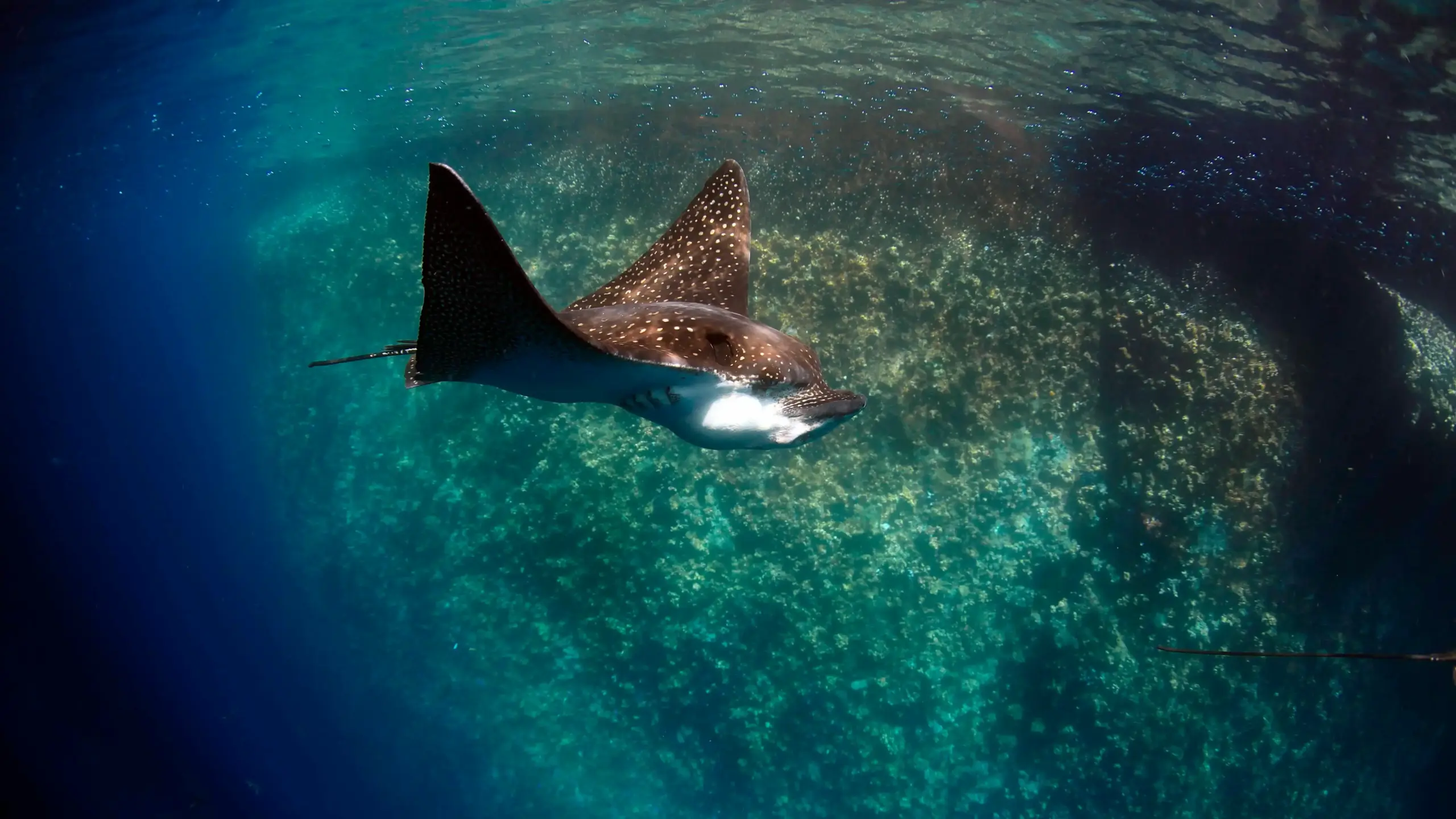
One of the most recognizable rays in the Galápagos, the spotted eagle ray is easy to identify thanks to its dark body covered with bright white spots and its long, whip-like tail. Their graceful swimming style makes them one of the most photographed rays in the Galápagos.
With wingspans reaching up to 10 feet (three meters), these rays appear to “fly” underwater, gracefully flapping their large pectoral fins.
They’re commonly seen around rocky reefs and drop-offs, particularly while snorkeling at sites like Kicker Rock and Los Túneles, where they often travel alone or in small groups.
Golden Cownose Ray
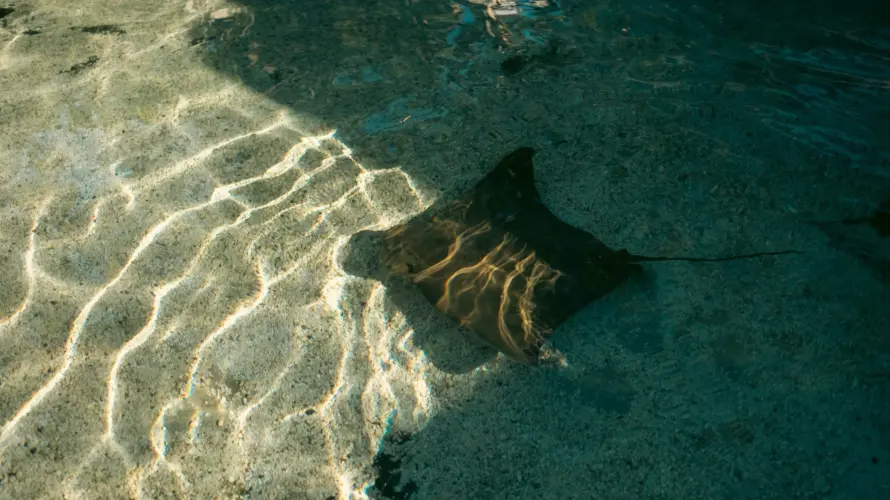
Golden cownose rays are among the species travelers most frequently encounter during shallow-water snorkeling excursions.
Their broad, rounded bodies display beautiful golden-brown tones that blend perfectly with sandy bottoms and volcanic landscapes.
Unlike eagle rays, they often move in schools, creating impressive underwater displays as they glide together through calm coastal waters.
Los Túneles is one of the best places to observe this species.
Diamond Stingray
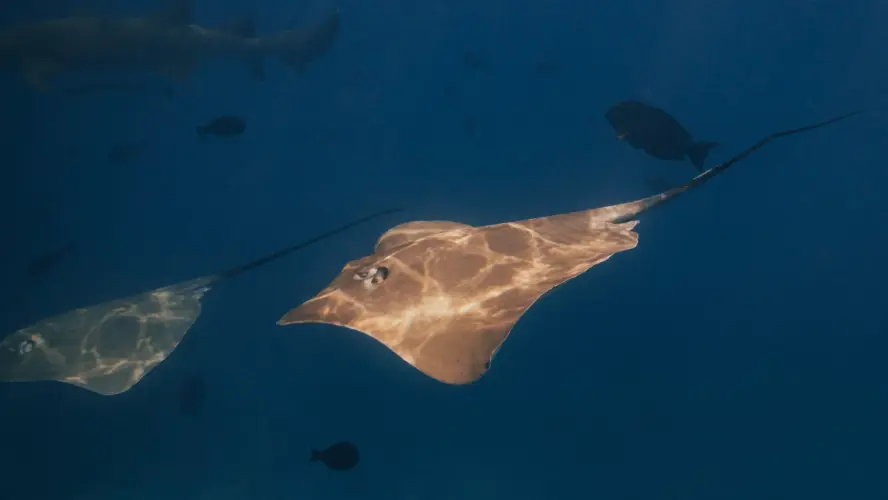
Diamond stingrays are often found resting on sandy seabeds, where their coloration helps them blend almost perfectly into their surroundings.
One of the joys of snorkeling in the Galápagos is watching experienced naturalist guides point out wildlife that many visitors would otherwise miss. A stingray that first appears to be nothing more than a patch of sand suddenly comes into view, revealing just how well adapted these animals are to their environment.
Like all rays in the Galápagos, diamond stingrays should be observed from a respectful distance, allowing them to behave naturally.
Pacific Manta Ray
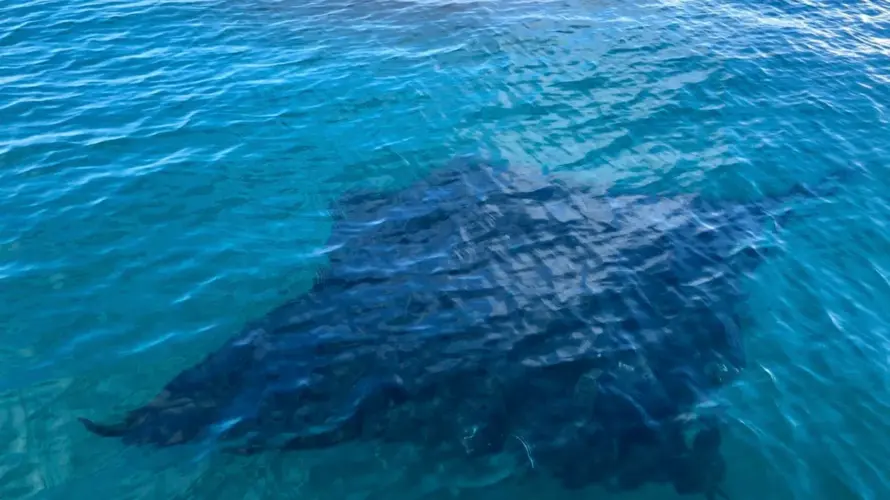
The Pacific manta ray is one of the largest fish in the world, with wingspans that can exceed 20 feet (six meters).
Although sightings in the Galápagos are relatively rare, they do occur, particularly during the warmer months when ocean conditions can attract more plankton.
Seeing a manta ray glide effortlessly through open water is considered one of the most unforgettable marine wildlife encounters the islands can offer.
Because they are highly migratory, sightings are never guaranteed.
Mobula Rays
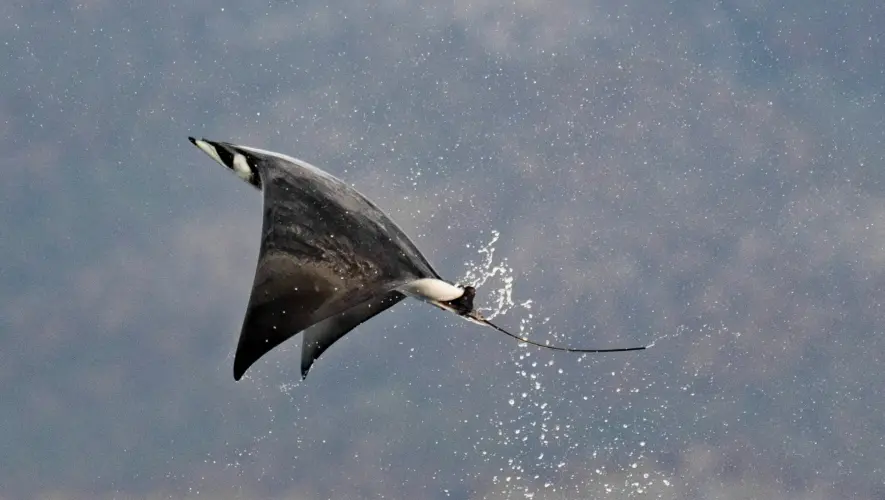
Unlike other rays, mobula rays are famous for launching themselves completely out of the water, earning them the nickname “devil rays.”
Travelers crossing between islands are sometimes treated to the unforgettable sight of these graceful animals soaring above the ocean before splashing back into the sea. Scientists are still studying exactly why they leap, with theories suggesting the behavior may help with communication, courtship, or parasite removal.
For those lucky enough to witness it, a mobula ray breaching during an inter-island journey often becomes one of the most unexpected and memorable wildlife encounters of the trip, proving that even the time spent traveling between islands can offer remarkable moments in the Galápagos.
Where to See Rays in the Galápagos
One of the wonderful things about rays is that you don’t need to visit a single specific site to encounter them. Different snorkeling locations, coastal areas, and even inter-island boat rides offer opportunities to observe a variety of ray species throughout the archipelago.
Los Túneles (Isabela Island)
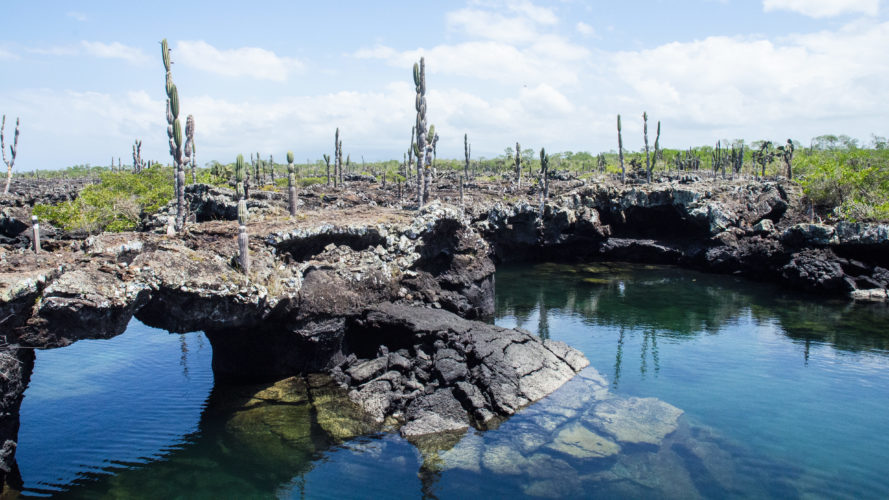
Los Túneles is one of the best places in the Galápagos to observe rays. Its calm, crystal-clear channels, formed by ancient lava flows, create an ideal habitat for several species.
As snorkelers drift through the shallow water, it’s common to spot golden cownose rays, spotted eagle rays, and diamond stingrays gliding over sandy bottoms or resting quietly among the volcanic formations. Gentle currents and excellent visibility often allow visitors to observe these graceful animals without disturbing their natural behavior.
Activities: Snorkeling, boat tour
Las Tintoreras
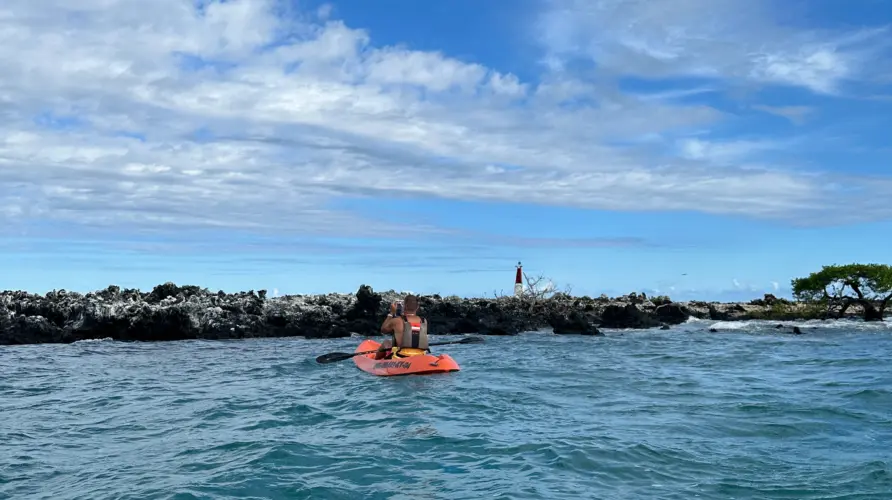
Just outside Puerto Villamil, Las Tintoreras offers another excellent opportunity to encounter rays. They are frequently seen gliding through the shallow lava channels or between the volcanic rocks, making them one of the highlights of the snorkeling experience.
The site is also well known for its Galápagos penguins and white-tip reef sharks, creating a diverse marine environment where several iconic species can often be seen during a single visit.
Activities: Snorkeling, kayaking
Kicker Rock
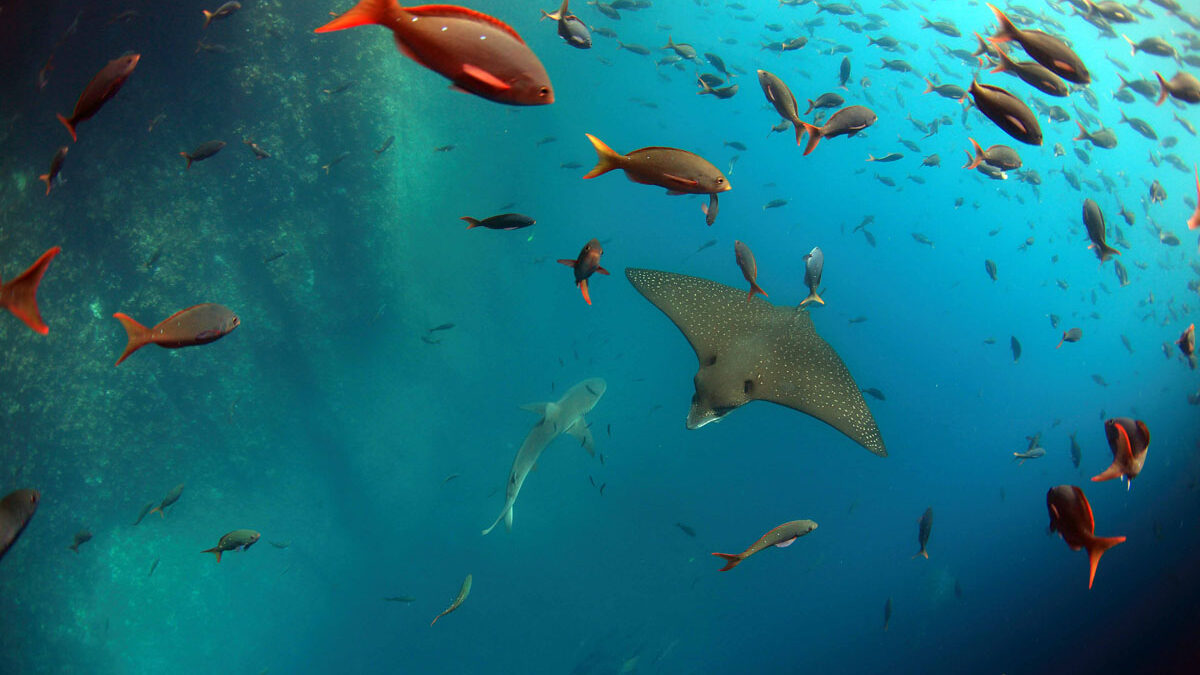
Kicker Rock is one of the Galápagos‘ most celebrated snorkeling sites, and rays are among the many reasons why. Spotted eagle rays are commonly seen cruising through the deep blue water or alongside the towering volcanic walls, and on fortunate days, visitors may even encounter majestic manta rays passing through the channel.
Sea turtles, reef sharks, colorful fish, and, occasionally, hammerhead sharks complete an unforgettable marine experience, with every visit offering something different.
Activities: Snorkeling
Inter-Island Boat Rides
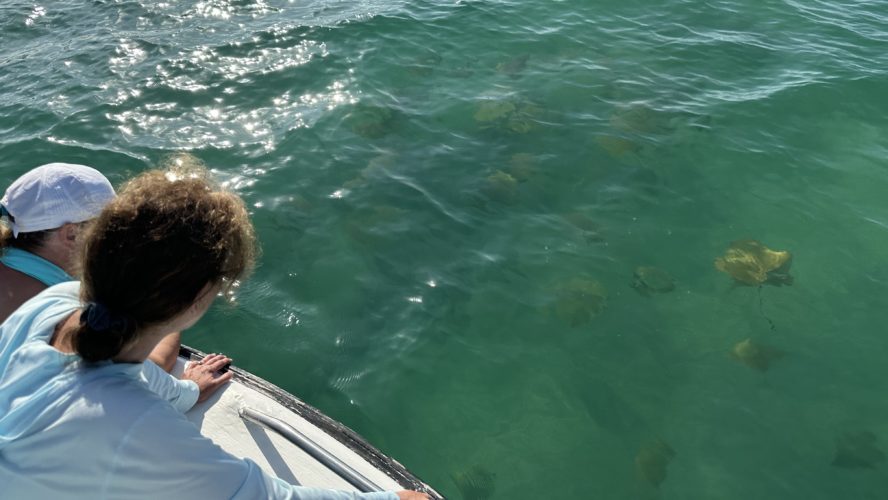
Not every wildlife encounter happens during a scheduled activity.
Some of the most memorable moments occur while traveling between islands. Keeping an eye on the ocean can reveal rays swimming just beneath the surface or groups of mobula rays launching themselves into the air in spectacular displays.
These unexpected sightings are a reminder that, in the Galápagos, the journey itself is often just as rewarding as the destination.
Can You Snorkel With Rays?
Absolutely, but it’s important to remember that these are completely natural encounters.
Rays are generally calm animals and rarely pay much attention to snorkelers. They simply continue moving through their environment as they search for food or travel between habitats.
Some encounters last only a few seconds, while others may continue for several minutes as a ray glides effortlessly beneath the group.
Because every outing is different, no two snorkeling experiences are ever exactly alike, and that’s part of what makes them so memorable.
Why Rays Matter to the Galápagos Ecosystem
Rays are more than beautiful animals to observe. They play an important role in keeping the Galápagos marine ecosystem healthy.
Many species feed on crustaceans, mollusks, worms, and other animals living on or beneath the seafloor. By doing so, they help maintain the balance of coastal habitats and contribute to the complex food web that supports the extraordinary diversity of marine life found throughout the archipelago.
The Galápagos Marine Reserve provides a vital refuge for these species. While many rays around the world face growing pressures from fishing and habitat loss, the reserve helps protect the waters where they feed, reproduce, and migrate.
Every ray encountered while snorkeling or exploring the islands is part of a much larger ecosystem, reminding visitors why protecting the Galápagos is so important for the future of its marine wildlife.
How to Respect Rays During Your Visit
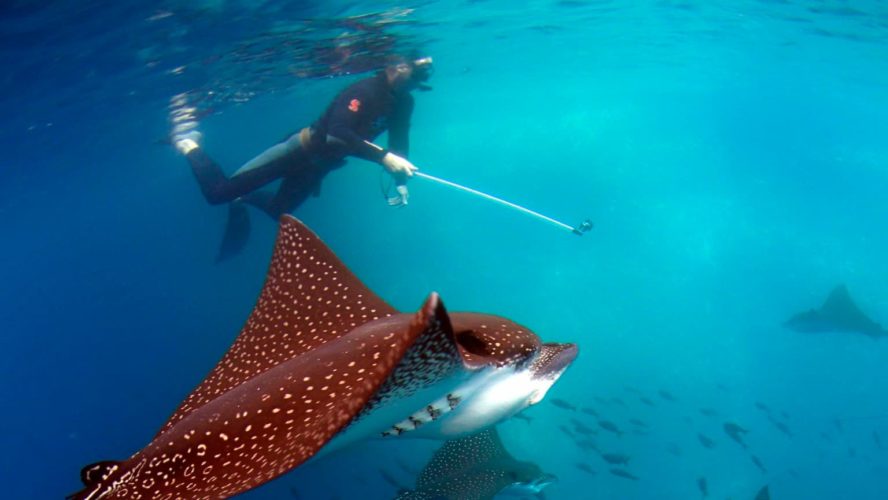
One of the reasons encounters with rays feel so special in the Galápagos is that they happen entirely on the animals’ terms. In most cases, rays pay little attention to snorkelers, quietly gliding through the water as they go about their daily lives.
The best way to enjoy these encounters is to observe without interfering. By giving rays the space to behave naturally, you’re more likely to witness the graceful movements that make them such memorable marine animals.
When encountering rays:
- Observe from a respectful distance.
- Never chase, surround, or block their path.
- Avoid touching them, even if they swim close.
- Move calmly and avoid sudden splashing.
- Always follow your certified naturalist guide’s instructions.
- Allow the ray to choose where it wants to swim.
The quieter and more respectful you are, the more natural, and often longer, the encounter becomes.
How You Can Contribute to Ray Conservation
Your wildlife sightings can help researchers learn more about the rays that inhabit the Galápagos Marine Reserve.
Citizen science projects use photographs and sighting information to better understand where different ray species are found, how they move around the archipelago, and how their populations change over time.
If you’re lucky enough to photograph a ray during your trip, consider recording the date, time, and location of the sighting. For manta rays, photos of the underside are especially valuable because each individual has a unique pattern that researchers use for identification. For other ray species, photographs of the back are often the most useful.
You can also contribute through the Shark Count app or share your sightings with local research initiatives:
- Manta rays: photoid@mantasecuador.org
- Other ray species: galapagosrays@gmail.com
Interested in learning more about citizen science in the Galápagos? Be sure to read our blog on shark identification and how travelers can contribute to marine conservation.
Frequently Asked Questions
Can you see manta rays in the Galápagos?
Yes, although they are much less common than eagle rays or golden cownose rays. Manta ray sightings are possible, particularly during the warm season, but they are never guaranteed.
Which rays are seen most often in the Galápagos?
Golden cownose rays and spotted eagle rays are among the species travelers encounter most frequently. They are commonly seen while snorkeling at sites such as Los Túneles, Las Tintoreras, and Kicker Rock, as well as during other marine activities throughout the archipelago.
Are Galápagos rays dangerous?
Most ray species encountered by visitors are calm and non-aggressive. They naturally avoid conflict and generally swim away if disturbed.
Can rays sting people?
Some species, such as stingrays, have a defensive barb on their tail. However, they do not use it unless they feel threatened. Giving rays plenty of space and avoiding attempts to touch them keeps encounters safe for both wildlife and visitors.
Do you have to snorkel to see rays?
No. Rays can also be observed from kayaks, beaches, docks, and during inter-island boat rides
What is the best time of year to see rays?
Rays can be seen throughout the year in the Galápagos. Warmer months may increase the chances of encountering manta rays, while golden cownose rays, spotted eagle rays, and stingrays can be observed year-round depending on the location and ocean conditions.
Can rays be seen from boats?
Yes. Travelers often spot rays gliding beneath the surface during boat excursions, and mobula rays are particularly well known for their spectacular leaps during inter-island crossings.
A Quiet Highlight of the Galápagos
In a destination famous for dramatic wildlife encounters, rays remind us that some of the most memorable moments happen quietly.
Watching a ray glide effortlessly through crystal-clear water, whether while snorkeling at Los Túneles, exploring Kicker Rock, or crossing between islands, is an experience many travelers remember long after they leave the Galápagos. There is no rush or spectacle, just the chance to observe these graceful animals moving naturally through one of the world’s richest marine ecosystems.
Perhaps that’s what makes encountering rays so special. They invite us to slow down, look a little closer, and appreciate the quieter side of Galápagos wildlife.
If you’re ready to discover the islands above and below the surface, explore our land-based tours or browse more of our blog for wildlife guides, travel tips, and local insights to help you plan your Galápagos adventure.
| |