
September 23, 2026
Brown Pelicans in the Galápagos: An Everyday Coastal Companion
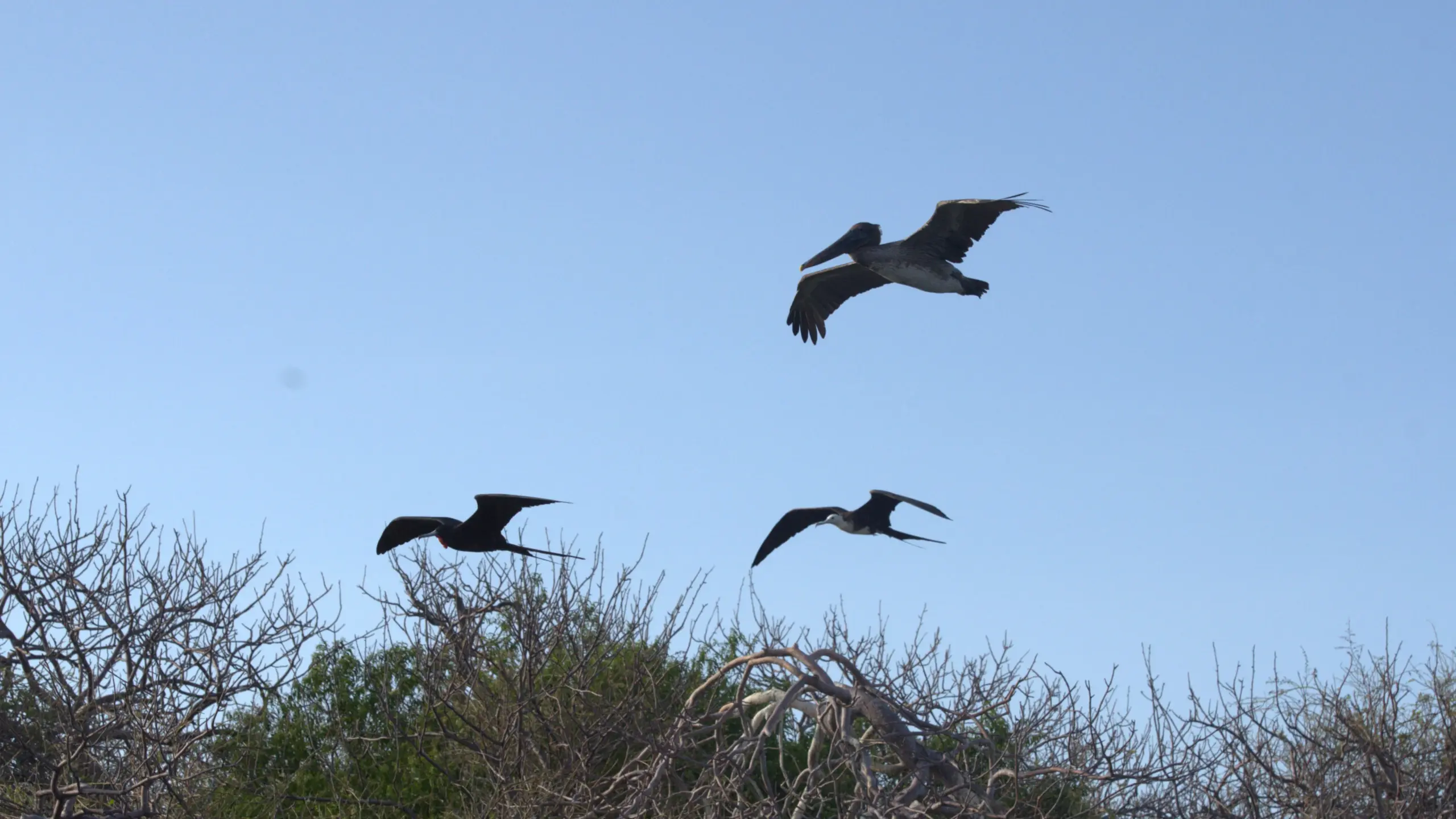
Some Galápagos wildlife encounters happen in places you might expect, such as remote visitor sites, volcanic trails, or snorkeling spots. Others are woven into everyday island life.
The Galápagos brown pelican is one of those animals.
You might see one resting on a beachfront railing, perched on the mangroves, gliding over a bay, or suddenly diving into the water after a fish. During a Galápagos tour, pelicans can become familiar companions as you move between beaches, towns, bays, and coastal visitor sites.
The Galápagos is home to the brown pelican (Pelecanus occidentalis), specifically the Galápagos subspecies Pelecanus occidentalis urinator. Although brown pelicans are found elsewhere along the Americas, the birds you encounter in the archipelago have adapted to life among the islands’ volcanic coastlines and highly productive surrounding waters.
They may not have the same fame as giant tortoises or marine iguanas, but watching a pelican hunt, glide across the water, or go about its day offers a wonderful glimpse into the connection between Galápagos wildlife and the ocean.
What Makes the Galápagos Brown Pelican Special?
The brown pelican is the smallest of the world’s eight pelican species, although seeing one at close range can still be impressive. The birds found in the Galápagos belong to a distinct subspecies adapted to life in the archipelago.
Like brown pelicans elsewhere, their survival is closely tied to the productivity of the ocean. The Galápagos sits at the meeting point of major ocean currents that influence water temperature, nutrients, and the availability of fish. These productive marine conditions help support the food sources pelicans depend on.
That connection also makes the brown pelican a good example of how closely linked the Galápagos‘ marine and terrestrial ecosystems are. What happens beneath the surface influences the seabirds feeding along the coast, connecting these familiar birds to the much larger marine system surrounding the islands.
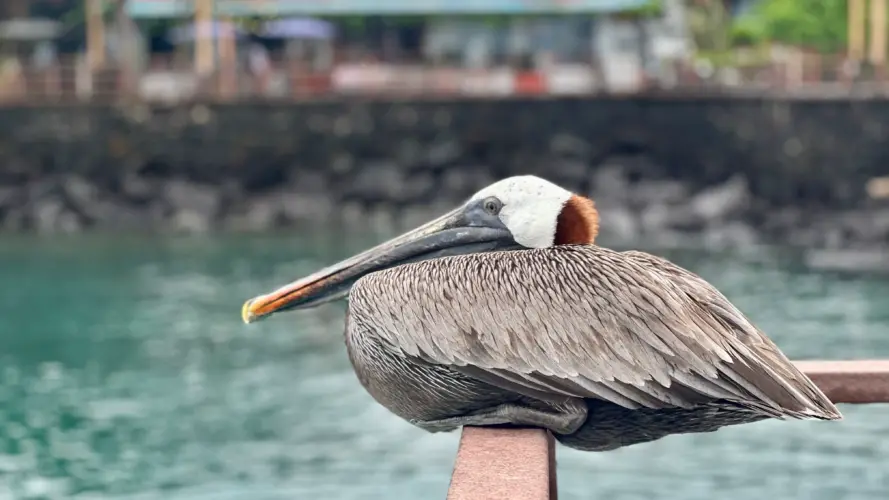
How to Identify a Galápagos Pelican
Once you know what to look for, pelicans are difficult to miss.
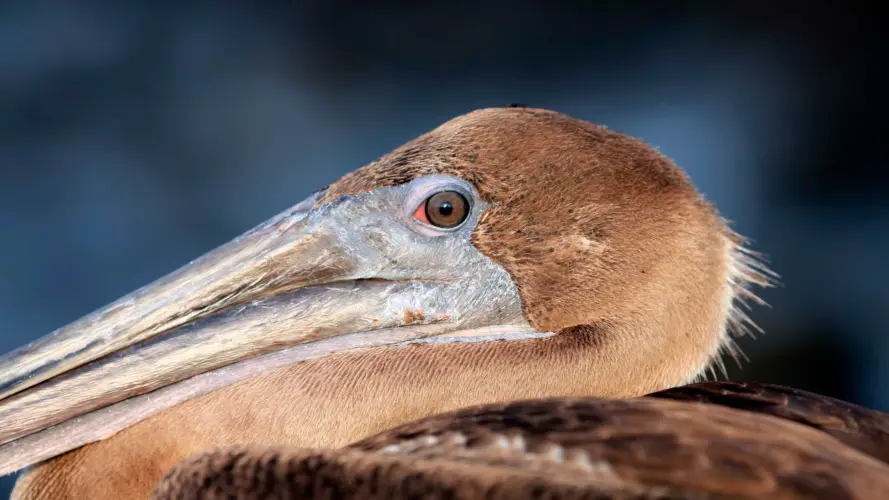
Their large body, broad wings, long bill, and distinctive throat pouch create an unmistakable silhouette, whether they’re resting or flying along the coast.
Adult Galápagos brown pelicans typically measure around 1 to 1.5 meters (3.3 to 5 feet) in length, with a wingspan that can reach approximately 2 meters or more. Their plumage is generally a combination of brown, gray, and white. Adults develop a darker head and neck with lighter areas around the face and neck, while their bodies are predominantly gray-brown. Males and females look very similar, although males are slightly larger.
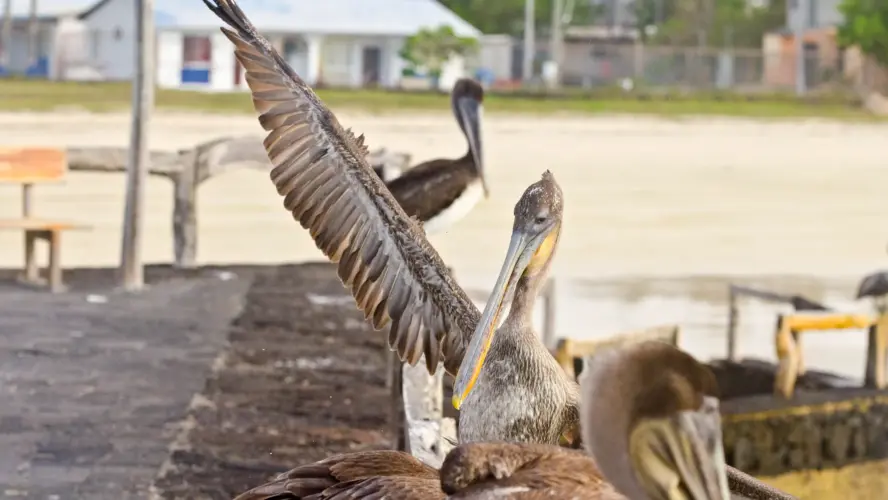
Young pelicans look different from adults, generally having more muted brown and gray plumage. Their appearance gradually changes as they mature.
Look for…
- A large seabird with broad wings
- A very long bill with a loose throat pouch underneath
- Brown, gray, and white plumage
- Slow, powerful wingbeats or long glides close to the water
- A sudden headfirst plunge into the ocean when hunting
Where Can You See Pelicans in the Galápagos?
The simple answer is: almost anywhere along the coast.
Brown pelicans are widespread throughout the Galápagos, particularly around rocky shorelines, beaches, sheltered bays, mangroves, lagoons, and other areas where fish are abundant. For travelers on a land-based tour, that means you don’t always need a scheduled wildlife excursion to find them. An early morning walk along the waterfront might be enough.
Santa Cruz
Around Puerto Ayora and other coastal areas of Santa Cruz, look for pelicans near the waterfront, fishing areas, and boats. These sightings offer an interesting glimpse of how wildlife and everyday island life often share the same spaces.
Isabela
Puerto Villamil’s beaches, lagoons, and surrounding coastline provide plenty of opportunities to spot pelicans. You may see them flying along the shore, resting near the water, or hunting during coastal excursions.
San Cristóbal
Around Puerto Baquerizo Moreno, pelicans are regularly seen along the waterfront and near fishing areas. They can also appear during excursions along San Cristóbal‘s coastline.
Keep Watching During Boat Rides
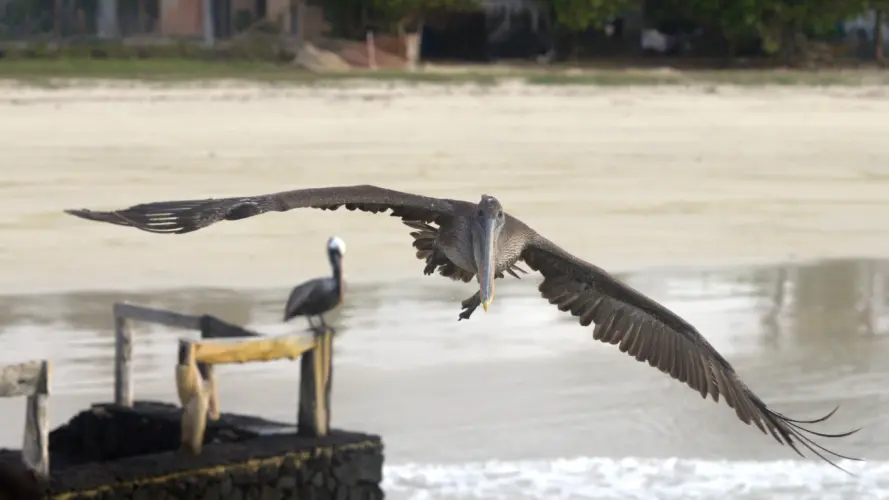
Pelican watching doesn’t stop when you leave land. During boat excursions and inter-island travel, look above the water as well as below it. Brown pelicans often glide low over the ocean, sometimes seeming to skim just above the waves before gaining height to search for their next meal.
Their widespread presence is part of what makes them such an interesting Galápagos companion. Instead of planning a specific excursion around seeing one, you simply start noticing them as you explore the islands.
How Brown Pelicans Hunt
Fish make up most of a brown pelican’s diet, but how they catch them is far more interesting than what’s on the menu.
Watch a pelican flying above the water and you may suddenly see it change direction, fold its wings, and plunge headfirst into the ocean. This distinctive hunting technique allows the bird to use its long bill and expandable throat pouch to scoop up fish near the surface.
After resurfacing, the pelican drains the water from its pouch before swallowing its catch. Sometimes the whole sequence happens really quickly, so once you notice a pelican searching the water from above, it’s worth watching for a bit longer.
Their success depends on what is happening beneath the surface. Ocean currents, water temperature, and the availability of fish all influence where pelicans feed, creating another visible connection between Galápagos seabirds and the productive marine ecosystem surrounding the islands.
It’s an everyday behavior, but once you understand what the pelican is doing, an ordinary coastal sighting becomes much more interesting.
Galápagos Pelican Behavior
Once you start noticing brown pelicans around the Galápagos, it’s fun to spend a little time watching what they’re actually doing. Even familiar behaviors can reveal how well adapted these birds are to life along the coast.
Gliding low over the water: Pelicans often fly remarkably close to the ocean’s surface, using their broad wings and coastal air currents to move efficiently. From a boat or waterfront, you may see one following the coastline just above the waves.
Plunge-diving for fish: If you notice a pelican circling or watching the water below, keep your eyes on it. You may be about to see the sudden plunge-dive described above, one of the species’ most distinctive behaviors.
Resting between meals: Pelicans also spend plenty of time doing very little. Rocks, docks, boats, and waterfront structures can all become places to rest and conserve energy between feeding periods. These quieter moments offer a good opportunity to observe their size, long bill, and distinctive pouch more closely.
Nesting and Raising Young
Brown pelicans nest in coastal areas with access to nearby feeding grounds. Both parents take part in incubating the eggs and caring for their young, continuing to bring food to the nest as the chicks develop.
If you encounter nesting birds, observation should always happen from a respectful distance. Giving adults and chicks plenty of space allows you to witness this part of their life cycle without interfering with their natural behavior.
The Galápagos Pelican and the Marine Ecosystem
A brown pelican may be one of the more familiar birds you encounter in the Galápagos, but its survival depends on a much larger marine ecosystem.
As fish-eating seabirds, pelicans rely on healthy fish populations and the waters that support them. This means that even a pelican resting near a waterfront is connected to what is happening beneath the surface of the surrounding ocean.
The Galápagos Marine Reserve helps protect these interconnected habitats and the many species that depend on them. It’s a useful reminder that protecting the ocean isn’t only about the wildlife living underwater. It also helps sustain the seabirds and other animals we encounter along the islands’ shores.
When Is the Best Time to See Galápagos Pelicans?
There isn’t a single season when you need to visit to see Galápagos pelicans.
They can be observed throughout the year, and because they are widespread across the islands, travelers have opportunities to encounter them in many different environments.
However, wildlife is never completely predictable. Pelicans may gather in particular areas when food is abundant, while ocean conditions can influence where fish and seabirds are concentrated.
The time of day can also make a difference to what you observe. Early in the day, coastal areas can be active with birds feeding and moving between resting and fishing areas. Later, you may find pelicans quietly perched along the waterfront or resting after feeding.
Rather than planning your trip around a guaranteed pelican sighting, keep your eyes open throughout the day. A bird you notice while walking to lunch or traveling between islands can be just as memorable as one seen during a dedicated wildlife excursion.
And remember, the Galápagos follows nature’s schedule, not ours.
How to Observe Galápagos Pelicans Responsibly
Because pelicans can sometimes appear close to people, it’s important not to mistake their tolerance for an invitation to approach.
When observing pelicans:
- Keep a respectful distance.
- Never feed, touch, chase, or attempt to attract them.
- Avoid blocking their route to the water.
- Give resting and nesting birds plenty of space.
- Keep noise low around wildlife.
- Never touch a pelican, even if it appears comfortable around people.
- Follow your naturalist guide’s instructions during excursions.
The goal isn’t simply to get the closest photograph possible. It’s to observe the animal without changing what it would naturally be doing.
The best wildlife encounter is one where the animal never needs to change its behavior because you’re there.
This is one of the principles that we believe makes wildlife experiences in the Galápagos so special. You aren’t visiting a zoo or wildlife enclosure. You’re entering a living ecosystem and observing animals going about their everyday lives.
Sometimes, simply giving a pelican space to keep fishing, resting, or gliding away on its own terms is the most respectful encounter you can have.
An Everyday Encounter Worth Noticing
Some of the most memorable Galápagos wildlife encounters aren’t necessarily the rarest ones.
A pelican resting beside a fishing boat. One gliding silently over a bay. Another suddenly diving into the water as you walk along the coast.
These moments may seem ordinary to someone who lives on the islands, but for a traveler, they offer a glimpse into something extraordinary: a place where wildlife is still woven into everyday life.
So next time you spot that unmistakable bill and broad silhouette along the coast, take a moment to watch. You might be witnessing one of the Galápagos’ most familiar residents simply doing what it does best: living alongside the ocean.
Ready to experience the Galápagos beyond the famous wildlife highlights? A land-based adventure gives you the opportunity to explore the islands at a more relaxed pace, discover local communities, and notice the everyday wildlife encounters that happen along the way. Explore our Galápagos land-based tours or get in touch with the Galakiwi team to start planning your adventure.
| |