
November 10, 2026
Galápagos High, Low & Shoulder Seasons: When Should You Travel?
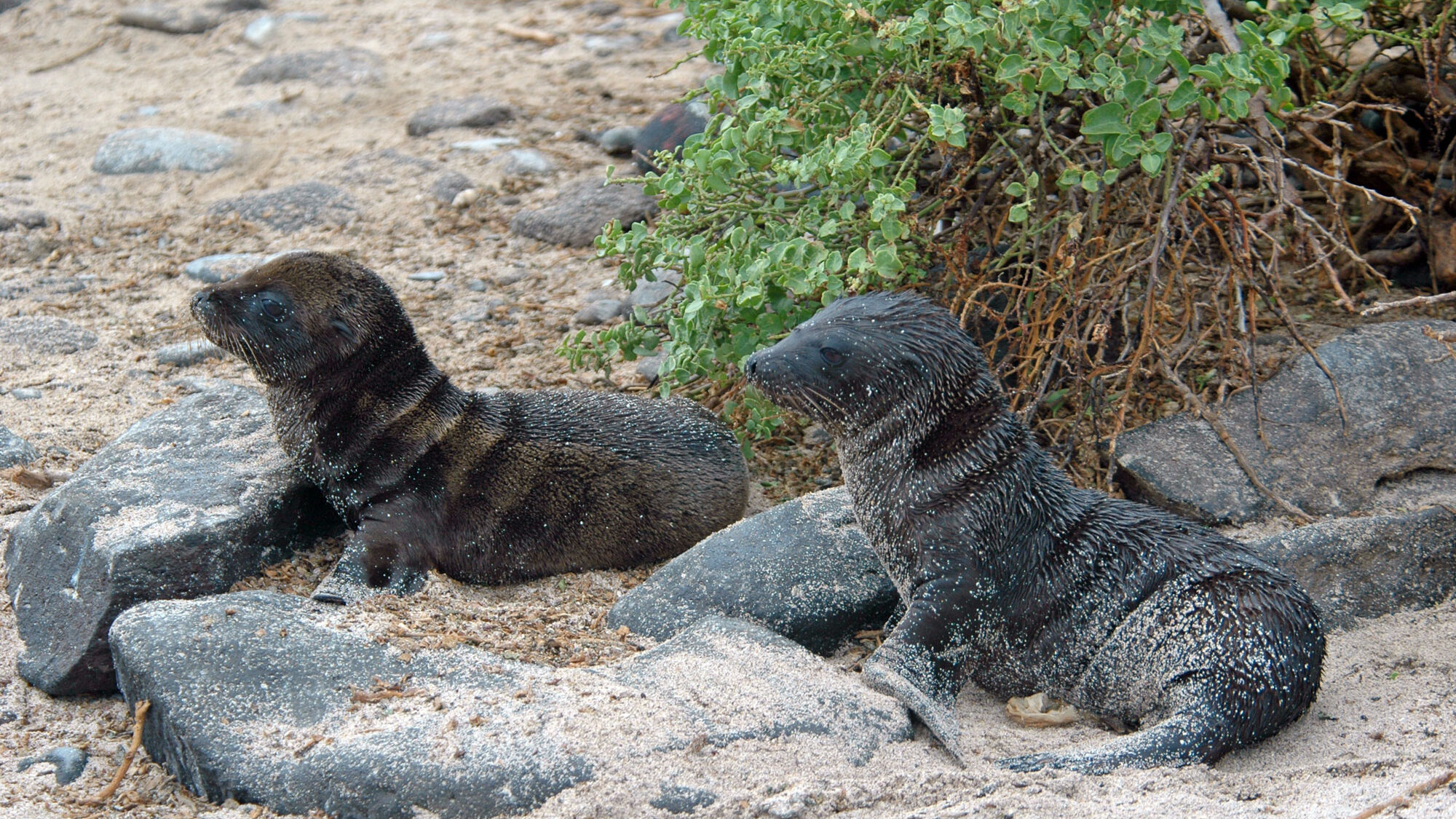
The Galápagos Islands offer remarkable wildlife encounters, active adventures, and distinctive landscapes throughout the year. But when planning your trip, one important question often comes up: When is the best time to visit?
The answer depends on more than just the weather.
In the Galápagos, there are two different seasonal patterns to consider. Tourism seasons influence demand for accommodations, guides, and excursions, while natural seasons shape weather, ocean conditions, and wildlife activity.
During popular travel periods, planning ahead becomes especially important, particularly if you have fixed dates or want to explore several islands on a customized itinerary. At other times of the year, travelers may have greater flexibility when choosing accommodations and arranging activities.
The good news is that the Galápagos is a rewarding destination in every season. Whether you’re interested in wildlife, hiking, snorkeling, or exploring local island life, there are opportunities to discover something remarkable throughout the year.
So, what do high, low, and shoulder seasons actually mean for your Galápagos land tour, and how can you plan the right experience for your travel dates?
What Is the Difference Between High Season and Low Season in the Galápagos?
The main difference between high, low, and shoulder seasons in the Galápagos is travel demand, availability of services, and how far ahead you may need to plan. These periods reflect when people tend to travel, not whether the islands are more or less rewarding to visit.
Based on the travel patterns our Galakiwi team observes throughout the year, some months and holiday periods see higher demand for accommodations, guides, and excursions, particularly around school vacations and popular international travel dates.
Here’s a general guide to how tourism demand changes throughout the year:
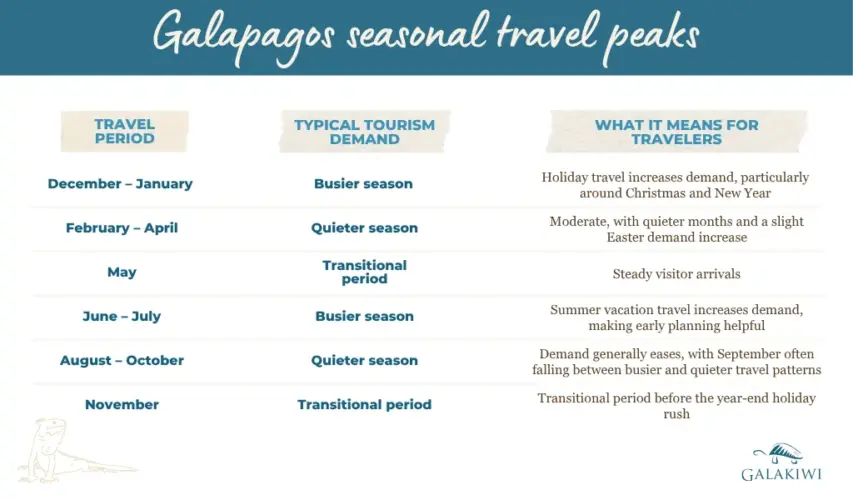
These patterns are a useful reference rather than fixed rules. Availability can vary depending on specific dates, accommodation preferences, and the services required for your itinerary.
For travelers exploring several islands, this distinction is particularly important. A Galápagos land tour involves coordinating accommodations, inter-island transportation, local guides, and activities across different locations. During periods of higher demand, securing your preferred combination of services may require booking further in advance.
It’s also important to distinguish tourism seasons from the Galápagos‘ natural seasons. The islands experience warmer and cooler periods that influence rainfall, ocean conditions, vegetation, and wildlife activity. These natural patterns don’t necessarily follow the same calendar as tourism demand.
When choosing your travel dates, it’s worth considering both how far ahead you may need to organize your trip and which natural conditions and experiences interest you most.
When Is High Season in the Galápagos?
The Galápagos generally experiences two main periods of higher tourism demand:
- Mid-December to mid-January: Christmas and New Year are popular travel periods, particularly for families and travelers planning around holiday schedules.
- June to September: This period overlaps with summer vacations in several major international travel markets, making it another popular time to visit the islands.
During these periods, demand for accommodations, experienced guides, inter-island transportation, and certain excursions can increase. This doesn’t mean the Galápagos experience is less enjoyable. It simply means that securing your preferred services may require more advance planning.
Why Booking Early Matters for Galápagos Land Tours
A land-based Galápagos adventure involves more than choosing a hotel and booking a few activities. Exploring several islands means coordinating accommodations, transportation, guides, and excursions across different locations.
For example, your itinerary might include a stay on Santa Cruz, snorkeling excursions from San Cristóbal, and wildlife experiences on Isabela. Each part needs to fit together within your available travel dates.
During popular holiday periods, certain hotels may have limited room availability, particularly for families or larger groups. Experienced guides may already be committed to other departures, and some excursions have limited capacity or operate on specific schedules.
Inter-island arrangements also need careful coordination, as transportation schedules and availability influence how much time you can spend on each island.
Booking early gives you and your travel planner more options when choosing where to stay, which activities to include, and how to organize your journey between islands. It’s about creating the itinerary that suits you, not avoiding an overcrowded destination.
For travelers planning a customized multi-island adventure, having those options can make a real difference.
If you’re traveling during Christmas, New Year, or the June–July holiday period, starting to plan around a year in advance can be a good idea, especially if you have fixed dates, preferred accommodations, or specific experiences in mind.
Not every high-season trip needs to be booked a year ahead, and good options may still be available closer to departure. But starting early generally gives you more flexibility when bringing the different elements of your trip together.

What Are the Weather and Wildlife Like During High Season?
Interestingly, the two main high-demand travel periods fall within different natural seasons in the Galápagos.
- December–January: The islands transition into the warmer, wetter season. Air and water temperatures generally rise, rainfall becomes more frequent, and vegetation begins to turn greener in many areas.
- June–September: The cooler garúa season brings milder air temperatures, cooler ocean conditions, and occasional mist or light drizzle, particularly in the highlands. Nutrient-rich waters support marine productivity and influence the activity of many marine species.
Both periods offer excellent opportunities to explore the islands, observe wildlife, hike volcanic landscapes, and enjoy water-based activities.
The conditions may feel different, especially when snorkeling or spending time in the highlands, but neither period is inherently better.
The most useful approach is to consider which natural conditions appeal to you and how much advance planning your travel dates may require.
When Is Low Season in the Galápagos?
Low season in the Galápagos refers to periods when demand for travel services generally decreases. For travelers with flexible dates, this can mean more options when choosing accommodations, arranging guided excursions, or putting together a customized multi-island itinerary.
Based on the travel patterns our Galakiwi team observes, periods of comparatively lower demand may include:
- February to April: Outside major holiday dates, these months can offer greater availability for certain accommodations, guides, and excursions.
- Late August to October: Demand may ease as international summer holiday periods come to an end, although the timing varies depending on travel markets and specific dates.
These are general patterns rather than fixed low-season dates. School holidays, Easter, and other popular travel periods can create additional demand within these months.
What Are the Advantages of Traveling During Low Season?
The main advantage is the possibility of greater flexibility when planning your itinerary.
If you have particular accommodations in mind, want to include specific excursions, or are interested in a customized journey across several islands, periods of lower demand may offer a wider range of available services.
This can be especially helpful when coordinating a land-based adventure. For example, having more accommodation and guide options may make it easier to arrange your preferred activities across Santa Cruz, Isabela, and San Cristóbal.
However, availability still depends on your travel dates, group size, and the services you want to include. Lower demand doesn’t guarantee that every hotel, guide, or excursion will be available.
And it doesn’t mean that the wildlife encounters or visitor sites are inherently better than during high season. The Galápagos National Park manages access to protected areas according to its regulations, while wildlife experiences depend on natural conditions and animal behavior.
What Are the Weather and Wildlife Like During Low Season?
The periods of lower tourism demand fall within different natural seasons, so conditions can vary considerably depending on when you visit.
- February–April: These months fall within the warmer, wetter season. Expect generally higher air temperatures, greener landscapes, and warmer ocean conditions that can be appealing for swimming and snorkeling.
- August–October: These months fall within the cooler garúa season, when milder air temperatures, occasional mist, and cooler ocean waters are common. Nutrient-rich waters support marine productivity and influence wildlife activity.
Low tourism season doesn’t mean less wildlife. Sea lions, marine iguanas, giant tortoises, and many of the islands’ bird species can be encountered throughout the year, although their behavior, breeding cycles, and activity vary with natural conditions.
Whether you’re drawn to warmer water and greener landscapes or cooler conditions for exploring the islands, these months offer plenty of opportunities for wildlife encounters and active adventures.
The main difference from high season is not the quality of the experience, but the potential for greater flexibility when organizing your trip.
What Is Shoulder Season in the Galápagos?
Not every Galápagos trip needs to fall within the main holiday travel periods. For travelers with flexible schedules, May and November are two additional months worth exploring.
Often described as shoulder-season months, they fall between some of the more popular travel periods and times of comparatively lower tourism demand.
- May: A transitional month between the warmer, wetter season and the cooler garúa season. It can be a useful option for travelers considering dates after the Easter holiday period and before the international summer travel season.
- November: Another transitional month, when demand may begin to increase ahead of the Christmas and New Year holidays.
Depending on your dates and preferences, these months may offer different accommodation, guide, and excursion availability when planning a land-based itinerary.
They aren’t necessarily better or less crowded times to visit. Instead, they give travelers more possibilities to consider when balancing their schedules, preferred activities, and the natural conditions they’d like to experience.
What Are the Weather and Wildlife Like During Shoulder Season?
May and November also mark interesting transitions in the Galápagos‘ natural seasonal cycle.
- May: The islands gradually move toward cooler conditions. Vegetation can remain green following the warmer months, while ocean temperatures generally begin to decrease.
- November: The cooler garúa season gradually gives way to warmer conditions, with air and sea temperatures typically beginning to rise as the warmer season approaches.
These changes influence the landscapes, ocean conditions, and wildlife activity across the archipelago.
As throughout the year, opportunities to observe sea lions, marine iguanas, giant tortoises, seabirds, and other Galápagos wildlife remain an important part of the experience. Particular behaviors and encounters depend on the species, location, and natural conditions.
For travelers with flexible dates, May and November are worth considering alongside other times of year, with the final choice depending on availability, interests, and travel preferences.

How Much Wildlife Can You See in Each Season?
One of the wonderful things about the Galápagos is that wildlife encounters are possible throughout the year. Sea lions, marine iguanas, giant tortoises, and many of the islands’ remarkable bird species can be seen in every season.
What changes isn’t the presence of wildlife, but the behaviors and natural conditions you might experience.
Wildlife activity follows ecological patterns influenced by factors such as ocean temperatures, food availability, rainfall, and breeding cycles. These patterns are separate from the islands’ high, low, and shoulder tourism seasons.
Depending on when and where you visit, you may have opportunities to observe different behaviors:
- Blue-footed boobies: Their famous courtship displays, including the distinctive high-stepping dance, are fascinating to watch. Courtship and nesting activity often increase during warmer periods, although timing varies between islands and colonies.
- Galápagos sea lions: Breeding activity generally increases during the cooler part of the year. Depending on the location and timing, visitors may observe territorial males, mothers nursing pups, or young sea lions interacting along the shore.
- Marine iguanas: Breeding seasons vary between islands. During these periods, males may develop more vivid coloration and display territorial behaviors, adding another dimension to encounters with these unusual marine reptiles.
The landscapes and ocean conditions also change throughout the year.
During the warmer, wetter season, rainfall can transform parts of the islands into greener landscapes. In the cooler garúa season, the lowlands often become drier, while cooler, nutrient-rich waters influence marine activity.
For travelers interested in snorkeling, water temperature, visibility, and marine conditions are also worth considering. These can vary by season and location, affecting the experience in the water.
There isn’t one month when every species is at its most active or every wildlife encounter is at its best. Each period offers different opportunities to observe animals in their natural habitats.
The best time to visit depends on when you’re able to travel, the landscapes you’d like to see, and the activities you’re most interested in experiencing, rather than simply whether your dates fall within high or low tourism season.
And because these are wild animals living freely in a protected environment, particular sightings and behaviors can never be guaranteed.
For a closer look at seasonal wildlife activity, explore our month-by-month Galápagos wildlife guide.
What Activities Can You Enjoy in Each Season?
One of the advantages of exploring the Galápagos on a land-based adventure is the variety of activities available throughout the year. From snorkeling and kayaking to hiking, cycling, and discovering local island life, there’s plenty to experience in every season.
While most activities aren’t tied to a particular time of year, weather, ocean conditions, and the islands you’re visiting can influence how you experience them.
- Snorkeling and swimming: The warmer season generally brings more comfortable water temperatures, while a wetsuit can make longer snorkeling sessions more enjoyable during the cooler months. Underwater visibility, currents, and sea conditions vary by location and time of year.
- Hiking and cycling: The cooler garúa season can offer comfortable temperatures for exploring trails and volcanic landscapes. During warmer months, staying hydrated, using sun protection, and adjusting your pace become especially important.
- Kayaking and water activities: These experiences are possible throughout the year when conditions allow. Wind, swell, and local sea conditions determine which locations are suitable on a particular day.
- Photography and landscapes: The warmer, wetter months often bring greener vegetation, while the cooler season reveals the drier landscapes and volcanic formations of the lowlands. Changes in light, clouds, and weather offer different photographic opportunities throughout the year.
- Exploring island communities: Visiting local restaurants, discovering small businesses, walking through inhabited towns, and learning about island life can be part of your experience in any season.
High or low tourism season doesn’t determine which activities you’ll enjoy most. Your interests, the natural conditions during your visit, and the islands included in your itinerary are often more important.
This is where local knowledge becomes particularly valuable. Galakiwi’s guides and on-island team understand how conditions can vary between locations and help coordinate activities that suit your interests, abilities, and travel dates.
When weather or sea conditions affect a planned excursion, having a local team to help assess suitable alternatives and adjust arrangements where possible can make a meaningful difference to your trip.
Which Season Is Best for Your Galápagos Land Tour?
So, when should you plan your Galápagos adventure?
Rather than searching for one perfect month, the best approach is to consider your travel dates, the activities you’re interested in, and how you’d like to explore the islands.
Here are four things worth thinking about as you plan your trip.
If Your Travel Dates Are Fixed
Perhaps you’re traveling during school holidays, Christmas, or a particular vacation period.
There’s no reason to rule out these popular travel dates. The Galápagos offers rewarding wildlife encounters and active adventures throughout the year.
The key is to plan ahead, especially if you have preferred accommodations, specific excursions, or a customized itinerary in mind.
Starting the conversation early gives your travel advisor and the Galakiwi team more opportunities to coordinate the services you need across the islands.
If You Have Flexibility With Your Dates
Having flexibility allows you to compare different travel periods before deciding when to visit.
Months such as May, September, October, and November may be worth exploring, depending on your interests and the availability of travel services.
You may find more options for accommodations, guides, and excursions on certain dates, making it easier to arrange an itinerary that suits your preferences.
Rather than choosing a month based on whether the islands might feel busier or quieter, consider which dates offer the best combination of availability, natural conditions, and experiences for your trip.
If You Have Particular Activities in Mind
Think about what you’d most enjoy doing during your visit.
If snorkeling and swimming are priorities, you might prefer the generally warmer water temperatures of the warmer season. If you enjoy hiking and cycling, the milder air temperatures of the cooler garúa season may appeal to you.
Wildlife interests can also help guide your decision. If there’s a particular species or seasonal behavior you’d love to observe, mention it early in the planning process.
Your travel advisor or Galakiwi team can help you understand when and where certain experiences may be possible, while keeping in mind that wildlife sightings and natural conditions can never be guaranteed.
If You’re Planning a Multi-Island Adventure
One of the advantages of a land-based Galápagos tour is the opportunity to explore different islands, each with its own landscapes, wildlife, and local character.
But planning a multi-island journey requires more than selecting your travel dates.
Accommodations, inter-island transportation, guided excursions, and the time needed to explore each destination all have to fit together.
For example, including Santa Cruz, Isabela, and San Cristóbal in one itinerary means considering how you’ll travel between them, which activities are available on particular days, and how much time you’d like to spend on each island.
Our team can help bring these elements together, recommend suitable arrangements, and build an itinerary that balances active exploration with enough time to enjoy each destination.
The goal isn’t to fit as many activities as possible into your trip. It’s to make the most of the time you have in the islands.
Ultimately, the best time to visit the Galápagos is the time that works for your schedule, interests, and preferred travel experiences, supported by thoughtful planning and an itinerary that brings everything together.
Tips for Planning Your Galápagos Land Tour
Once you have an idea of when you’d like to visit, a few practical steps can help you plan a Galápagos land tour that fits your interests, travel dates, and preferred activities.
- Start planning early if your dates are fixed. Popular holiday periods can mean limited availability for preferred accommodations, guides, and excursions. The earlier you begin, the more options you may have when putting together your itinerary.
- Identify your must-do experiences. Whether you’re excited about snorkeling with sea lions, hiking volcanic landscapes, kayaking, or observing giant tortoises, knowing your priorities helps your travel planner recommend suitable islands and activities.
- Share your preferences from the beginning. Let your travel advisor or Galakiwi team know about your group’s interests, activity levels, accommodation preferences, and any accessibility requirements. These details are especially helpful when designing a customized adventure.
- Allow time for inter-island travel. Moving between islands involves transportation schedules and logistics that need to be considered alongside your excursions. Some activities may also operate on particular days or depend on weather and sea conditions.
- Check availability before finalizing your dates. If you have some flexibility, comparing a few departure options may help you secure your preferred combination of accommodations, guides, and activities.
Planning a multi-island journey involves bringing together several services across different locations. Galakiwi’s locally based team works alongside travelers and their travel advisors to coordinate these arrangements, helping turn individual activities and destinations into a well-organized experience.
There Is No Single Best Time to Visit the Galápagos
The Galápagos offers remarkable wildlife encounters, active adventures, and opportunities to explore its islands throughout the year. Each natural season brings different conditions and experiences, while tourism seasons influence how far ahead you may need to plan.
Whether your travel dates are fixed or you have the flexibility to explore different options, the best time to visit is the one that fits your schedule, interests, and the experiences you’d most like to enjoy.
Planning ahead, especially during popular holiday periods, can help you secure your preferred accommodations, guides, and activities. And with Galakiwi’s locally based team helping coordinate the details across the islands, you can focus on discovering what makes each place special.
Ready to start planning your Galápagos adventure? Explore our Galápagos land tours or get in touch with our team to find an experience that suits your interests and travel dates.
| |