
October 20, 2026
Hummingbirds in Mindo, Ecuador: Species, Where to See Them & Travel Tips
Mindo is one of those places where nature seems to be everywhere.
Surrounded by Ecuador’s cloud forest, this small town is known for its lush landscapes, waterfalls, butterflies, orchids, and extraordinary birdlife. Located about 2½ hours from Quito, Mindo is one of the favorite mainland add-ons for many travelers visiting the Galápagos.
Since most international visitors traveling to the Galápagos pass through mainland Ecuador on their way to or from the islands, adding a few days in the cloud forest can offer a glimpse of a completely different side of the country.
And for many nature lovers, one of the most memorable experiences is watching hummingbirds.
Stand quietly near flowering plants or a feeder and, suddenly, tiny birds flash past in shades of green, blue, purple, and copper. One moment there is nothing there; the next, a hummingbird is hovering only a few feet away before disappearing just as quickly.
Mindo is home to a remarkable variety of hummingbirds, making it a wonderful destination for birdwatchers, photographers, families, and anyone who simply enjoys being surrounded by nature.
So why are there so many hummingbirds in Mindo, and what makes this small cloud forest town such an extraordinary place to see them?
What Makes Mindo, Ecuador So Special?
Mindo sits within Ecuador’s Chocó-Andino region, an area recognized for its exceptional biodiversity. The Mindo area is part of the Chocó Andino de Pichincha UNESCO Biosphere Reserve, a protected landscape in northwestern Ecuador encompassing forests, mountains, and communities.
One of the first things you notice here is the forest itself.
A cloud forest is different from the lowland rainforest many travelers associate with Ecuador. Found at higher elevations, these forests are frequently wrapped in clouds and mist. Moisture settles on leaves, mosses, and branches, while sunlight filters through a dense canopy of vegetation.
The result is a landscape that rarely feels still. Clouds move across the hillsides, visibility changes with the weather, and the forest can shift from bright and green to cool and misty surprisingly quickly.
Mindo sits at roughly 1,200 meters above sea level, while the surrounding Chocó-Andino landscape extends across a much broader range of elevations. These changes in altitude, combined with abundant moisture, dense forest, and Ecuador’s equatorial location, create many different habitats within a relatively small area.
That variety of habitats helps explain the remarkable diversity found here, from orchids and butterflies to frogs, mammals, and an exceptional variety of birds. It also makes Mindo a place that invites exploration beyond birdwatching.
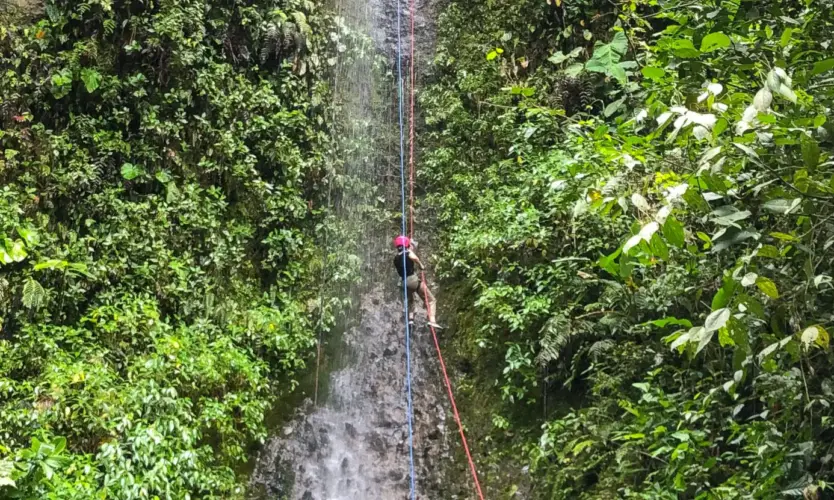
You can hike through the cloud forest, cross above the canopy by cable car, follow trails to waterfalls, visit butterfly gardens, learn about Ecuadorian cacao, or experience the forest from a different perspective while ziplining.
For travelers combining Mindo with the Galápagos, the contrast is part of what makes the experience so interesting. Within the same country, you can move from volcanic islands, open ocean, and coastal wildlife to mist-covered mountains, dense green forest, waterfalls, and an entirely different community of species.
Mindo offers a glimpse of just how much Ecuador’s landscapes can change within a relatively short journey.
Why Are There So Many Hummingbirds in Mindo?
The short answer is that Mindo offers many of the things hummingbirds need to thrive: food, habitat, water, and a variety of microclimates.
The cloud forest provides an abundance of native plants, flowers, insects, and other food sources. Because vegetation grows throughout the year, different plants can flower at different times, creating a relatively continuous supply of nectar.
That makes Mindo a particularly productive environment for these tiny, high-energy birds.
A Perfect Cloud Forest Climate
Mindo has a mild, humid climate throughout much of the year, with frequent rainfall and temperatures that are generally comfortable for exploring.
The rain is not something that the cloud forest needs to escape from. It is part of what makes the ecosystem possible.
Moisture supports the dense vegetation, mosses, orchids, bromeliads, and flowering plants that fill the forest. The result is a landscape where food and shelter are available for an incredible range of species.
For hummingbirds, that means access to flowering plants across different parts of the forest.
And while a rainy day might mean reaching for your rain jacket, but the mist and moisture are also part of what keeps the landscape so green and productive.
An Abundance of Food
Hummingbirds are famous for their dependence on nectar, which provides them with the energy they need for their incredibly active lifestyles. With different plants flowering at different times, the cloud forest can provide nectar sources throughout much of the year.
But nectar isn’t their only food source.
Hummingbirds also eat small insects and other tiny arthropods, an important source of protein and other nutrients. A diverse forest rich in both flowers and insect life therefore provides them with different sources of food.
The relationship works both ways. As hummingbirds move between flowers in search of nectar, they can carry pollen from one plant to another, making them important pollinators within the cloud forest ecosystem.
It’s one of the pleasures of watching hummingbirds in Mindo: you’re not simply seeing colorful birds visiting flowers. You’re watching one small part of a much larger forest system at work.
How Many Hummingbird Species Live in Mindo?
This is one of those questions where the answer depends on exactly how you define the area.
The wider Mindo and Chocó-Andino area supports an exceptional diversity of hummingbirds, with more than 50 species recorded across the broader region. At Mindo and nearby birding locations, visitors may encounter several dozen species depending on the elevation, habitat, season, and specific location they visit.
That variety is part of what makes hummingbird watching in Mindo so exciting.
But there is an important thing to remember: there is no guaranteed species list for a particular visit.
Birds move. Weather changes. Flowering patterns change. Some species prefer particular elevations or habitats.
Rather than arriving with a checklist of species you absolutely must see, it is often more rewarding to let Mindo surprise you.
Hummingbirds You May See in Mindo
Mindo is home to many beautiful hummingbird species, but here are five that birdwatchers may have the opportunity to encounter.
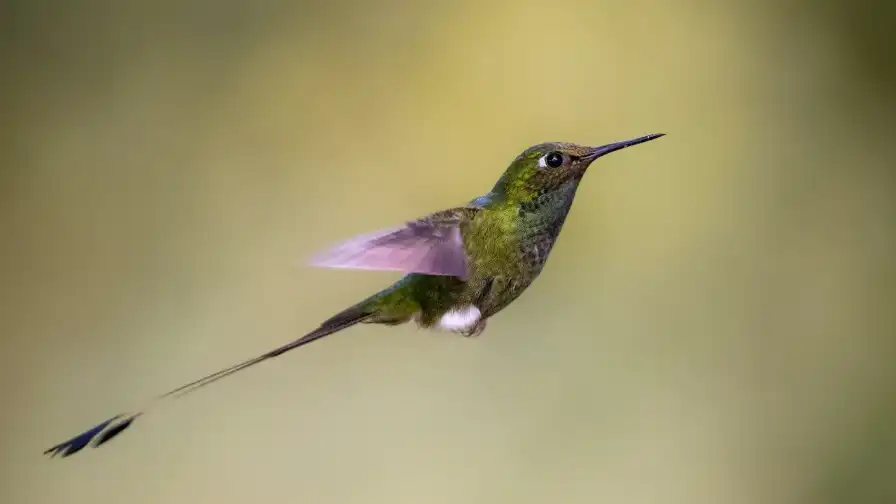
White-booted Racket-tail
The White-booted Racket-tail is one of the most distinctive hummingbirds you may encounter in the Mindo area.
Its name comes from two unusual features: white feathering around its legs that resembles little boots and elongated tail feathers ending in racket-shaped tips.
The males are particularly striking, and their unusual tail makes them relatively easy to recognize once you know what to look for.
They are associated with humid montane forests and can sometimes be seen visiting flowering plants or feeders.
Keep an eye out for: the white “boots” and the distinctive racket-shaped tail.
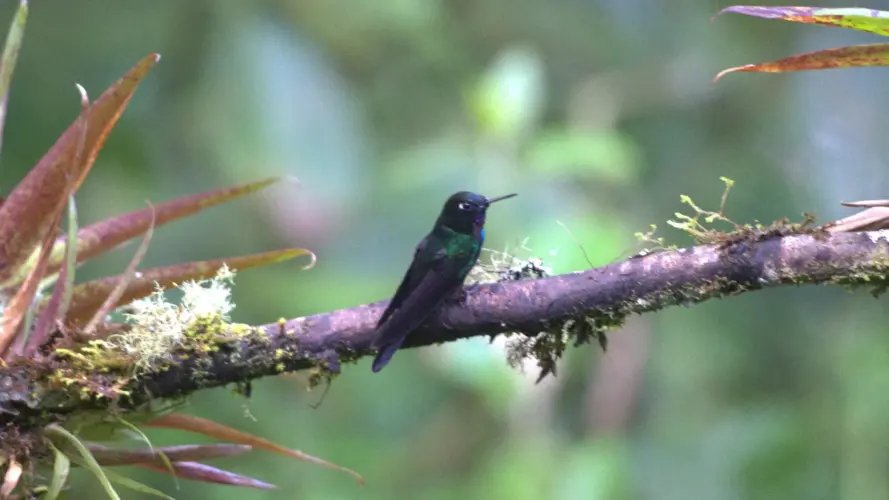
Velvet-purple Coronet
The Velvet-purple Coronet is a compact hummingbird with rich, dark plumage that can appear almost velvety in the right light.
Its colors can change dramatically depending on the angle of the light, making it a particularly beautiful bird to watch and photograph.
Like many hummingbirds in the region, it can be found in humid forest environments and frequently visits flowers for nectar.
Keep an eye out for: deep purple tones and a sturdy-looking body compared with some of Mindo’s more delicate hummingbirds.
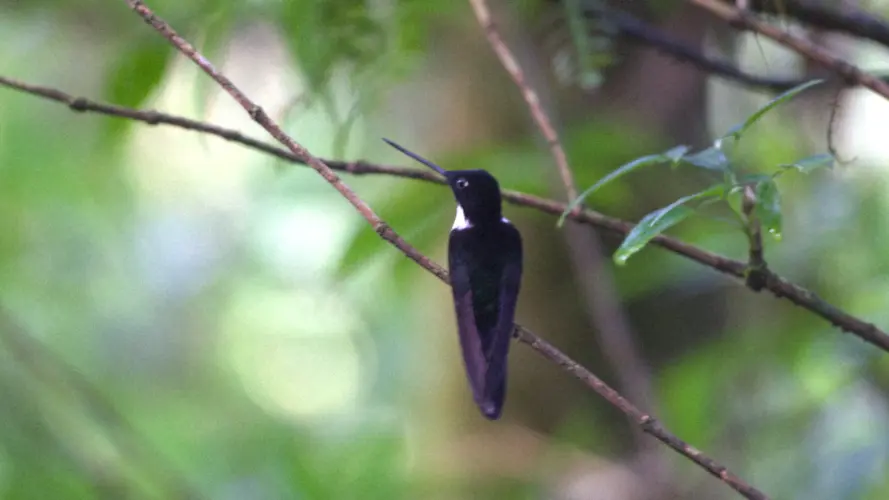
Brown Inca
The Brown Inca is another hummingbird associated with the Andean forests.
Its plumage is predominantly brownish or dark, with contrasting features around the throat and tail. It can be less immediately flashy than some of the more colorful species, but watching one feeding among the flowers is still a memorable experience.
Keep an eye out for: its darker brown coloration and the distinctive contrast around its throat.
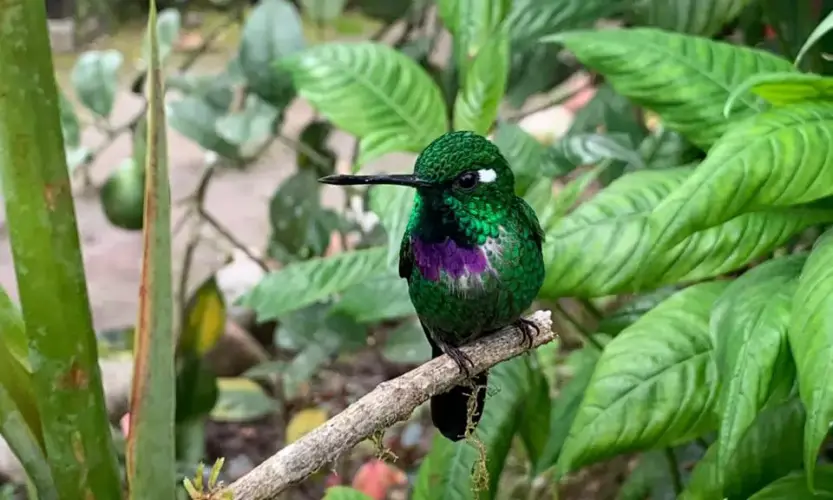
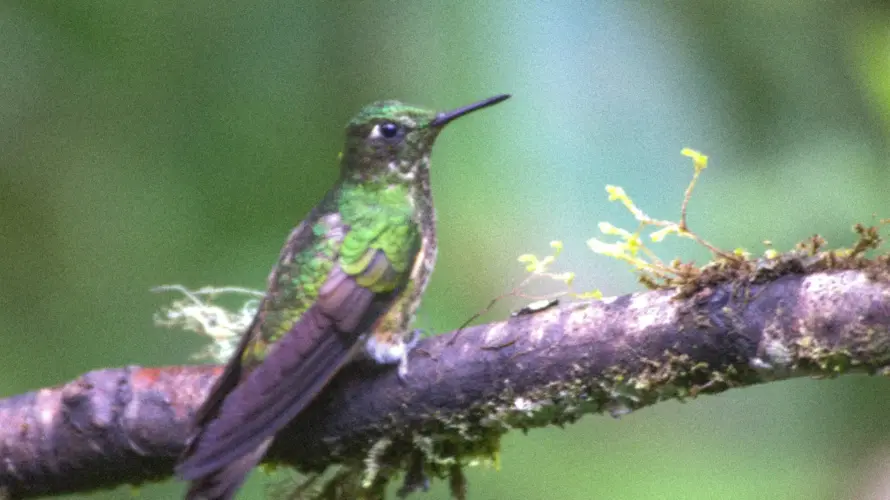
Green-crowned Brilliant
The Green-crowned Brilliant is a larger and particularly striking hummingbird.
As its name suggests, it has a brilliant green crown, while its body can show rich green and bronze tones. Males may display especially vivid coloration when the light catches their feathers.
It can be found in humid montane forests and is often associated with flowering plants.
Keep an eye out for: the brilliant green head and relatively large size.
Violet-tailed Sylph
The Violet-tailed Sylph is one of the hummingbirds that can stop you in your tracks.
It is known for its elongated tail, with the male displaying beautiful violet-blue coloration. When it flies through the forest, its long tail makes it particularly distinctive.
Seeing one clearly can be a wonderful moment for photographers and birdwatchers alike.
Keep an eye out for: the exceptionally long tail and violet coloration.
Of course, these are only a few of the hummingbirds you may encounter around Mindo. The exact species you see will depend on where you go, the habitat you’re exploring, weather conditions, and the expertise of your local guide.
Respectful Interactions With Hummingbirds in Mindo
Hummingbirds are fast, energetic birds. An encounter may last only a few seconds, or you may find yourself watching one feed, hover, and return to the same flowers again and again.
The key is patience.
Whether you’re watching hummingbirds in a garden, along a forest trail, or near feeders, give them the space to behave naturally and let the birds decide how close they want to come.
Give them space
Stand quietly, keep your voice low, and avoid sudden movements. Don’t chase a bird for a photograph or try to move closer each time it changes position. Often, staying in one place gives you a better opportunity to observe.
Keep flight paths clear
Hummingbirds can approach flowers and feeders quickly and from different directions. Avoid standing directly in their flight paths or blocking access to places where they are actively feeding.
Use binoculars or a zoom lens
You don’t need to be physically close to appreciate the details. Binoculars can reveal colors and features that are easy to miss with the naked eye, while a zoom lens allows photographers to capture behavior without crowding the bird.
Avoid using flash
Cloud forest light can be challenging for photography, but avoiding flash helps keep your presence less intrusive. Instead, work with available light and give yourself time to observe where birds are regularly returning.
And perhaps the most important tip is simply to pay attention.
Listen for the rapid sound of wings. Watch how a hummingbird can hover before changing direction almost instantly. Notice which flowers different species visit, how they interact with one another, and how quickly the activity around you can change.
Some of the best hummingbird encounters happen when you stop trying to make something happen and simply let the birds move freely around you.
Mindo Is More Than Hummingbirds: Things to Do
Hummingbirds may be one of the highlights of Mindo, but there is plenty more to experience while you’re here.
Explore the Cloud Forest
Walking the forest trails is one of the best ways to experience Mindo beyond its hummingbird gardens. Follow paths through dense vegetation, look for orchids and other epiphytes growing among the trees, and explore trails leading to waterfalls hidden within the forest.
A guided nature walk can add another layer to the experience. Guides often notice the smaller details that are easy to walk past, from insects tucked beneath leaves to birds calling from high in the canopy.
Discover Mindo’s Wildlife
Hummingbirds are only part of Mindo’s remarkable birdlife. Exploring different habitats can reveal a much wider variety of species, while butterfly gardens offer a closer look at another colorful group of cloud forest inhabitants.
For families in particular, butterfly gardens can be an engaging way to learn about the different stages of a butterfly’s life while observing several species up close.
Add Some Adventure or Local Flavor
For a different perspective on the forest, Mindo offers canopy and ziplining experiences that take you above the vegetation and add a little more adventure to the day.
Back on the ground, you can explore another side of Ecuador through cacao. Local chocolate experiences introduce visitors to the journey from cacao bean to finished chocolate, while offering a taste of one of the country’s best-known agricultural products.
Together, these experiences make it easy to build a few days in Mindo around different interests, whether you prefer wildlife watching, walking through the forest, active adventures, or discovering a little more about Ecuadorian food and culture.
Why Mindo Is a Perfect Mainland Ecuador Extension for Galápagos Travelers
Many travelers arrive in Ecuador with the Galápagos firmly at the center of their plans. But spending a few extra days on the mainland can reveal just how much more there is to the country.
A few days earlier, you might have been walking across black lava beside a marine iguana or snorkeling along a volcanic coastline. In Mindo, you’re standing beneath dripping leaves, surrounded by layers of green, listening for the buzz of hummingbird wings in the cloud forest.
The contrast is part of what makes the combination so interesting.
One destination shows you how species have adapted to isolated volcanic islands surrounded by the Pacific Ocean. The other takes you into a lush mountain forest where moisture, elevation, flowers, and dense vegetation support an entirely different world of wildlife.
And because Mindo is only a few hours from Quito, it can fit naturally before or after a Galápagos adventure without requiring another major journey within Ecuador.
Together, the two destinations offer something more interesting than simply adding another place to an itinerary. They allow you to experience two very different sides of Ecuador and see just how dramatically its landscapes and wildlife can change within one relatively small country.
The Best Way to Visit Mindo
There isn’t one right way to experience Mindo. How much time you spend here depends on your wider Ecuador itinerary and how deeply you want to explore the cloud forest.
Because Mindo is relatively close to Quito, it can work as either a day trip or a longer stay.
A Mindo Day Tour
A day trip is a good option for travelers with limited time on the mainland.
Leaving Quito early gives you time to experience the cloud forest, watch hummingbirds, and choose another activity or two before returning to the city. It works particularly well when Mindo is being added to a wider Ecuador or Galápagos itinerary and you only have one day available.
It is a rewarding introduction to the cloud forest.
An Overnight Stay
If you have more time, staying overnight gives you the freedom to experience Mindo at a slower pace and shape your visit around the kind of experience you enjoy most.
For travelers who want to focus on nature, those extra hours can mean more time for birdwatching, photography, guided forest walks, and quietly observing the wildlife and smaller details of the cloud forest.
If you prefer a more active nature experience, Mindo also makes it easy to combine wildlife and forest exploration with hiking, waterfalls, canopy adventures, and other outdoor activities.
Whichever pace you choose, staying longer means less pressure to fit everything into a single day. It also gives you opportunities to experience the forest at different times of day, including the early morning when bird activity can be particularly rewarding.
For travelers combining mainland Ecuador with the Galápagos, Mindo can therefore be anything from a brief introduction to the cloud forest to a more immersive nature or active adventure before or after the islands.
Tips for Visiting Mindo
When Is the Best Time of Year to Visit Mindo?
Mindo can be visited throughout the year, and there isn’t one perfect month for everyone.
Because Ecuador sits on the equator, seasons don’t follow the same patterns travelers may be used to in temperate parts of the world. In Mindo, rainfall and conditions vary throughout the year, and weather can also change quickly in the cloud forest.
Hummingbirds can be encountered year-round, although the species and activity you experience may vary with weather, flowering patterns, habitat, and the particular locations you visit.
Rather than trying to avoid the cloud forest’s weather altogether, come prepared for it. Mist and rain are part of the ecosystem and part of experiencing Mindo.
Wear Comfortable Walking Shoes
Whether you’re exploring forest trails, visiting waterfalls, or moving between different nature experiences, comfortable footwear will make your day much easier. Shoes with good grip are particularly useful when trails are wet.
Bring Rain Protection
A lightweight rain jacket is worth keeping with you, even when the day begins clear. Cloud forest conditions can change, and being prepared means a passing shower doesn’t have to interrupt your plans.
Take Your Time
Mindo rewards travelers who don’t rush. Leave room to stop, listen, and notice what is happening around you.
Watch the flowers beside the trail. Listen for movement in the vegetation. Give yourself a few extra minutes when something catches your attention.
Sometimes the most memorable wildlife encounter isn’t the one you planned.
Hummingbirds of Mindo: A Small Bird With a Big Story to Tell
Mindo’s hummingbirds are more than beautiful animals to photograph. They are part of the relationships between flowers, insects, birds, and plants that keep the cloud forest alive.
But you don’t need to understand every part of that ecosystem to appreciate the experience.
Standing quietly as a hummingbird hovers beside you, hearing the rapid movement of its wings, or watching one disappear into the forest in a flash of color can seem like a small moment.
You don’t always have to search for something extraordinary. Sometimes, you simply have to slow down enough to notice what is already happening around you.
For travelers heading to or from the Galápagos, a few days here can also reveal another side of Ecuador and another way of experiencing its wildlife.
Thinking about adding Mindo to your Galápagos journey?
Whether you have a few hours to spare in Quito or want to spend a couple of days immersed in the cloud forest, Mindo can be a wonderful addition to your Ecuador adventure. Explore our Mindo Nature Adventure or Mindo Active Adventure, or get in touch with our team and let us help you combine the cloud forest with your Galápagos experience.
| |